Trump's Iran Peace Talks Denounced as 'Fake News' Amid Conflicting Claims
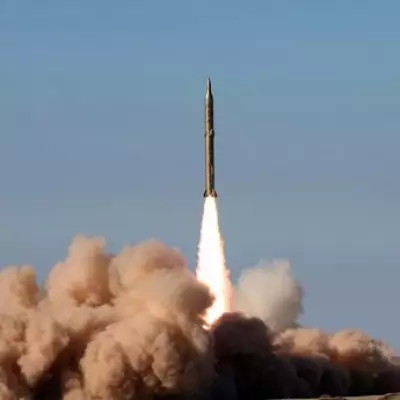
Donald Trump has been accused of creating "fake news" in an attempt to soothe financial markets after he announced a pause on striking Iran's energy infrastructure and claimed the US was having "productive" discussions with Tehran to end the war. Iranian officials have swiftly denied any such discussions took place, condemning the US president for spreading misinformation in a bid to "escape the quagmire" of the ongoing conflict.
Conflicting Statements from Washington and Tehran
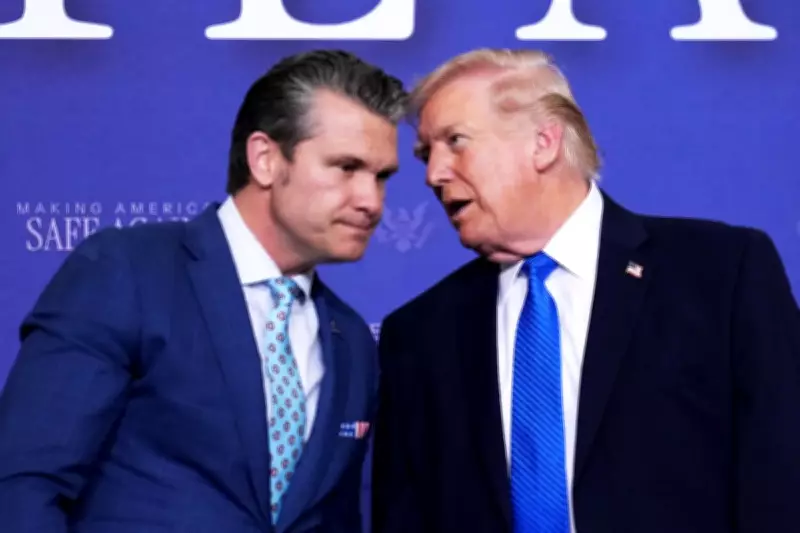
On Monday, Mr Trump said he was extending a 48-hour deadline for Iran to reopen the crucial Strait of Hormuz or face attacks on its power plants, granting an additional five days. He told reporters Iran wanted "to make a deal," and claimed US envoy Steve Witkoff and his son-in-law Jared Kushner had held talks with an Iranian leader on Sunday. UK prime minister Sir Keir Starmer indicated he was aware of talks without providing further details.
However, Iran's parliament speaker Mohammad Bager Galibaf firmly contradicted these assertions, stating: "No negotiations have been held with the US, and fake news is used to manipulate the financial and oil markets and escape the quagmire in which the US and Israel are trapped." This direct denial highlights the stark divide between the two nations' narratives.

Trump's Optimistic Claims and Market Reactions
Speaking from Memphis, Tennessee, on Monday, President Trump insisted: "We were planning tomorrow on shooting down some of their power plants, we're gonna hold that up, hopefully we won't have to do it. We are now having really good discussions, they started last night, a little bit the night before that. I think they're really good. They want peace, they agreed they will not have a nuclear weapon. I think there's a very good chance we're going to end up with a deal and so we're giving it five days and then we're going to see where that takes us."
Mr Trump noted that the pause on planned airstrikes was "subject to the success of the ongoing meetings and discussions." Following this announcement, oil and gas prices plunged, as security in the Strait of Hormuz is key to worldwide energy supplies, indicating market sensitivity to the geopolitical tensions.
Iranian Response and Regional Escalation
In response to Trump's claims, Iranian state television displayed a banner reading: "US president backs down following Iran's firm warning." Over the weekend, Iran had threatened to strike the energy and water systems of its Gulf neighbours in retaliation if Mr Trump followed through with his threat to attack Iranian energy infrastructure.
Despite Monday's claim by Mr Trump that the war in Iran could soon conclude, Israel launched new attacks on Tehran, targeting infrastructure with explosions reported in multiple locations. This simultaneous military action underscores the complex and volatile nature of the conflict, with allies potentially pursuing divergent strategies.
Expert Analysis on US-Israel Divergence
Professor Maziyar Ghiabi, director of the centre for Persian and Iranian studies at the University of Exeter, commented: "The offer of five days to reach a deal by US President Donald Trump has provided relief to financial markets. However, while the US president announced diplomatic communication with his Iranian counterpart, the Israeli air force carried out extensive bombing of Iranian infrastructure."
He added: "The objectives of the United States and Israel appear to differ, with Tel Aviv preparing for a prolonged conflict that, so far, has had only limited material impact compared to that experienced by GCC countries and US bases. The key question is whether the US administration will be able to disentangle itself from Israeli strategy, or whether it will be drawn into a prolonged war with global repercussions—as well as domestic unpopularity—due to Israel's military offensive. Based on precedents, it is unlikely Israel will restrain from the current strategy unless there is a strong US pressure, which is currently lacking."
This analysis points to potential rifts in allied approaches, raising concerns about the sustainability of peace efforts and the broader implications for regional stability.