It is tempting to view America's military engagement with Iran as a series of misguided endeavors—whether attempting to dismantle the nation's nuclear capabilities, instigate regime change, or spark internal rebellion among discontented citizens. These objectives have all been proposed, and while they hold appeal, the underlying rationale for President Trump's aggressive stance is far more calculated. Despite initial appearances, the administration's targeting of Tehran serves a distant purpose: striking at Beijing, some 3,500 miles away.
The Chinese Factor in Trump's Foreign Policy
China consistently occupies a central place in President Trump's strategic considerations. Beyond domestic issues like border security and inflation, the rapid ascent of Chinese power represents the foremost concern of his second term and the primary focus of White House foreign policy. For years, under the passive oversight of previous administrations, China and Iran have deepened their alliance, compelling Washington to take decisive action. Consequently, Trump's confrontation with the Iranian regime is not a rash gamble but a historically inevitable response to shifting global dynamics.
The Foundation of China-Iran Cooperation
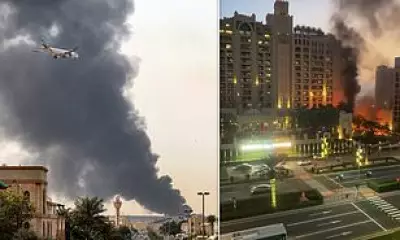
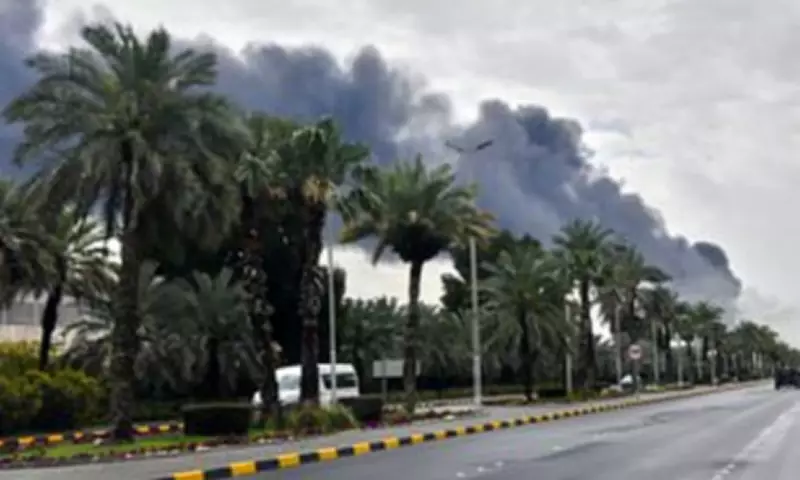
The cornerstone of the current Sino-Iranian partnership was laid in 2015 with a memorandum of understanding, largely overlooked or underestimated in Western circles. This agreement facilitated Iran's integration into China's Beidou satellite navigation system, among other collaborations. Today, after weeks of conflict, missiles are striking Israel and U.S. bases in the region with alarming precision. Pentagon analysts have come to recognize, at considerable cost, the direct link between these advancements and the strengthened China-Iran axis.

Reports suggest that both the United States and Israel were initially caught off guard by the effectiveness of Tehran's missile assaults. It took approximately 72 hours after their own opening strikes—which targeted Iran's defense ministry, intelligence hub, and key figures including Ayatollah Khamenei—for them to acknowledge the surprising potency of Iran's capabilities. This raises a critical question: were China and Iran strategically poised for this moment?
Historical Context and Blame
To address this, it is essential to revisit the past. The 2015 Iran-China agreement was signed during Barack Obama's presidency, not Donald Trump's. The Obama administration appears to have neglected the growing threat, but responsibility extends further. The challenges confronting America and the West today stem from three decades of U.S. foreign policy under four presidents—Bill Clinton, George W. Bush, Barack Obama, and Joe Biden. Their approaches often involved delaying action or, worse, participating in a broader movement toward globalization that eroded national boundaries.
In this light, Trump faced a dilemma: damned for risking conflict with Iran, and doubly damned for inaction. Another puzzle is the transformation between June 2025's 12-day Israel-Iran skirmish, where Iranian weapons proved relatively ineffective, and the current conflict. Intelligence indicates that Iran was not integrated into the Beidou system last year but is now, enabling precise and meticulous targeting capabilities.
Military Realities and Global Repercussions
Russian Defense Minister Sergei Shoigu, a noted ally of Tehran, recently asserted that Iran possesses missiles capable of striking any target in the Middle East. Current evidence supports this claim, raising questions about why Western allies have not rallied to Trump's call for a united front. With the Beidou system operational and ample missile reserves, Iran is likely to prolong the war to achieve its objectives.
President Trump can frame this conflict to U.S. voters as a strategic victory: neutralizing a Chinese ally in the Gulf, curtailing Iran's oil sales to Beijing, and positioning America as Europe's primary supplier of liquefied natural gas (LNG) at U.S. prices. He can also emphasize a tough stance on Gulf leaders, insisting they fund the reconstruction of American bases and the maintenance of the U.S. Fifth Fleet in the region.

Shifts in Geopolitical Power
Meanwhile, China may interpret events differently. The USS Gerald R. Ford aircraft carrier is out of commission following an onboard fire, potentially for an extended period, while the USS Abraham Lincoln appears damaged in an Iranian attack, with its condition and location undisclosed. Iranian missiles have destroyed approximately $200 billion worth of U.S. bases, significantly handicapping the Fifth Fleet and potentially heralding a major geopolitical realignment.
Through commercial expansion, China has already established dominance in Africa. Is it now preparing to extend its influence into the Gulf? This raises the ultimate question: is the current outcome precisely what China intended all along, leveraging the conflict to weaken American presence and bolster its own regional ascendancy?