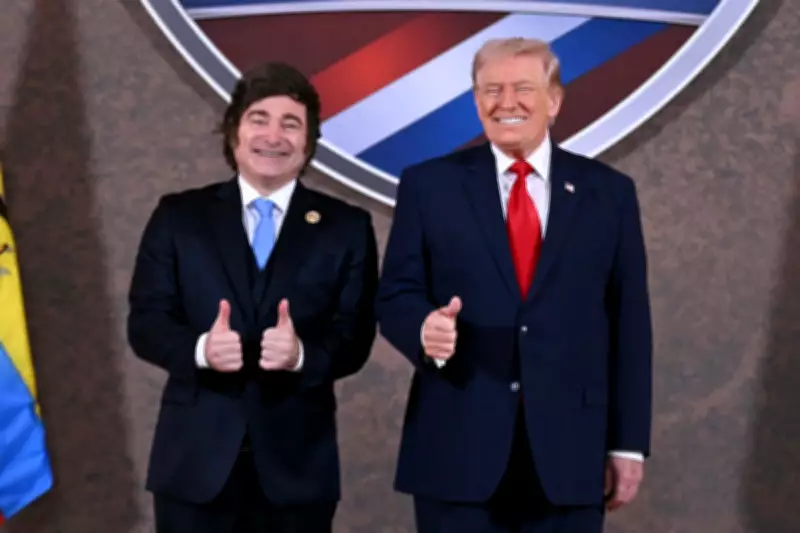
Downing Street has insisted that the sovereignty of the Falkland Islands rests with the UK after a leaked Pentagon memo indicated that the United States could withdraw its diplomatic support for the British claim. The confidential internal email suggested that Washington might review its position as part of a broader punishment for NATO allies that have not shown support for the US war in Iran.
US Threat to Reassess Support
President Donald Trump has repeatedly criticised NATO members for a lack of support since launching his military offensive in the Middle East, threatening to withdraw from the alliance altogether and branding it a “paper tiger”. The leaked memo, which also considers suspending Spain from the alliance, floats the idea of reassessing Washington’s diplomatic support for European “imperial possessions”, such as the Falkland Islands.
UK Government Response
A spokesperson for Prime Minister Sir Keir Starmer reaffirmed the UK’s position: “We could not be clearer about the UK’s position on the Falkland Islands. It is long-standing, it is unchanged. Sovereignty rests with the UK and the islands’ right to self-determination is paramount. It’s been our consistent position and will remain the case.” The spokesperson added that Britain had expressed that position “clearly and consistently to successive US administrations”.

Expert Analysis: No Practical Impact
Experts have told The Independent that losing US support for British sovereignty would have no practical effect. Admiral Lord West of Spithead, who commanded HMS Ardent during the Falklands War, said: “The recognition or otherwise by the US does not make the islands less secure.” Former army colonel Philip Ingram MBE added: “Under international law the fate of the Falklands is down to the will of its people, no matter what Trump says – so their sovereignty is not under any threat.” He described the memo as “Trump clickbaiting and nothing else”.
Broader Implications for UK-US Relations
Dr Carlos Solar, a senior research fellow from RUSI, said the memo indicates a breakdown in the “special relationship”. He noted: “The idea of the US not supporting British sovereignty over the Falkland Islands does not add much to the issue itself, but rather it speaks badly about how the ‘special relationship’ is being handled.” He added that there is no active military threat from Argentina and that both countries have improved bilateral matters in trade, science, industry, and education despite their unshakable positions on sovereignty.
Argentine Claims and Referendum
Questions over UK sovereignty have intensified since Argentine President Javier Milei took office in 2023. Milei, who has a strong relationship with Trump, has repeatedly claimed Argentine sovereignty over the islands. In a speech marking the 44th anniversary of the 1982 conflict, he said the war “did not alter the legal nature of this dispute”. However, residents of the Falklands voted overwhelmingly in favour of remaining a UK overseas territory in a 2013 referendum, with 99.8% in favour.
Historical Context
The Falkland Islands have been under British administration since 1833, though Argentina has long disputed this claim. The 1982 Falklands War lasted 74 days, resulting in 255 British and 649 Argentine military deaths. Argentina has not been able to rebuild its navy since. The islands were uninhabited before European discovery in the 17th century, and British captain John Byron claimed them for Britain in 1765.
While the US threat may have no real impact on sovereignty, it signals further deterioration in UK-US relations. President Trump said on Thursday that King Charles’s state trip at the end of this month could help repair strained relations, but he criticised Sir Keir Starmer as weak and indecisive, adding: “If he opened the North Sea and if his immigration policies became strong, which right now they’re not, he can recover, but if he doesn’t, I don’t think he has a chance.”