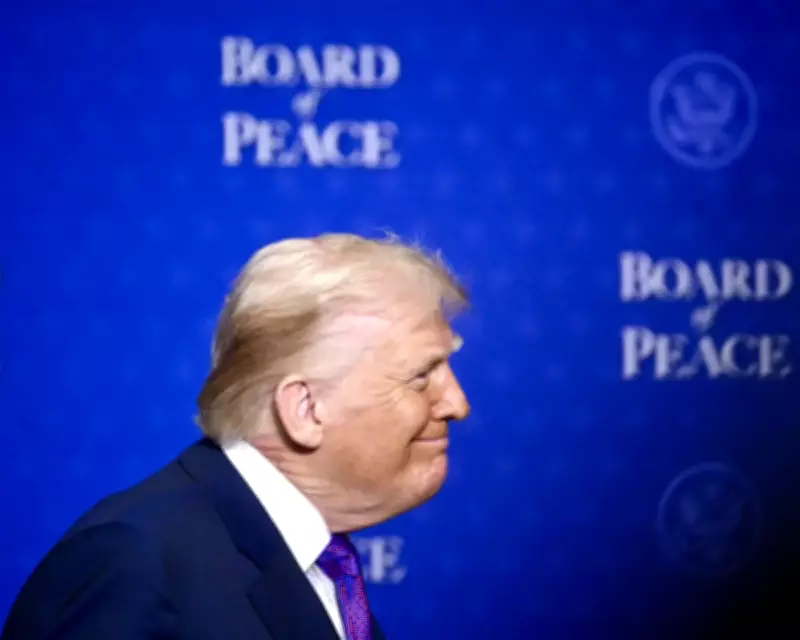
Trump's Peace Board Receives $10bn as Gaza Aid Trickles In
As humanitarian aid continues to trickle into Gaza at levels deemed insufficient by relief agencies, the United States has announced a $10bn transfer to President Donald Trump's newly convened Board of Peace. This move starkly contrasts with the dire conditions on the ground, where temporary shelters are scarce, reconstruction materials are restricted by Israeli controls, and UN reports describe a persistent crisis. Since the ceasefire began, Israeli strikes have killed approximately 600 people in Gaza, highlighting ongoing violence.
Private Initiative vs. Public Need
The substantial funding for a private body chaired by Mr Trump raises critical questions about foreign policy priorities. While the Board of Peace has ambitious plans—including rebuilding Rafah with skyscrapers within three years and establishing Gaza as self-governing within a decade—these claims remain largely notional. An International Stabilisation Force of 20,000 troops is proposed, but delivery is uncertain. Meanwhile, Washington has paid only $160m of its over $4bn UN arrears, leaving existing mechanisms severely cash-strapped.
Funnelling state funds into this board suggests that policy may be serving private interests rather than the public good, especially as the board lacks clear legal authority. A UN Security Council resolution from last November authorised it solely as a temporary, two-year transitional administration for Gaza, but Mr Trump, who holds veto power, claims it can intervene in other global conflicts. This sidesteps lengthy coalition-building with regional partners, potentially undermining institutional credibility.

Gaza's Future at Stake
Experts warn that the US's top-down economic model risks remaking Gaza into a tightly managed enclave, with Palestinians confined to heavily surveilled compounds while the strip is developed with residential towers, datacentres, and seaside resorts. Muhammad Shehada of the European Council on Foreign Relations argues this poses a blunt question: is Gaza the home of its people or a prize for outside powers and profiteers? Palestinians have limited say in decisions that will shape their future, even as Gaza lies in ruins after what many describe as a genocide.
Israeli Prime Minister Benjamin Netanyahu's government signals a new offensive if Hamas does not disarm, possibly before Israel's election this year, which aligns with the letter of the UN resolution but contradicts its logic. Peace requires regional calm, Israeli restraint, Palestinian legitimacy, and credible institutions, yet the US contemplates military action against Iran over nuclear enrichment while encouraging Riyadh to adopt a similar programme. This escalatory approach threatens conflagration in an already volatile region.
Ultimately, the Board of Peace's success hinges on whether guardrails keep pace with public relations, as personalised diplomacy risks exacerbating contradictions in Gaza's path to sovereignty.