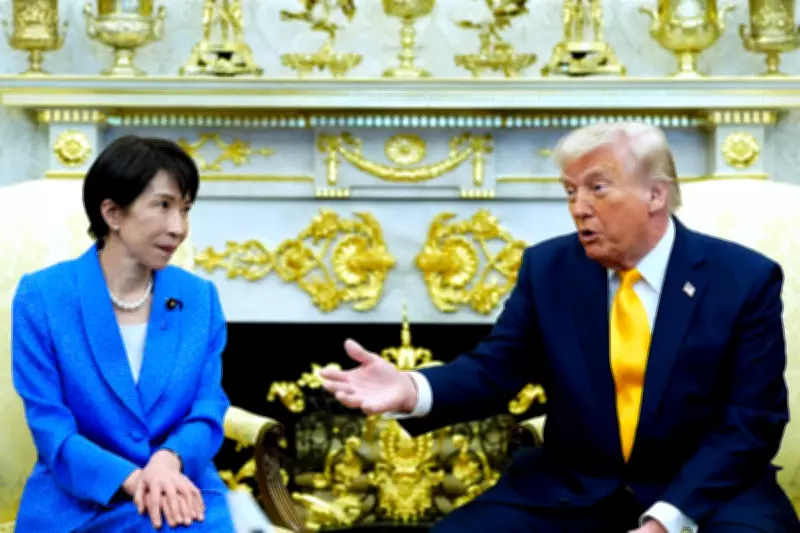
In a moment that left the Oval Office crowd briefly silent, President Donald Trump turned a historic tragedy into a punchline during a bilateral meeting with Japanese Prime Minister Sanae Takaichi on Thursday. The incident occurred when a Japanese journalist pressed Trump on why key American allies, including Japan, were not informed prior to the joint U.S.-Israeli air campaign against Iran on February 28.
Awkward Exchange Over Surprise Tactics
Trump initially defended the lack of warning, stating that the United States "went in very hard" and "didn't tell anybody about it because we wanted surprise." However, the conversation took an uncomfortable turn moments later when the president remarked, "Who knows better about surprise than Japan?"
Following some muted laughter from U.S. officials present, Trump directly addressed Prime Minister Takaichi, who was born two decades after the 1941 attack, with a pointed question: "Why didn't you tell me about Pearl Harbor, ok?" The room fell into a hushed silence, underscoring the sensitivity of referencing an event that President Franklin Roosevelt once called "a date that will live in infamy."

Justifying the Element of Surprise
After the awkward pause, Trump returned to the topic, explaining to reporters that the element of surprise was crucial to the mission's success. He claimed, "And because of that surprise, we knocked out ... we probably knocked out 50 percent ... and much more than we anticipated doing. So if I go and tell everybody about it, there's no longer a surprise."
The joint air campaign against Iran, which commenced on February 28, has been a focal point of international scrutiny, with allies expressing concerns over the lack of prior consultation. Trump's comments, made in the presence of the Japanese leader, highlight the ongoing tensions in diplomatic communications and the president's unorthodox approach to foreign policy discussions.
This incident adds to a series of controversial remarks by Trump during his tenure, often blurring the lines between humor and historical sensitivity. The reaction in the Oval Office, marked by an immediate silence, reflects the weight of referencing Pearl Harbor—an attack that led to the United States' entry into World War II and remains a poignant memory in U.S.-Japan relations.