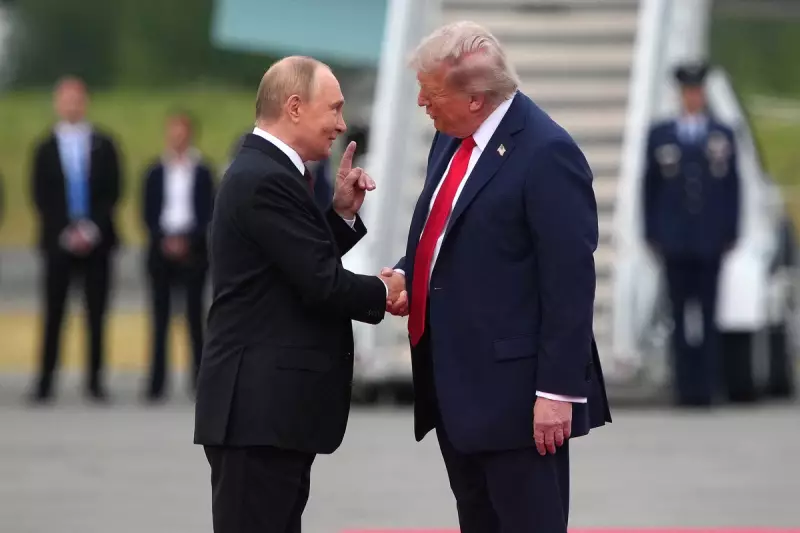
Donald Trump's proposed peace plan for Ukraine has ignited a political firestorm in Washington, with US senators accusing the former president of advancing a proposal that reads like a Russian "wish list" while European leaders scramble to coordinate their response.
Senators Reveal Private Concerns About Russian Influence
Three prominent US senators have publicly claimed that Secretary of State Marco Rubio privately described Trump's 28-point peace document as reflecting Russian priorities during confidential calls made while travelling to Geneva for negotiations. Independent Senator Angus King, Democratic Senator Jeanne Shaheen and Republican Mike Rounds told reporters at a security forum in Canada that Rubio had characterised the proposal as "not the administration's plan" but rather Moscow's desired outcome.
Senator Rounds delivered particularly scathing criticism, stating the text "looked more like it was written in Russian to begin with" and insisting the Trump administration wasn't responsible for the document's release in its current form. The lawmakers maintained the administration intended to use it merely as a starting point for negotiations rather than a final settlement.
The State Department swiftly denied the senators' account, with a spokesperson calling their claims "blatantly false." Secretary Rubio later took to social media platform X to assert that Washington had authored the proposal, describing it as "a strong framework for ongoing negotiations" that incorporated input from both Moscow and Kyiv.
European Leaders Rally Behind Ukraine
As the diplomatic dispute unfolded, European leaders gathered on the sidelines of the G20 summit in South Africa to coordinate their response to Trump's ultimatum. The US president has given Ukrainian leader Volodymyr Zelensky until Thursday to accept the proposal, which demands significant concessions including ceding additional territory to Russia, limiting Ukraine's military capabilities, and renouncing future NATO membership.
Prime Minister Sir Keir Starmer spoke directly with Trump late Saturday, expressing concerns from multiple leaders that the current deal would leave Ukraine dangerously vulnerable to future Russian aggression. The conversation followed Starmer's assurance to President Zelensky of Britain's "steadfast support for Ukraine" amid the mounting pressure.
European leaders issued a joint statement acknowledging the US proposal contained "important elements that will be essential for a just and lasting peace" but emphasised that the draft "will require additional work." The statement came from leaders of the EU, Germany, France, Britain, Canada, the Netherlands, Spain, Finland, Italy, Japan and Norway.
Zelensky's Defiant Stance and Republican Backlash
President Zelensky has taken a defiant position, pledging not to "betray his country" while offering alternatives to what many see as Kremlin-backed terms. In a dramatic appeal to his nation, the Ukrainian leader said Kyiv faced a choice between losing its dignity and freedom or Washington's crucial backing.
The proposal has also faced significant criticism from within Trump's own party. Nebraska Republican representative Don Bacon lambasted the plan, warning it could become the president's damaging "legacy" and asserting "they're pushing a surrender plan on Ukraine." Bacon joined several GOP lawmakers in criticising what they perceive as excessive concessions to Moscow.
The controversy deepened with revelations that Trump administration officials, including special envoy Steve Witkoff and Jared Kushner, met with blacklisted Kremlin official Kirill Dmitriev in Miami last month to discuss the peace framework. Dmitriev, a close ally of Vladimir Putin who leads the Russian Direct Investment Fund, has taken a leading role in talks with the US despite being under sanctions since 2022.
As national security advisers from Britain, France and Germany prepare to meet with EU, US and Ukrainian officials in Geneva on Sunday, the international community watches anxiously to see whether a compromise can be reached that protects Ukrainian sovereignty while ending the devastating conflict.