UK Government Prepares for Major Evacuation as Gulf Conflict Escalates
The United Kingdom is drawing up contingency plans for what could become one of the largest peacetime evacuations of British citizens, with approximately 94,000 people already registered with the Foreign Office amid escalating conflict in the Middle East. Foreign Secretary Yvette Cooper confirmed that around 300,000 British nationals are currently in Gulf countries targeted by Iranian drone and missile strikes, which have forced the closure of airspace across the region.
Chaos Across Gulf Airports as Strikes Intensify
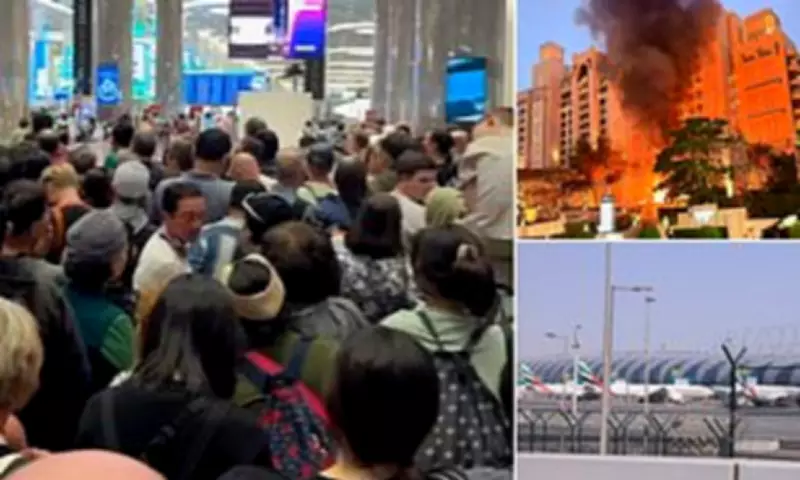
Airports in Dubai, Abu Dhabi, and Kuwait have become focal points of the crisis after being struck by Iranian retaliatory attacks following coordinated US and Israeli operations against Iran. The closure of airspace has created unprecedented travel disruption, with nearly 6,000 flights cancelled globally and approximately 30,000 delayed since hostilities began. At London Heathrow alone, 24 of 56 scheduled flights to the Middle East were cancelled yesterday, leaving thousands of passengers stranded.
The situation at Dubai International Airport, one of the world's busiest aviation hubs, has been described as "utter carnage" by stranded travelers. Amanda Murdoch, a 55-year-old from the Lake District who was transiting through Dubai from New Zealand, reported a "mass exodus" that took three hours to navigate through crowds of thousands. Emirates, Qatar Airways, and Etihad Airways—which collectively handle about 90,000 passengers daily through these airports—have suspended operations indefinitely.

Government Response and Evacuation Planning
Foreign Secretary Yvette Cooper emphasized the government's urgent response, stating: "We are setting up support systems because as well as the 94,000 people who have been in touch when we set up the 'register your presence' system, there's an estimated 300,000 British citizens in Gulf countries that have now been targeted by Iran." She confirmed that rapid deployment teams are being sent to the region to coordinate with local governments and travel industry partners.
The current advice for most British nationals remains to shelter in place and follow local guidance, but evacuation plans are being actively developed. These would involve land-based evacuation routes from the United Arab Emirates, Bahrain, Kuwait, and Qatar to Saudi Arabia if airspace closures persist. The scale of the operation is unprecedented for the Foreign Office's registration system, potentially surpassing recent evacuations from Afghanistan and previous Middle East crises.
Human Impact and Celebrity Accounts
The conflict has affected diverse groups including holidaymakers, business travelers, transit passengers, and long-term expatriates. Among those caught in the crisis are several British celebrities who have relocated to Dubai, including former Apprentice star Luisa Zissman, Formula One heiress Petra Ecclestone, and Love Island personality Arabella Chi. They have shared harrowing accounts of what Ecclestone described as "one of the most scary, worst nights actually of my life," with constant explosions heard as air defense systems intercepted incoming missiles.
Petra Ecclestone's husband, Sam Palmer, acknowledged the psychological toll, particularly on children: "The kids are scared. We're scared. I've never been in a missile attack before." Meanwhile, authorities in Abu Dhabi confirmed that falling debris from an intercepted drone strike at Zayed International Airport killed one person and injured seven others, with four additional staff injured at Dubai International Airport.
Broader Regional Context and Future Implications
The current crisis follows Iran's launch of hundreds of missiles and suicide drones across the Middle East in retaliation for the assassination of Supreme Leader Ayatollah Ali Khamenei in joint US-Israeli strikes. Tehran has vowed to unleash its "most intense offensive operation in history," with strikes targeting not only military installations but also tourist hotspots like the Burj Al Arab and Palm Jumeirah in Dubai.

As the situation continues to evolve, the UK government faces logistical challenges comparable to the 2021 Afghanistan evacuation, though potentially involving significantly larger numbers. The Foreign Office continues to urge British nationals in Bahrain, Israel, Palestine, Qatar, and the UAE to register their presence online for updates and assistance, while working on "every possible option" to ensure citizens can return home safely.