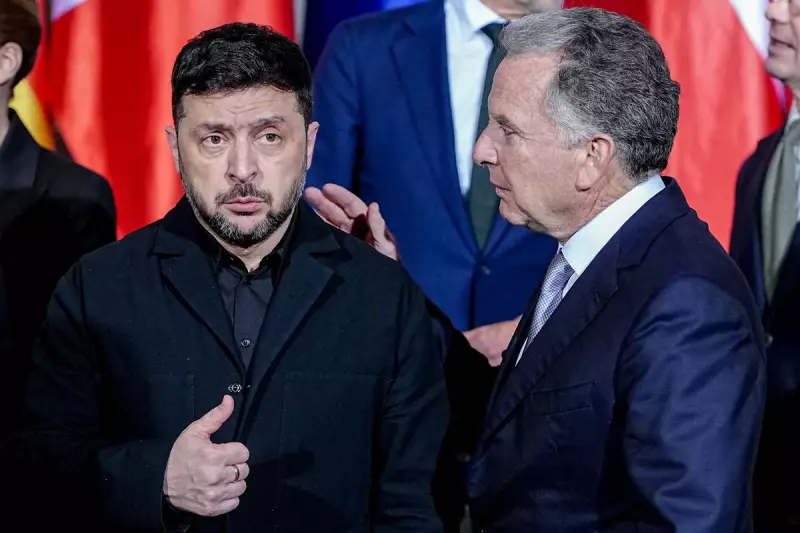
Following two days of high-stakes negotiations in Berlin, Ukrainian President Volodymyr Zelensky has struck a notably positive tone, suggesting a framework for ending the war with Russia is within reach. The talks, held with US special envoy Steve Witkoff, have centred on the security assurances Kyiv requires to consider a peace agreement.
Security Guarantees vs. Territorial Stalemate
The discussions yielded a significant development: the United States has reportedly offered Ukraine security protections modelled on NATO's Article 5 collective defence clause. European allies have concurrently proposed fronting a 'multinational force' from a Coalition of the Willing, backed by US support. This represents a major diplomatic win for Kyiv, which has long argued that ironclad guarantees must precede any discussion on land.
However, the path to peace is blocked by a familiar and formidable hurdle: territory. President Zelensky, bound by the Ukrainian constitution and his own public pledges, has stated he cannot and will not cede land. Russia, for its part, remains unyielding. On Tuesday, its deputy foreign minister explicitly rejected any concession on the Donbas, Crimea, or the historically claimed region of 'Novorossiya'. The Kremlin also continues to oppose any deployment of what it labels 'NATO peacekeepers' on Ukrainian soil.
Key Concessions and Unresolved Points
In a move signalling his commitment to negotiations, Zelensky offered during the talks to relinquish Ukraine's ambition to join NATO. Analysts view this as a substantial concession designed to contrast with Moscow's rigid stance. Meanwhile, a potential compromise on the occupied Zaporizhzhia nuclear power plant is reportedly close, involving a complex arrangement for sharing the electricity it produces, though practical details remain unclear.
On the economic and political front, US officials indicated that Russia would accept Ukraine's future membership in the European Union as part of a final settlement. While some European diplomats express scepticism over the proposed timeline, top EU figures have acknowledged that eventual membership would itself constitute a significant security guarantee for Ukraine.
A Cautious Road Ahead
Despite the progress, the atmosphere is one of cautious optimism. US officials claim 90 per cent of issues in a draft 20-point peace plan are now resolved and express confidence that even the territorial deadlock holds room for movement. President Donald Trump echoed this sentiment, stating a deal is "closer than ever" following a lengthy call with Zelensky.
The Ukrainian leader, while hailing the advances made in Berlin, acknowledged the core dilemma remains painfully unresolved. "Russia wants what it wants, and we can't go any further," he told reporters. The next potential step could see talks shifting to the United States as early as this weekend, but any final agreement still hinges on a response from a Kremlin that has yet to see the latest proposals.