Ukraine has significantly increased its military operations against Russian energy infrastructure and drone manufacturing sites in recent weeks. This escalation comes as diplomatic efforts to end the ongoing four-year conflict have failed to yield any substantial progress.
Peace Talks Stall Without Russian Participation
President Volodymyr Zelenskiy confirmed that Ukrainian and United States delegations concluded a second day of negotiations in Florida on Sunday, focusing on strategies to terminate the war. Notably, Russian representatives were absent from these discussions, which commenced on Saturday. Originally, the talks were scheduled to take place in Abu Dhabi with Russian attendance expected.
Strategic Targeting of Energy Facilities
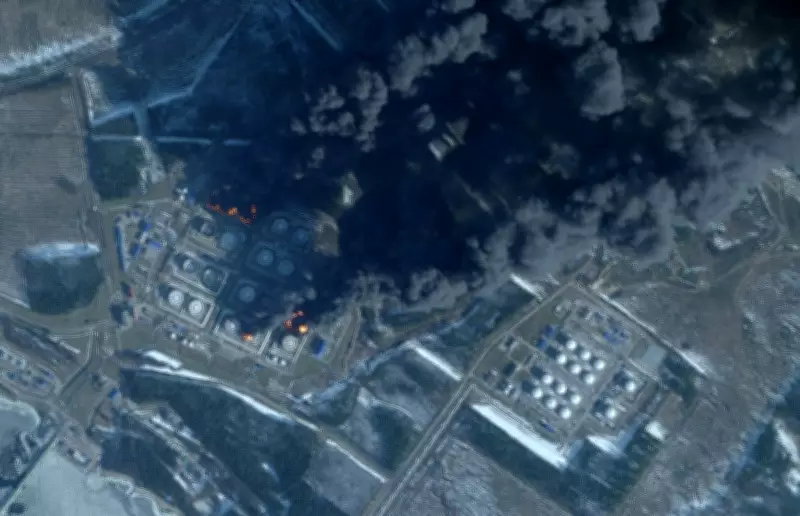
The Ukrainian military has deliberately targeted Russian oil refineries and related energy assets, citing the critical role these sites play in sustaining Russia's war economy. Additionally, drone production facilities have been attacked due to the severe threats these unmanned aerial vehicles pose to Ukrainian civilians and critical infrastructure.

Major Refinery Attacks and Their Impacts
Saratov Oil Refinery: Controlled by Rosneft, this facility was struck by a drone on March 21. The attack forced the shutdown of its crude distillation unit. In 2024, the refinery processed 5.8 million metric tons of oil, representing 2.2 percent of Russia's total oil refining capacity.
Ilsky Refinery: Located in southern Russia, a drone assault on February 17 triggered a fire that was fully extinguished by the following day. This export-oriented plant has an annual processing capacity of 6.6 million tons of oil.
Volgograd Refinery: Owned by Lukoil, this refinery was completely shut down on February 11 after drone attacks. The strikes damaged the primary oil processing unit CDU-1, which handles 18,600 tons per day, accounting for approximately 40 percent of the refinery's total output. In 2024, it processed 13.7 million tons of oil.
Ukhta Refinery: Also owned by Lukoil, a drone attack on February 12 caused a fire at this northern Russian facility. The primary processing unit CDU-1, with a daily capacity of about 6,000 tons or one-third of the refinery's total, was affected. In 2025, the refinery processed around 3 million tons of oil.
Afipsky Refinery: In southern Russia, a drone attack on January 21 resulted in a fire at this mostly export-focused refinery. It processed 7.2 million metric tons of crude oil, equivalent to 144,000 barrels per day, in 2024.
Disruptions to Ports and Tankers
The Baltic Sea ports of Ust-Luga and Primorsk resumed crude oil loadings on Monday and Tuesday, respectively, after suspending operations due to drone attacks. Furthermore, Russia's oil pipeline monopoly Transneft reduced crude intake by approximately 250,000 barrels per day following a Ukrainian drone strike on a pumping station on February 23, which serves major oil hubs and ports.
In a separate incident on January 13, drones struck two oil tankers in the Black Sea, including one chartered by US oil major Chevron, as they were en route to a terminal on the Russian coast.