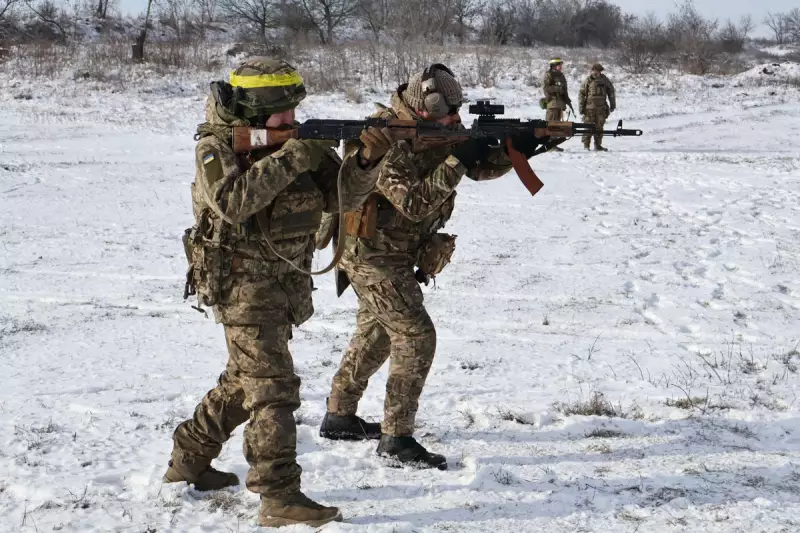
Ukraine is enduring a bitterly cold winter following sustained Russian attacks on its critical energy infrastructure, with peace efforts appearing to be overshadowed by other geopolitical concerns at the World Economic Forum in Davos.
Kyiv Faces Severe Heating and Power Crisis
Ukrainian President Volodymyr Zelenskyy has confirmed that approximately 4,000 buildings in Kyiv remain without heating, while nearly 60% of the capital city is experiencing power outages. This situation follows days of intense Russian bombardment targeting Ukraine's power grid, which has left millions vulnerable during one of the coldest winters in recent years.
Temperatures in Kyiv have plummeted to as low as minus 20 degrees Celsius (minus 4 degrees Fahrenheit), compounding the hardship for Ukrainian citizens almost four years after Russia launched its full-scale invasion. The combination of freezing conditions and damaged infrastructure has created a humanitarian emergency in the capital and surrounding regions.

Peace Efforts Stalled Despite Diplomatic Push
A yearlong initiative by the Trump administration to halt the fighting has yet to yield any significant breakthrough, despite the American president issuing multiple deadlines. U.S. special envoy Steve Witkoff announced plans to discuss peace proposals with Russian President Vladimir Putin and hold talks with a Ukrainian delegation, stating "We need a peace" during the World Economic Forum in Davos, Switzerland.
However, discussions about Ukraine's defense and recovery appear likely to be sidelined at Davos, where a dispute over Greenland's future has largely eclipsed other transatlantic issues. Zelenskyy indicated last week that his envoys would attempt to finalize documents with U.S. officials relating to postwar security guarantees and economic recovery, potentially for signing in Davos this week.
In a significant development, the Ukrainian president announced he would not be traveling to Switzerland, choosing instead to focus on restoring power within Ukraine. This decision underscores the severity of the domestic crisis facing the nation.
Ukrainian Government Responds to Energy Emergency
Ukraine's Cabinet of Ministers is allocating 2.56 billion hryvnias (approximately $60 million) from a reserve fund to purchase emergency generators, according to Prime Minister Yuliia Svyrydenko. This substantial financial commitment reflects the government's urgent efforts to address the energy shortfall affecting millions of citizens during the harsh winter months.
NATO Calls for Increased Military Support
NATO Secretary-General Mark Rutte has urged the 32-nation alliance's military chiefs to press their national governments to supply desperately needed air defense systems to Ukraine. In a video message to top military officials meeting at NATO's Brussels headquarters, Rutte emphasized the critical nature of the situation, stating "Look deep into your stockpiles to see what more you can give to Ukraine, particularly air defense interceptors. The time really is now."
This appeal comes as Ukraine continues to face relentless aerial attacks from Russian forces, with the Ukrainian air force reporting that Russia launched 97 drones and a ballistic missile at Ukraine overnight.
Civilian Casualties and Regional Impact
The human cost of the conflict continues to mount, with attacks in the central Dnipropetrovsk region killing a 77-year-old man and a 72-year-old woman, according to regional military administration head Oleksandr Hanzha. Meanwhile, Russia's Defense Ministry claimed that air defenses downed 75 Ukrainian drones over several Russian regions.
The conflict's impact has extended beyond Ukraine's borders, with international airports in Krasnodar, Sochi, Gelendzhik, and Saratov briefly suspending flights overnight due to drone activity. In Adygea, more than 200 kilometers from the Ukrainian border, a Ukrainian drone reportedly caused a fire at an apartment building that injured 11 people, including two children, according to Governor Murat Kumpilov.
As Ukraine battles both the elements and continued military aggression, the international community faces increasing pressure to address both the immediate humanitarian crisis and the longer-term diplomatic challenges surrounding the conflict.