Striking and surreal images have emerged showing an unexploded Iranian missile embedded in the ground of a remote sheep field in Syria. This menacing projectile forms part of a massive barrage launched by Iran over recent days, a direct retaliation for a devastating joint United States and Israeli air assault. That coordinated military operation resulted in the death of Iran's Supreme Leader, Ayatollah Ali Khamenei, on Saturday morning, triggering a severe regional escalation.
Iran's Expanding Retaliatory Campaign
In response to the killing of its leader, the Iranian regime has executed dozens of strikes targeting United States assets and allied nations throughout the Gulf region. These attacks have focused on Israel, the United Arab Emirates, Kuwait, Qatar, and Bahrain. However, the scope of retaliation has broadened significantly in recent hours. Iran has now expanded its target list to include the United Kingdom's Royal Air Force Akrotiri airbase located in Cyprus. In a separate incident, a NATO defensive system successfully intercepted and shot down another Iranian missile after it violated Turkish airspace.
Unexploded Ordnance in Rural Syria
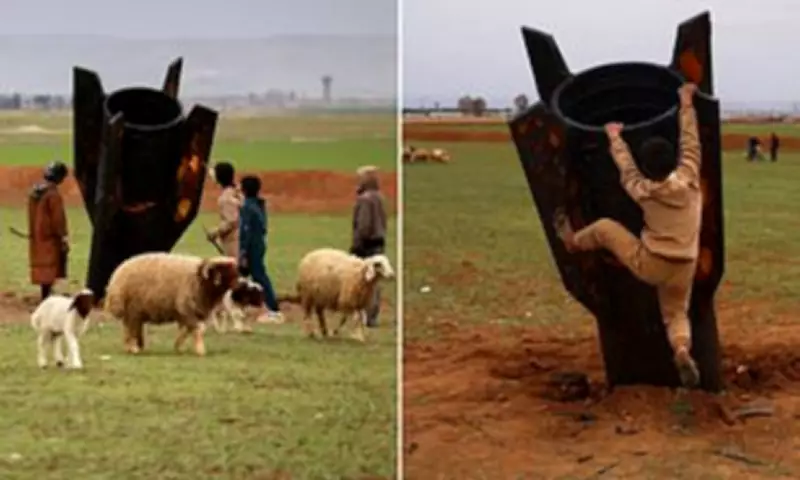
Across the border in Syria, the national government has taken the precaution of closing its airspace. Despite this measure, there have been multiple reports of debris from Iranian missiles, primarily intended for Israeli targets, falling to earth on Syrian territory. On Wednesday, local residents discovered one particularly intact piece of ordnance in an open field near Qamishli, on the outskirts of eastern Syria. The unexploded missile created a bizarre scene, landing amidst a flock of grazing sheep who appeared largely unperturbed by the dangerous new arrival.
Young shepherd boys, seemingly unaware of the grave danger, quickly rushed over to inspect the strange object. They were seen casually prodding and examining the missile. One particularly curious youngster was even photographed attempting to climb into the missile's warhead section after it had buried itself into the soft earth. The device in question is identified as a Shahed drone missile, capable of travelling at speeds up to 115 miles per hour while carrying a substantial 90-kilogram warhead. This drone model is engineered to strike targets as far as 1,600 miles away and can support a maximum payload of 400 kilograms.
Widespread Travel Disruption Strands Britons
As the intense military action continues into its sixth consecutive day, the repercussions are being felt far beyond the immediate conflict zones. Thousands of British citizens who were living, working, or simply travelling through the Middle East have found themselves effectively stranded. Widespread flight cancellations and the closure of major airports have created a significant travel crisis. In the United Arab Emirates, several iconic tourist and expatriate hotspots have been struck, including the prestigious Fairmont The Palm hotel and the world-renowned Burj Al Arab hotel.
Furthermore, Dubai International Airport and Abu Dhabi's Zayed International Airport have also come under attack. Tragically, one person was reported killed in the assault on Zayed International Airport. In light of the extreme and volatile situation, the United Kingdom's Foreign, Commonwealth & Development Office has issued urgent advice, warning all British nationals against any non-essential travel across the entire Middle East region.
Government Response and Further Threats
Prime Minister Keir Starmer has addressed the growing crisis, confirming that repatriation efforts for stranded citizens will continue. The government has organised two chartered aircraft that are scheduled to depart from Oman in the coming days to assist with the evacuation. Meanwhile, the Iranian regime has issued further threats, specifically targeting commercial and military vessels approaching the critical Strait of Hormuz. This narrow chokepoint at the mouth of the Persian Gulf is a vital global shipping lane. Intelligence reports suggest Iran has already launched multiple attacks in this maritime area, heightening fears of a broader regional conflagration that could severely impact global trade and energy supplies.