The most significant diplomatic vacancy globally remains conspicuously empty, with President Donald Trump demonstrating no urgency to appoint a new US ambassador to Russia. This glaring omission has transformed the competition for this prestigious diplomatic posting into a real-time audition reminiscent of a reality television show, complete with scheming, rivalries, and inevitable casualties.
A Diplomatic Void Amid Ongoing Conflict
The absence of a confirmed US ambassador to Russia creates a substantial void in one of the world's most crucial diplomatic relationships. This vacancy persists as Russia's invasion of Ukraine enters its fourth year, with Congress having authorized over $170 billion in total aid since the conflict began. Without a designated ambassador, the United States lacks a direct, high-level channel to Moscow for de-escalation and conflict resolution efforts.
"This is a pattern, especially in the Trump administration – special envoys big-footing the ambassadors," a diplomatic source familiar with the region told the Daily Mail. "It is shocking that we are already in April and we don't have an ambassador to one of the most important countries in the world."

The Witkoff Factor
Operating as a special envoy, Steve Witkoff has circumvented decades of established State Department protocol to become the primary – and perhaps sole – conduit between Washington and Moscow. Working alongside his unofficial negotiating partner Jared Kushner, Witkoff has reportedly logged eight face-to-face meetings with Russian President Vladimir Putin, a level of access that would make career diplomats envious.
"There's nobody in Moscow that does anything without his blessing — so why does he need an interlocutor getting in the way?" one former ambassador familiar with the situation remarked.
Diplomatic insiders reveal that Witkoff is "highly comfortable" with the current arrangement and has privately expressed concerns that appointing a heavyweight diplomat could dilute his direct line to the Russian president. Despite official denials, multiple sources indicate that all roads lead back to Witkoff, who is reportedly favored to maintain his current influential role.
Failed Candidates and Internal Politics
The search for a permanent ambassador has already eliminated several prominent candidates. Among those considered were a veteran Wall Street financier with deep Kremlin connections and a seasoned political operative who held senior intelligence and envoy roles across both Trump administrations – both ultimately removed from consideration.
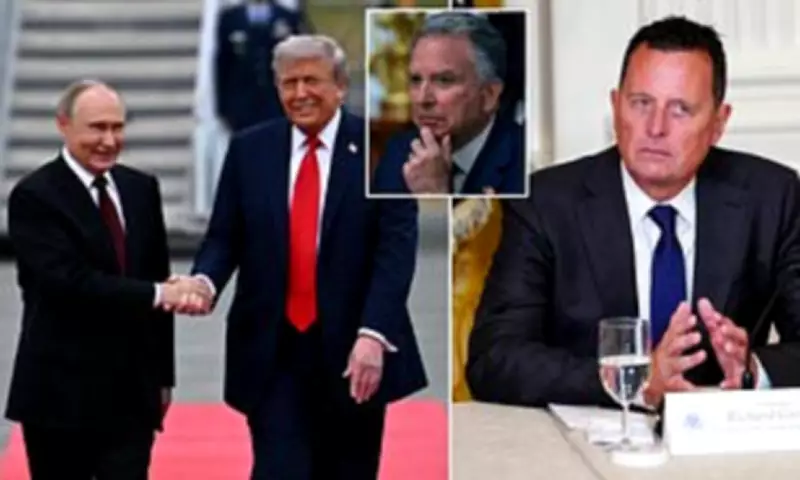
Bob Foresman, a seasoned businessman with decades-long ties to the Kremlin, was reportedly once the frontrunner for the position. Foresman previously served as Vice-Chairman of UBS Investment Bank and Deputy Chairman of Renaissance Capital between 2006 and 2009, and earlier led investment banking for Russia at Dresdner Kleinwort Wasserstein from 1997 to 2000. According to two diplomatic sources, Foresman was sidelined because the administration didn't want him, with Witkoff reportedly telling President Trump he didn't need the assistance.
Ric Grenell, the former acting director of the renamed Trump-Kennedy Center, floated his interest in the Moscow role to close colleagues, according to two sources close to Grenell. However, given Putin's regime's extreme anti-LGBTQ stance, sources suggest this consideration was never taken seriously. Grenell is now said to be holding out for a "top national security job" instead.
An Unnecessary Position?
As internal jockeying continues, the reality in Moscow remains unchanged. "There is truthfully no ambassadorial appointee who's going to have top Putin ally Kirill Dmitriev calling the ambassador instead of Steve and Jared," said another former ambassador familiar with the region. "There is no rush to fill that role because it has now been deemed unnecessary."
The US Ambassador's seat in Moscow has been vacant for nearly nine months following the departure of Lynne Tracy on June 27, 2025. Tracy, the first woman to hold the post, concluded her turbulent 29-month tenure that began in January 2023, during which she navigated Putin's suspension of the New START treaty and a volatile era of hostage diplomacy.

White House Response and Ongoing Implications
Anna Kelly, White House spokeswoman, responded to these reports by stating: "This is totally fake news. Special Envoy Witkoff has not put his thumb on the scale in any way for a US Ambassador position in Russia. These personnel decisions are made by the President, and the Special Envoy is focused on bringing the Russians and Ukrainians together to facilitate a peace deal."
Despite this official denial, diplomatic sources maintain that the search isn't stalled by a lack of qualified candidates but rather by the requirement that any appointee must align with Witkoff's vision for America's most sensitive back-channel diplomacy. As Witkoff and Kushner's back-channel diplomacy operates at full capacity, the broader US-Russia relationship risks falling into what observers describe as a "black hole of neglect."
A source familiar with the selection process notes the particular challenges of this posting: "Certain ambassadorial positions are considered more desirable than others. This is considered a hardship post by the State Department." With the position remaining unfilled and no apparent urgency to appoint a successor, the United States continues to navigate one of its most critical international relationships without a formal, confirmed ambassador in place.