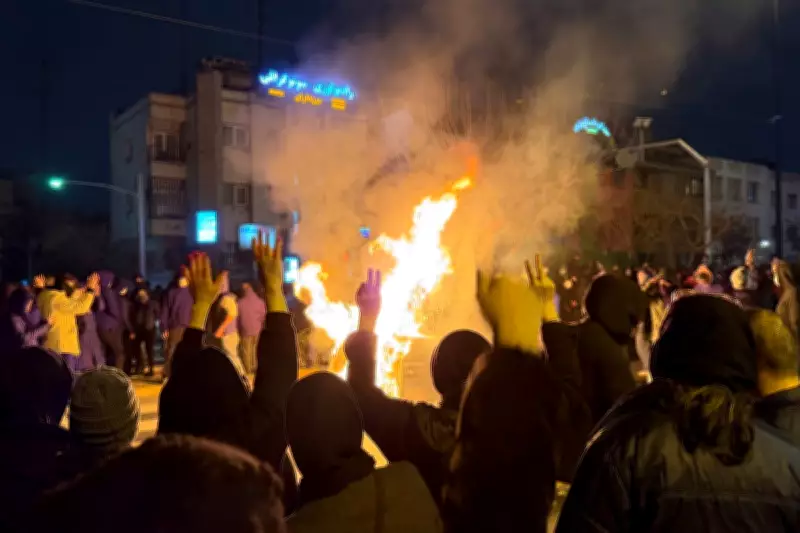
The Trump administration has taken decisive action against Iran's interior minister, imposing significant sanctions on Friday over his alleged role in the violent repression of nationwide protests. Eskandar Momeni, who oversees Iran's law enforcement forces, stands accused of being responsible for the deaths of thousands of peaceful demonstrators who have challenged Tehran's theocratic government.
Coordinated International Pressure
This latest move represents coordinated international pressure, with the European Union imposing its own sanctions against Momeni just one day earlier on Thursday. The EU measures also targeted members of Iran's judicial system and other high-ranking officers involved in what they describe as "the violent repression of peaceful protests and the arbitrary arrest of political activists and human rights defenders."
Expanding Sanctions Network
The Treasury Department's Office of Foreign Assets Control simultaneously imposed sanctions on Babak Morteza Zanjani, an Iranian investor accused of embezzling billions of dollars in Iranian oil revenue for government benefit. Two digital asset exchanges linked to Zanjani that have processed substantial volumes of funds were also penalised in this comprehensive action.
In a significant development, the EU has agreed to list Iran's paramilitary Revolutionary Guard as a terrorist organisation, creating additional symbolic pressure on Tehran despite the practical limitations of such designation.
Broader Targeting of Iranian Networks
The latest American sanctions package extends beyond individual officials to include the secretary of the Supreme Council for National Security, whom Treasury officials accuse of being among the first to advocate violence against Iranian protesters. Additionally, the measures target eighteen individuals and companies allegedly participating in money laundering operations connected to Iranian oil sales through a shadow banking network of sanctioned financial institutions.
Official Statements and Consequences
Treasury Secretary Scott Bessent issued a strongly worded statement declaring, "Like rats on a sinking ship, the regime is frantically wiring funds stolen from Iranian families to banks and financial institutions around the world. Rest assured, Treasury will act." He further emphasised the department's commitment to "continue targeting Iranian networks and corrupt elites that enrich themselves at the expense of the Iranian people."
The practical consequences of these sanctions are substantial, denying targeted individuals and firms access to any property or financial assets held in the United States, restricting their travel to America, and prohibiting U.S. companies and citizens from conducting business with them.
Context of Unrest and Response
The nationwide protests initially emerged in late December, sparked by economic difficulties before evolving into broader challenges against the Islamic Republic's authority. The subsequent crackdown has reportedly resulted in more than six thousand fatalities according to activist groups, while Iranian officials and state media consistently label demonstrators as "terrorists."
These sanctions represent the latest in a series of measures by both the United States and European Union targeting high-ranking Iranian officials over the government's response to the protest movement that has shaken the nation's political foundations.