US and Iran Exchange Threats of Expanding Middle East War
The United States and Iran have engaged in a dangerous exchange of threats to widen the ongoing Middle East conflict, following strikes near sites associated with nuclear programs. This escalation comes as Iran and its ally, the Lebanese militant group Hezbollah, intensify pressure on Israel with attacks across the country's northern and southern regions.
Strikes Near Nuclear Sites Heighten Tensions
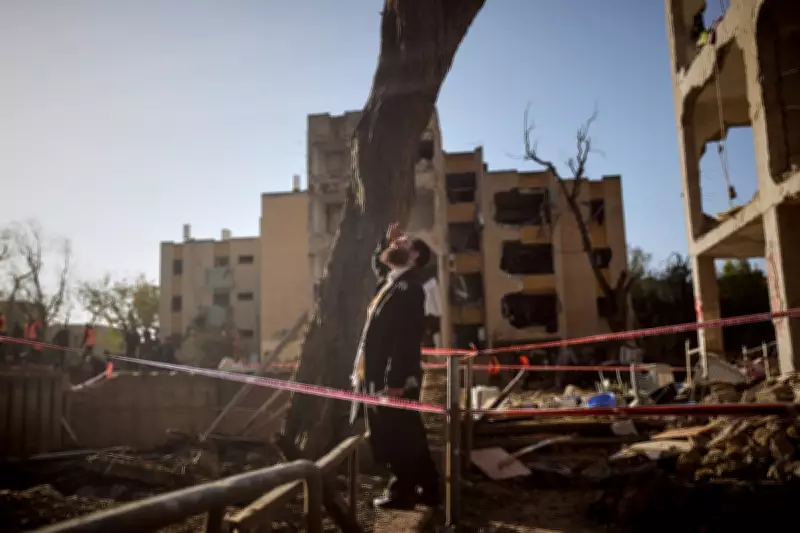
On Sunday, Iran and Hezbollah launched intense attacks on Israel, targeting areas in the north and south. This offensive followed renewed threats from both the US and Iran to expand their military targets in the war, now entering its fourth week. As Israel faced this renewed fire, top Israeli leaders visited the Negev Desert, home to the country's primary nuclear research center. Iranian barrages had struck two towns in this region on Saturday, damaging apartment buildings and injuring numerous people in Arad and Dimona.
Prime Minister Benjamin Netanyahu toured Arad, describing it as a "miracle" that no fatalities occurred there. He asserted that Israel and the US were progressing toward achieving the war's objectives and called for international support. Earlier, President Donald Trump issued a stark warning, stating the US would destroy Iran's power plants if Tehran failed to fully reopen the Strait of Hormuz within 48 hours. In response, Iran's parliament speaker, Mohammad Bagher Qalibaf, threatened retaliation against American and Israeli energy and infrastructure across the region if the US followed through.

Strait of Hormuz Blockade and Global Impact
Iran has effectively closed the Strait of Hormuz, a critical chokepoint through which approximately one-fifth of the world's oil supply passes. Attacks on commercial vessels and threats of further strikes have halted nearly all tanker traffic, forcing major oil producers to reduce output due to blocked export routes. This blockade poses significant challenges for the US and its allies in Europe and Asia, who depend heavily on Persian Gulf supplies to meet energy needs for factories, vehicles, and homes.
To alleviate pressure on energy prices, the US has lifted some sanctions on Iranian oil at sea. However, Trump's ultimatum to Iran emphasized that failure to open the strait would result in the destruction of Iran's power plants, starting with the largest. Qalibaf countered on social media, warning that targeting Iran's infrastructure would lead to the irreversible destruction of vital regional facilities, including energy and desalination plants.
Nuclear Concerns Amidst Escalating Conflict
Iran claimed its strikes in the Negev Desert were retaliation for an earlier attack on its main nuclear enrichment site in Natanz, as reported by state-run media. Tehran hailed this as a demonstration of strength, despite Israeli military assertions that Iranian missile launches have decreased in frequency since the war began. Qalibaf suggested that Israel's inability to intercept missiles in the heavily protected Dimona area indicated a new phase in the battle.
Dimona is located about 20 kilometers west of the nuclear research center, with Arad approximately 35 kilometers to the north. Soroka Hospital, southern Israel's main medical facility, received at least 175 wounded from these towns, according to deputy director Roy Kessous. While Israel is widely believed to possess nuclear weapons, it neither confirms nor denies their existence. The UN nuclear watchdog reported no damage to the Israeli center or abnormal radiation levels.
Humanitarian Toll and Regional Fallout
In Iran, the war's death toll exceeded 1,500 on Saturday, as per state media citing the health ministry. In Israel, 15 people have been killed by Iranian strikes, with additional civilian casualties in the occupied West Bank and Gulf Arab states. Non-combat accidents have also occurred, including a US refueling plane crash in western Iraq that killed six service members and a Qatari military helicopter crash blamed on a technical malfunction, resulting in seven fatalities.

Hezbollah claimed responsibility for an airstrike on Sunday that killed a man in northern Israel, marking the first fatality there from such attacks. The group initiated strikes on Israel soon after the war erupted, citing retaliation for the killing of Iran's Supreme Leader Ayatollah Ali Khamenei. Israel has responded with bombardments in Lebanon, targeting Hezbollah and expanding its presence in southern Lebanon, while amassing troops near the border. Lebanese authorities report that Israeli strikes have killed over 1,000 people and displaced more than 1 million.
Iran also reported that Saturday's strike at Natanz hit a hospital in nearby Andimeshk, forcing the evacuation of patients and doctors. Health Ministry spokesman Hossein Kermanpour shared images showing structural damage and broken glass, noting that patients were transferred to another city. The Pentagon declined to comment on the Natanz strike, which has been targeted multiple times in recent conflicts.
These developments signal a dangerous new direction in the Iran war, launched by the US and Israel on February 28, despite Trump's earlier mention of considering "winding down" operations. The conflict has already claimed hundreds of lives, disrupted the global economy, and caused oil prices to surge, with Gulf Arab states like Saudi Arabia and the United Arab Emirates working to intercept new Iranian strikes.