The United States embassy in Jerusalem made a significant security announcement on Friday, authorizing the departure of all non-emergency government personnel and their family members from Israel. This decision, attributed to mounting safety risks, comes amid escalating military tensions in the region and strained diplomatic negotiations with Iran.
Immediate Evacuation Orders Issued
In a formal statement posted on its official website, the embassy declared: 'On February 27, 2026, the Department of State authorized the departure of non-emergency US government personnel and family members of US government personnel from Mission Israel due to safety risks.' The advisory strongly recommended that individuals 'may wish to consider leaving Israel while commercial flights are available.'
US Ambassador Mike Huckabee reinforced this urgency through an email to embassy staff, obtained by the New York Times. He explicitly instructed those wishing to leave to 'should do do TODAY', emphasizing that the primary objective should be securing immediate departure from the country, with subsequent travel arrangements to Washington DC being secondary.

Military Buildup Reaches Unprecedented Scale
This evacuation order coincides with the largest United States military deployment in the Middle East in decades. The USS Gerald R. Ford, recognized as the world's largest aircraft carrier, is scheduled to arrive off the northern coast of Israel on Friday as part of this strategic buildup.
Naval and Aerial Reinforcement
Washington currently maintains an impressive naval presence in the region, comprising:
- Two aircraft carriers (including USS Abraham Lincoln)
- Nine destroyers
- Three additional combat ships
The simultaneous deployment of two aircraft carriers, each carrying dozens of warplanes and crewed by thousands of personnel, represents an exceptionally rare military posture.
Complementing this naval power, the United States has positioned advanced F-22 Raptor fighter jets in Israel, ready for immediate deployment if required.
Diplomatic Negotiations on the Brink
President Donald Trump has repeatedly threatened Iran with military action unless Tehran agrees to a comprehensive deal addressing multiple security concerns. These threats follow last year's US strikes on Iranian targets and come as diplomatic negotiations appear increasingly fragile.
Failed Talks and Divergent Demands
Recent diplomatic efforts collapsed in Geneva on Thursday amid fundamental disagreements over Iran's nuclear program. According to The Wall Street Journal, negotiations broke down over critical issues including uranium enrichment cessation and dismantlement of nuclear facilities.
Iran responded on Friday by demanding that the United States abandon its 'excessive demands', dampening optimism that had emerged from Oman-mediated talks viewed as a final attempt to prevent armed conflict.
Special Envoy Steve Witkoff and presidential son-in-law Jared Kushner are leading the American delegation in what appears to be a last-ditch diplomatic push. President Trump had previously given Iran a fifteen-day deadline on February 19 to reach an agreement, insisting that any deal must address not only nuclear activities but also missile programs and support for militant groups.
New Military Capabilities Deployed
In a significant escalation, Washington has approved deployment of Task Force Scorpion, an experimental drone unit featuring autonomous, self-detonating aircraft. Bloomberg reports these kamikaze drones, successfully tested in the Arabian Gulf last December at approximately $35,000 per unit, represent part of Trump's massive military buildup—the largest since the 2003 Iraq invasion.
Advanced Drone Capabilities
US Central Command spokesman Tim Hawkins explained: 'We established the squadron last year to rapidly equip our warfighters with new combat drone capabilities that continue to evolve.' These Arizona-produced drones are designed for:

- One-way attack missions
- Reconnaissance operations
- Maritime strike capabilities
With extensive operational range and autonomous functionality, these advanced drones are reportedly intended to target Iranian nuclear facilities, transportation networks, and missile launch sites should diplomatic efforts fail.
Presidential Ultimatum
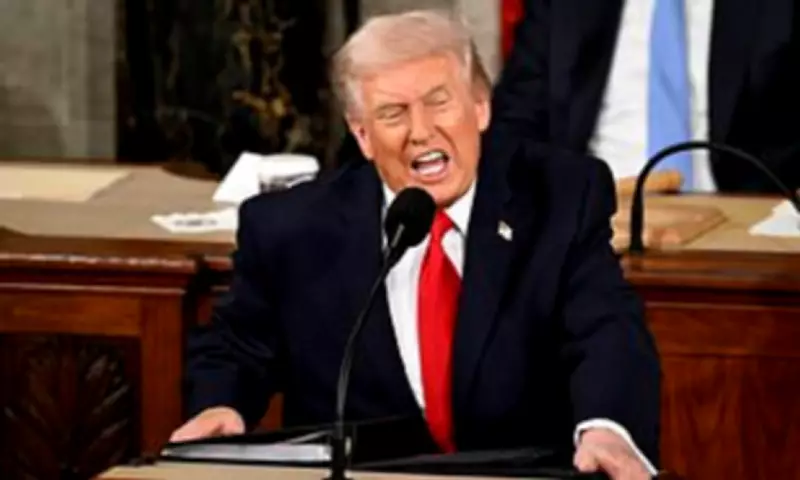
In his recent State of the Union address, President Trump articulated his dual-track approach: 'My preference is to solve this problem through diplomacy.' However, he issued a stark warning: 'I will never allow the world's number one sponsor of terror to have a nuclear weapon. Can't let that happen.'
The President emphasized that while negotiations continue, Iran must explicitly commit to never developing nuclear weapons—a concession Tehran has thus far refused to make publicly. With evacuation orders in effect, military assets positioned, and diplomatic channels strained, the region faces one of its most precarious security situations in recent memory.