Unprecedented Joint US-Israeli Operation Targets Iran for Regime Change
The United States and Israel have initiated an unprecedented joint military operation against Iran, commencing with a comprehensive bombing campaign explicitly aimed at regime change. This coordinated assault marks a significant escalation in tensions between the nations, with immediate and far-reaching consequences across the Middle East.
Widespread Strikes Hit Key Iranian Targets
Israeli fighter jets and American missiles executed hundreds of strikes across Iran, targeting vital security and political locations. Among the primary objectives were the residences of Iran's Supreme Leader, Ayatollah Ali Khamenei, and President Masoud Pezeshkian, alongside numerous weapons facilities dispersed throughout the country. The operation, dubbed Operation Lion's Roar by Israel, was described by an Israeli military official as intended to "degrade the regime's capabilities" and is projected to continue indefinitely.
Prior to any formal announcement, a barrage of Tomahawk missiles and F-16 aircraft were deployed towards hundreds of targets. The attacks concentrated on key security and political hubs in Tehran, including the supreme leader's compound, as well as ballistic missile storage sites on the country's peripheries. Satellite imagery from Airbus, released via Soar Atlas, confirms extensive damage and black smoke emanating from Khamenei's secure complex, indicating severe destruction within this critical administrative and residential area.

Civilian Casualties and Regional Escalation
The bombing campaign resulted in significant civilian casualties, with at least 51 fatalities and over 60 injuries reported from a strike on a girls' school in Minab, located in the southern Hormozgan province. This incident was verified by Reuters, which also confirmed footage from the scene. Notably, an Islamic Revolutionary Guard Corps base is situated in the same city, highlighting the proximity of military and civilian infrastructures.
Iran responded swiftly with retaliatory measures, launching missile waves at Israel and targeting US military bases in five Gulf countries: Qatar, Kuwait, the UAE, Bahrain, and Riyadh, Saudi Arabia. This action breached previous red lines that had excluded the Gulf region from direct conflict between Washington and Tehran. The Gulf states expressed outrage, condemning the attacks and reserving the right to respond, while the US conducted additional strikes on Iranian-backed Popular Mobilization Forces in Iraq, injuring several members.
Panic and Displacement in Urban Centres
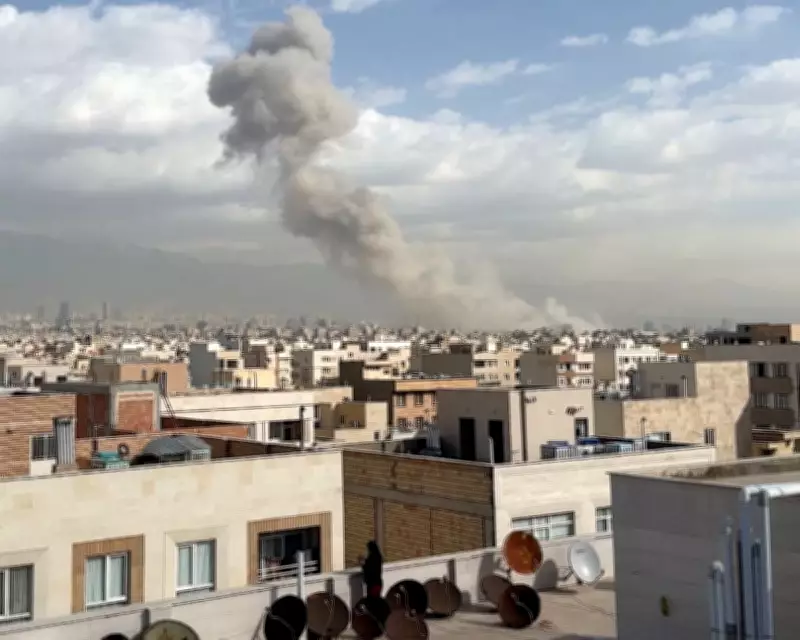
In Tehran, panic ensued as explosions rocked the densely populated city, prompting residents to flee for safety. Israeli military spokespeople advised Iranians to distance themselves from military and industrial facilities, while Iranian authorities instructed citizens to evacuate major cities, reminiscent of mass exoduses during previous conflicts. Smoke billowed over Tehran's skyline as people sought cover, with many security institutions located in residential areas increasing the likelihood of civilian casualties from large air-dropped bombs.
Simultaneously, Israelis spent much of the day in blast shelters as air-raid sirens sounded continuously due to incoming Iranian missiles. Israel's Iron Dome defence system intercepted most projectiles aimed at populated areas, though the psychological impact was profound. The conflict's rapid expansion across the Middle East, including explosions reported in Damascus, south Lebanon, and Amman, underscores the dizzying speed at which the situation has regionalised, surpassing the scope of previous conflicts within hours.
This joint operation represents a critical juncture in Middle Eastern geopolitics, with implications for regional stability and international relations. The targeting of high-profile Iranian figures and infrastructure signals a bold strategic shift, while the civilian toll and retaliatory strikes highlight the escalating humanitarian and security crises.