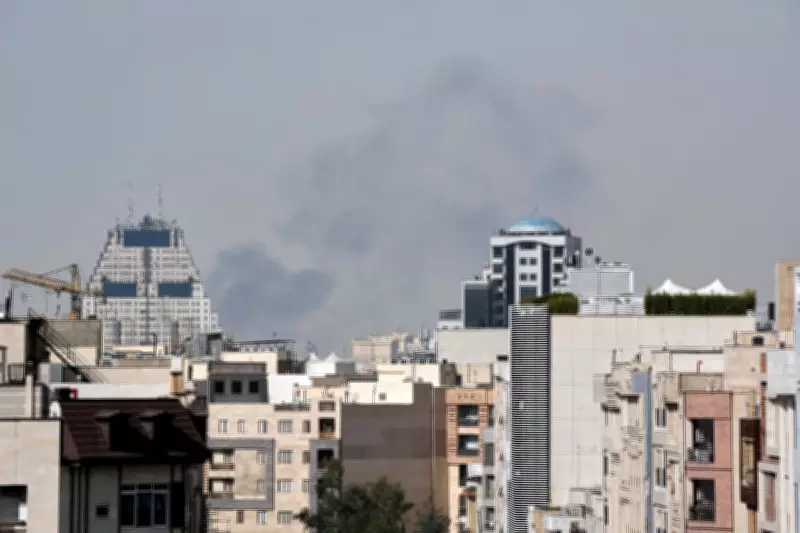
Major U.S.-Israel Military Strikes Target Iran's Nuclear and Military Infrastructure
In a significant escalation of tensions in the Middle East, the United States and Israel launched coordinated military attacks on Iran on Saturday, 28 February 2026. President Donald Trump described the operation as a massive effort to destroy Iran's military capabilities and eliminate the threat of it developing a nuclear weapon.
Iran's Immediate Retaliation and Regional Impact
Iran responded swiftly to the assaults, with its Foreign Ministry vowing to defend the homeland. The Revolutionary Guard launched counterattacks, firing drones and missiles at Israel and striking U.S. military installations in Bahrain, Kuwait, and Qatar. According to Iran's state-run IRNA news agency, at least 40 people were killed at a girls' school in southern Iran due to the Israeli-U.S. strikes. Additionally, shrapnel from an Iranian missile attack on the capital of the United Arab Emirates resulted in one fatality, as reported by state media.
The attacks have caused widespread disruption across the region. Bahrain confirmed that a missile attack targeted the U.S. Navy's 5th Fleet headquarters, while witnesses reported sirens and explosions in Kuwait, home to U.S. Army Central. Explosions were also heard in Qatar, where Al Udeid Air Base hosts thousands of service members. In response, Iraq and the United Arab Emirates closed their airspace, and sirens sounded in Jordan.

Details of the Initial Strikes and Military Strategy
Explosions in Tehran marked the first signs of the attack, with Israel announcing it had launched strikes shortly after. One of the initial strikes hit near the offices of Supreme Leader Ayatollah Ali Khamenei, though his whereabouts remained unclear as he had not been seen for days. Israeli Defense Minister Israel Katz stated the attack was conducted "to remove threats," targeting Iran's military, government symbols, and intelligence sites, according to an anonymous official briefed on the operation.
In Israel, sirens wailed to warn of possible incoming missile strikes. An apartment building in northern Israel was damaged, and shrapnel fell in multiple sites, but Lt. Col. Nadav Shoshani reported no significant hits, and rescue services indicated no injuries from missile barrages across the country.
Trump's Announcement and Call for Uprising
President Trump delayed over an hour before making an official announcement on U.S. involvement, terming it "major combat operations." In an 8-minute video on social media, he cited grievances dating back to the 1979 Islamic Revolution, which transformed Iran from a U.S. ally into a foe. Trump urged Iranians to take cover but later rise up and topple the Islamic leadership, stating, "When we are finished, take over your government. It will be yours to take. This will be probably your only chance for generations."
The attacks followed Trump's frustration over stalled negotiations to curb Iran's nuclear weapons development. Israel revealed it had collaborated with the U.S. for months to plan the strikes, which came amid a U.S. military buildup in the region. Before negotiations in Geneva, the U.S. assembled a vast fleet, including the aircraft carriers USS Abraham Lincoln and USS Gerald R. Ford, along with multiple destroyers, adding over 10,000 troops to pressure Iran into a nuclear deal.
Regional Escalation and Travel Disruptions
Meanwhile, Iranian-backed Houthis in Yemen vowed to resume attacks on Red Sea shipping routes and Israel, according to senior Houthi officials speaking anonymously. The conflict has severely disrupted air travel, with Israel and the United Arab Emirates closing their airspace, leading to flight cancellations and reroutes. Qatar Airways temporarily canceled flights to and from Doha, while Virgin Atlantic canceled its Heathrow to Dubai flight and adjusted routes to avoid Iraq. Turkish Airlines suspended flights to multiple Middle Eastern countries, and KLM planned to suspend Tel Aviv flights starting Sunday.