Joint US-Israel Military Operation Targets Iranian Leadership
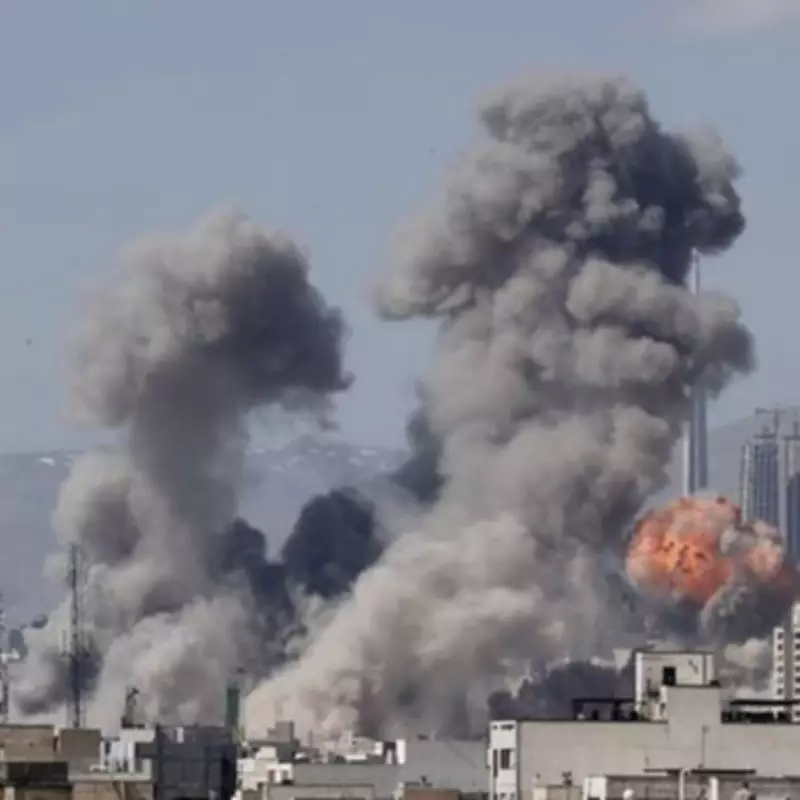
In a dramatic escalation of tensions, the United States and Israel launched coordinated strikes against Iran early on Saturday morning. The operation resulted in the death of Supreme Leader Ayatollah Khamenei along with numerous senior officials from Tehran's government. This unprecedented attack has plunged the Middle East into immediate turmoil, with far-reaching consequences already unfolding across the region.
Iran's Immediate Retaliation and Regional Fallout
Iran responded swiftly to the assassination of its leader with extensive drone and missile attacks targeting Israel directly. The retaliation extended beyond Israel to include Bahrain, Dubai, Qatar, Kuwait, and the United Arab Emirates—all nations maintaining close diplomatic and military ties with the United States. The conflict quickly demonstrated its capacity to draw multiple countries into the fray, creating a dangerous regional flashpoint.
One Iranian drone struck a runway at RAF Akrotiri in Cyprus, prompting the urgent evacuation of British military families stationed at the base. In a significant policy reversal, the United Kingdom has now granted permission for American forces to launch attacks from British military installations, having initially refused such cooperation. This decision underscores the rapidly evolving nature of the crisis and the UK's alignment with US strategic interests.

Humanitarian Crisis and Global Economic Impact
Approximately 94,000 British citizens are currently stranded across various Middle Eastern nations as commercial travel grinds to a halt. The Foreign Office has initiated a massive evacuation operation to ensure their safe return. Meanwhile, global oil prices have skyrocketed following the attacks, sending shockwaves through international markets and highlighting the economic vulnerability created by Middle Eastern instability.
US President Donald Trump confirmed the death of Ayatollah Khamenei shortly after the strikes concluded, describing the operation as "the single greatest chance for the Iranian people to take back their country." Iranian state television presenters later verified the Supreme Leader's death, announcing forty days of official mourning as Tehran begins the complex process of selecting a new leader.
Escalating Violence and Contradictory Narratives
The conflict intensified dramatically in subsequent hours when a school in Iran was struck, resulting in the deaths of nearly 150 girls. The educational facility was located adjacent to an Islamic Revolutionary Guard Corps center, suggesting it may have been collateral damage. Separately, nine individuals perished in a single strike within Israel. Iran's retaliatory actions have also claimed the lives of three American service members, with President Trump warning that additional casualties are likely.
President Trump has defended the strikes as a preventive measure against potential attacks on American interests. However, Pentagon briefers have contradicted this justification, stating that Iran had no plans to strike US forces unless Israel attacked first. This discrepancy raises serious questions about the intelligence assessment that prompted the operation.
Military Preparations and Regional Dynamics
The United States had positioned the carrier USS Abraham Lincoln and its accompanying destroyers in the Arabian Sea for several weeks prior to the strikes, while squadrons of fighter jets were deployed throughout the region. These movements followed failed diplomatic efforts where American envoys attempted to persuade Tehran to dismantle its nuclear program, cease support for proxy groups, and end oppression of opposition protesters.
As predicted, Iran's proxy force Hezbollah has now entered the conflict from Lebanon, exchanging cross-border missiles with Israeli forces. Several US F-15 fighter jets reportedly crashed over Kuwait, though their pilots successfully parachuted to safety without serious injury. Iran has explicitly rejected President Trump's claim that they sought negotiations, diminishing hopes for a swift resolution to the crisis.

Iran's Internal Turmoil and Leadership Transition
Tehran has dispatched troop battalions to its northern border with Iraq to prevent Kurdish rebels from smuggling weapons into the country. Despite the leadership vacuum and internal disarray following Khamenei's death, Iran shows no signs of capitulating to American pressure. A temporary council consisting of President Masoud Pezeshkian, Judiciary Chief Gholam-Hossein Mohseni-Ejei, and Ayatollah Alireza Arafi is currently governing the nation.
According to Iran's constitution, the Assembly of Experts—an 88-member clerical body—must appoint the next supreme leader. Mohseni-Ejei currently leads as the frontrunner with approximately 18% support, while other contenders include Arafi and cleric Hassan Khomeini. There remains speculation that the position itself could be abolished as part of broader structural changes within Iran's governance system.
The crisis continues to evolve with Iran launching fresh missile barrages toward Israel this morning, though casualty figures remain unknown. The situation represents one of the most severe geopolitical confrontations in recent decades, with implications extending far beyond the Middle East.