US-Israel Strikes Trigger Rapid Escalation as Iran Retaliates in Middle East Conflict
This morning witnessed a dramatic escalation in Middle Eastern tensions as the United States and Israel launched coordinated military strikes against Iran. The Islamic Republic swiftly responded with counterattacks, marking a significant intensification of hostilities that is rapidly spilling over into the wider region. Explosions have been reported in Bahrain, the United Arab Emirates, and Kuwait as the conflict expands beyond initial borders.
Operation Epic Fury and Regional Fallout
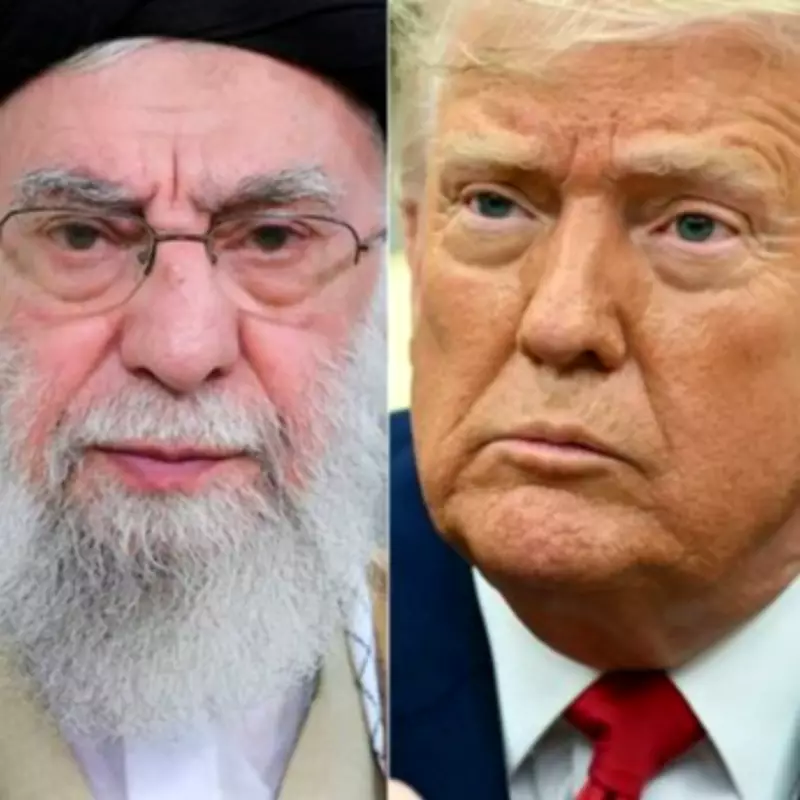
President Donald Trump announced what he termed Operation Epic Fury, describing it as a massive and ongoing military operation against Iran. In a video statement, Trump justified the action by accusing Iran of rejecting every opportunity to renounce nuclear ambitions and labeling the country the world's primary state sponsor of terror. The President made direct appeals to the Iranian people, urging them to take over their government when the conflict concludes, suggesting this might represent their only chance for generational change.
The strikes reportedly targeted significant locations including the office of Supreme Leader Ayatollah Ali Khamenei, with visible plumes of smoke rising over Tehran. This represents the second direct confrontation between these nations in less than a year, following last year's Operation Midnight that targeted Iran's nuclear facilities at Natanz, Isfahan, and Fordo.

Immediate Consequences and Regional Response
The Iranian Revolutionary Guard launched retaliatory strikes according to Israeli Defense Force reports, while airlines began diverting or canceling flights to the Middle East. The UK Foreign and Commonwealth Office issued urgent warnings to British citizens in Kuwait, Bahrain, Qatar, and the UAE, advising them to immediately shelter in place and avoid all travel while following local authority instructions.
Tensions had been building for weeks with Trump's movement of what he described as an armada of military forces to the region. Diplomatic nuclear negotiations between the US and Iran had stalled recently, creating the backdrop for this sudden escalation.
Key Players and Strategic Context
Donald Trump acknowledged that American casualties might occur during the conflict but emphasized his determination to prevent Iran from obtaining nuclear weapons. He referenced widespread protests earlier this year that were violently suppressed by the Iranian regime, suggesting the current conflict presents an opportunity for regime change.
Benjamin Netanyahu and Israel maintain their position as crucial Western allies in the region, though experts note shifting perceptions. Dr. Alexander Gilder, Associate Professor of International Law and Security at the University of Reading, explained that Israel provides a friendly foothold in the Middle East to deter states like Iran. However, Professor Anthony Glees from the University of Buckinghamshire observed that Israel's values have increasingly diverged from European democracies, with the nation becoming more extreme and embattled under hardline nationalist leadership.
Ali Khamenei leads an Iranian regime that Western analysts frequently characterize as an apocalyptic death cult with backward, deeply religious tendencies. The Supreme Leader's office was reportedly struck in today's attacks, though Iran's image suffers from what Dr. Nick Westcott describes as Western attitudes toward the mysterious East, Islamic fundamentalism, and political absolutism.
Broader Regional Dynamics and Historical Context
The conflict cannot be understood in isolation from wider regional relationships. Iran has long maintained proxy relationships with groups including Hezbollah in Lebanon, militias in Yemen and Iraq, and Hamas in Gaza. Trump specifically cited Iran's support for Hamas and the October 7 attacks as justification for current military action.

Experts unanimously caution against simplistic good versus evil narratives. Dr. Westcott emphasized that things are almost never black and white, only shades of grey, while Dr. Gilder noted that Israel-Iran relations are heavily influenced by other countries including the US and Saudi Arabia.
Professor Glees highlighted the British public's sense of justice, explaining that while understanding Israel's right to exist due to historical persecution of Jews, there's also support for Palestinian self-determination and concern about Israel's conduct in Gaza.
Religious Dimensions and Future Implications
Both Israel and Iran maintain strong relationships between religion and state, with some characterizing them as theocracies. This religious foundation often leads to oversimplified Jews versus Muslims narratives that experts warn help no one. Prior to the 1979 Iranian revolution, Israel and Iran maintained favorable relations, but official ties were severed afterward, with anti-Israel rhetoric becoming commonplace.
The current escalation occurs against a backdrop of potential normalization between Israel and Saudi Arabia, which Iran views as threatening its regional position. With explosions reported across multiple countries, airspaces closing, and the terrifying prospect of further escalation, the relationships throughout the Gulf region have never mattered more.
As the situation develops rapidly, governments face the challenge of avoiding polarization while sticking to objective truth rather than propagating misinformation. The conflict's outcome may reshape Middle Eastern geopolitics for generations, with immediate consequences already affecting civilian populations across multiple nations.