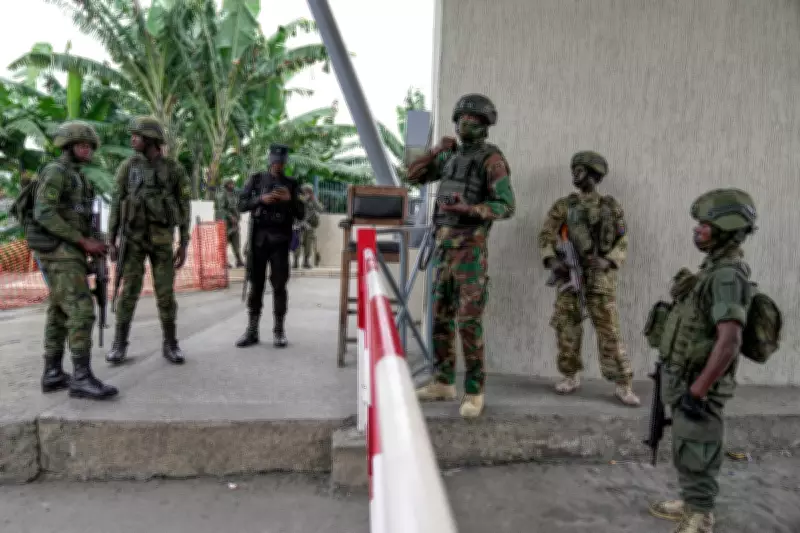
US Sanctions Rwanda's Military Over Alleged Support for M23 Rebels in Congo
The United States has imposed significant sanctions on Rwanda's defense force and top military officials, as announced by the U.S. Treasury Department on Monday. These measures accuse Rwanda of actively supporting the M23 rebel group in eastern Congo, a region plagued by persistent conflict and humanitarian turmoil.
Accusations of Military Collaboration
According to a statement from the U.S. Treasury Department, the Rwandan Defense Force is alleged to be "actively supporting, training, and fighting alongside the March 23 Movement (M23)." This armed group, which is sanctioned by both the U.S. and the United Nations, has been implicated in severe human rights abuses and has contributed to a mass displacement crisis in the Democratic Republic of the Congo.
The sanctions target four individuals, including Vincent Nyakarundi, the Rwandan army chief of staff, and the chief of the defense staff. These actions follow longstanding accusations from Congo, the U.S., and U.N. experts that Rwanda is backing M23, which has expanded from hundreds of members in 2021 to approximately 6,500 fighters, as reported by the U.N.

Context of the Conflict and Humanitarian Impact
Eastern Congo, a mineral-rich area near the Rwandan border, is a hotspot for over 100 armed groups vying for control, with M23 being the most prominent. This ongoing conflict has precipitated one of the world's most severe humanitarian crises. The U.N. agency for refugees estimates that more than 7 million people have been displaced due to the violence.
Despite a peace deal brokered by the U.S. between the Congolese and Rwandan governments, and ongoing negotiations between rebels and Congo, fighting persists on multiple fronts in eastern Congo. This has resulted in numerous civilian and military casualties, exacerbating the region's instability.
Rwanda's Response to the Sanctions
In response to the sanctions, Rwandan government spokesperson Yolande Makolo issued a statement on Monday, criticizing the U.S. actions as "unjustly targeting only one party to the peace process." She argued that these measures "misrepresent the reality and distort the facts of the conflict in eastern Democratic Republic of Congo."
Makolo further accused Congo of violating the peace agreement by allegedly conducting "indiscriminate" drone attacks and ground offensives, suggesting a more complex dynamic in the conflict than the sanctions imply.
The situation remains tense, with the international community closely monitoring developments. The sanctions highlight the challenges in achieving lasting peace in a region where geopolitical interests, resource competition, and humanitarian concerns intersect.