Washington and Kyiv have moved closer to a jointly agreed framework aimed at ending the war in Ukraine, though Moscow's response remains shrouded in uncertainty and several critical issues are yet to be resolved.
Key Concessions and a Revised Draft
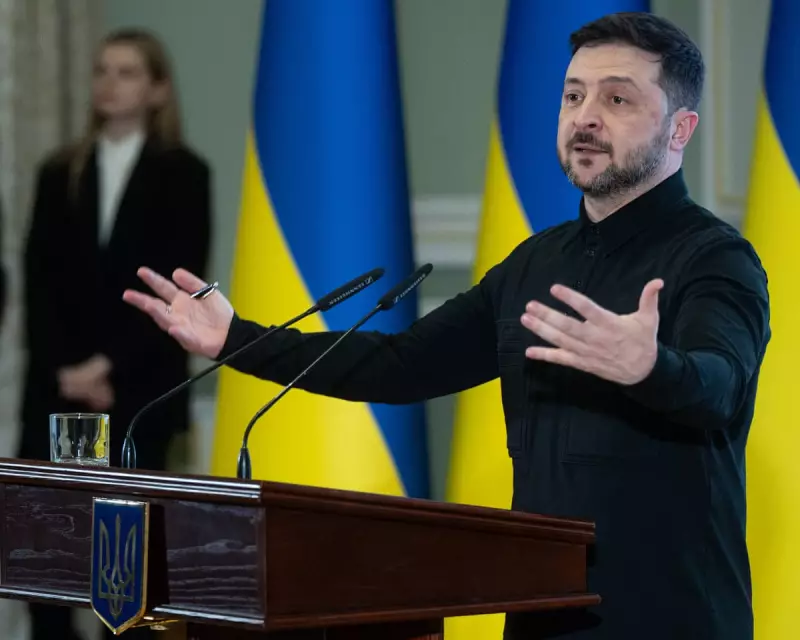
Revealing the latest status of US-brokered peace talks, Ukrainian President Volodymyr Zelenskyy appears to have secured several important concessions from earlier versions of the now slimmed-down plan. This follows intense discussions with the American negotiating team. Regardless of whether Moscow accepts it, the revised text marks a success for Kyiv in rewriting an earlier US draft that had been criticised as overly favourable to the Kremlin. Zelenskyy stated he expected US negotiators to contact the Kremlin on Wednesday.
In the latest iteration of the proposal, Ukraine accepts the principle of establishing a demilitarised zone in its eastern regions, a long-standing stumbling block. However, this is contingent on Russia making a similar pullback of its own forces. Details have been sent to Russian President Vladimir Putin via his envoy, Kirill Dmitriev. A Kremlin spokesperson confirmed Moscow is formulating its response and would not comment publicly immediately.
Uncomfortable Concessions and Security Guarantees
The complex choreography of the negotiations requires Ukraine to agree to several difficult concessions. These include a partial withdrawal of Ukrainian troops from areas it controls on the eastern frontline. Furthermore, Kyiv would renounce its ambition for NATO membership in exchange for US-European security guarantees that mirror NATO's Article 5 mutual defence clause. The precise nature of these guarantees remains publicly unclear.
The plan also calls for Russian forces to withdraw from the Dnipropetrovsk, Mykolaiv, Sumy, and Kharkiv regions. International troops would then be stationed along the contact line to monitor implementation. During a two-hour briefing, Zelenskyy suggested the proposals strengthen Ukraine's hand, as Moscow now risks the US supplying Kyiv with substantially more arms and escalating sanctions if Putin rejects the plan.
"[Moscow] cannot tell President Trump: 'Look, we are against a peaceful settlement.' That is, if they try to obstruct everything, then President Trump would have to arm us heavily, while imposing all possible sanctions against them," Zelenskyy told reporters.
Referendum Requirement and Remaining Sticking Points
Zelenskyy emphasised that any plan involving a Ukrainian troop pullback would need to pass a national referendum. He linked this to discussions about designating withdrawn areas as a demilitarised free-trade zone. On the issue of NATO, he noted the choice of membership ultimately lies with the alliance, but Ukraine has moved away from proposed constitutional changes that would have prohibited joining.
Significant hurdles remain. Russia has long insisted on full control of Donetsk, and it is highly uncertain whether it would accept a demilitarised buffer zone or its own withdrawal. Other unresolved issues include control of the Zaporizhzhia nuclear plant, which Kyiv insists should be jointly managed by the US and Ukraine.
This diplomatic push follows repeated efforts by former US President Donald Trump to broker an end to the four-year conflict, which was triggered by Russia's full-scale invasion in 2022. The war has resulted in tens of thousands of deaths, decimated eastern Ukraine, and displaced millions. Russian troops continue to advance in some areas and hammer Ukrainian cities and energy infrastructure with nightly missile and drone attacks.