The dramatic capture of Venezuelan President Nicolás Maduro by United States special forces has sent shockwaves through the large Venezuelan community in Spain, sparking both jubilation and deep apprehension about what comes next.
A Community Torn Between Hope and Fear
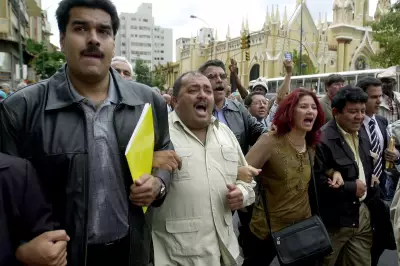
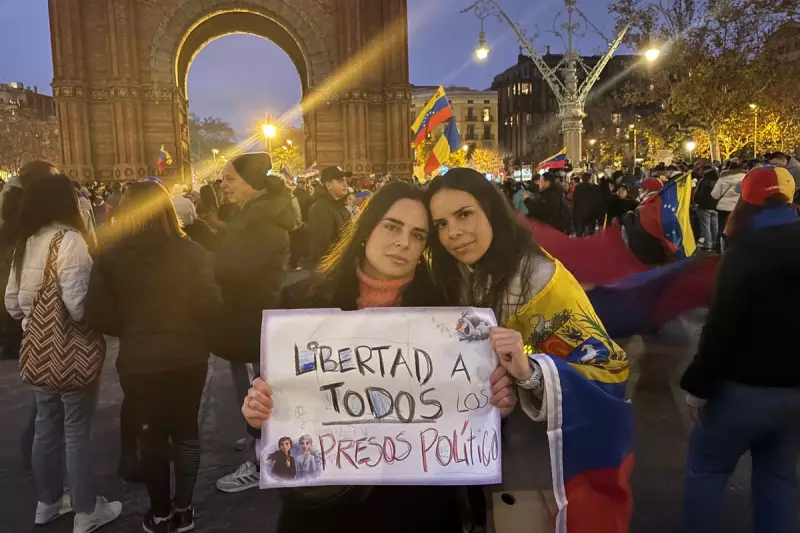
On Sunday afternoon, hundreds gathered at Barcelona's central Arc de Triomf to celebrate the ousting of a leader whose rule, and that of his predecessor Hugo Chávez, spanned from 1999 until Saturday, 3 January 2026. Among them was 34-year-old Cora Galavis, who tearfully explained how politics dictated her life. Her family's company was seized when she was young, leading to food scarcity despite her parents' education and hard work. "I have friends whose parents were killed by kidnappers because that was what the regime did," she told The Independent, painting a grim picture of a homeland defined by fear.
Ms Galavis is one of an estimated 33,000 Venezuelans who have made Barcelona their home during the Chávez-Maduro era, part of a wider diaspora of some 400,000 across Spain. For many, the news of Maduro's capture raised, for the first time in years, the tangible possibility of returning home.
Complex Reactions to US Intervention
The US military action has provoked complex and divided reactions. While the Barcelona crowd waved placards reading "Viva free Venezuela" and "freedom for all", scores of Venezuelans protested outside the US embassy in Madrid on the same day, condemning what they labelled "Yankee terrorism". Similar anti-intervention demonstrations occurred near the Venezuelan consulate in Barcelona the day before.
Ms Galavis was keen to clarify the nature of the celebration. "This is not a celebration of any strikes. It's not a celebration of Venezuela being invaded by Trump," she insisted, having lived in Barcelona for a decade. "It's about the freedom of a country that has been oppressed for more than 26 years." She expressed personal disdain for former US President Donald Trump but admitted exhaustion at seeing Venezuela's vast resources fail to reach its people.
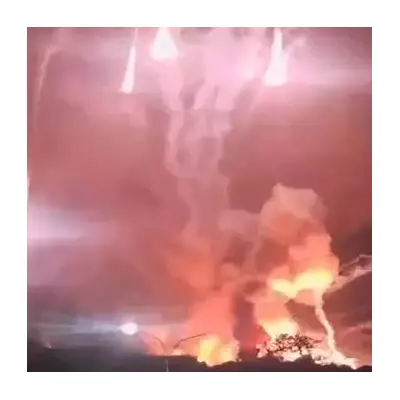
The weekend was one of high tension, with Venezuelans across Spain waking on Saturday to news of US bombardments and frantically messaging loved ones to ensure their survival.
An Ambiguous Path Forward
Despite the celebrations, a cloud of uncertainty hangs over the future. Maduro's capture has created a political vacuum with no clear democratic transition plan in place. This leaves the thousands who have built new lives, businesses, and relationships in Spain in a state of limbo, unsure if they can or should return.
Luis Arres, 34, from Caracas, expressed hope that after seven years abroad he might finally go home. He acknowledged the challenges but believed Venezuela could work with the US for mutual gain. "Nothing in this world is free. We have to actually fight [for] change," he said, noting America "has a lot of things that we need".
Another demonstrator, 29-year-old Krishna, said his initial reaction was pure "happiness". "Now I have a thousand times more hope than before," he stated, adding that his primary thought was, "Finally, I can return." He declared he had no fears for the future, celebrating that "the dictator has gone" and would face justice in the US.
The Spanish government, led by Prime Minister Pedro Sánchez, struck a cautious note. On Sunday, Sánchez stated on social media that while Spain "did not recognise the Maduro regime", it would not recognise "an intervention that violates international law and pushes the region toward a horizon of uncertainty and belligerence."
For the Venezuelan diaspora in Europe, the removal of Maduro is a tentative first step. As Luis Arres summarised, "We have a lot of things that we have to work on, but the first step is being a democracy. After that, we can develop a new country, different to what we had before." The dream of return is alive, but the path home remains fraught with unanswered questions.