The capture of Venezuelan dictator Nicolas Maduro by US forces has ignited a flicker of hope for the more than 700 political prisoners languishing in the regime's notorious jails. Yet, for those still detained, including the brothers of a prominent opposition politician, freedom remains agonisingly out of reach.
A Year of Torture and Humiliation
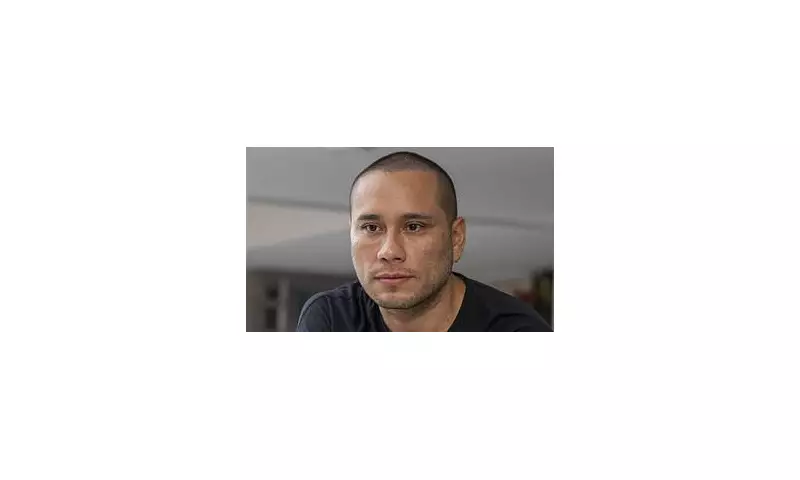
Ivan Colmenares Garcia, a 35-year-old Colombian lawyer, knows the brutal reality of Maduro's prisons firsthand. Despite possessing all the correct permits for a routine entry into Venezuela, he was forcibly stripped, bound, blindfolded, and incarcerated. For a year, he endured systematic humiliation and torture.
Mr Garcia was subjected to sleep deprivation, held in a freezing basement with six air-conditioning units, and later moved to a crowded maximum-security prison. His cell contained only a hole in the ground for a toilet, which frequently overflowed with the waste of 600 inmates. "I learnt that in prison there are no good days," he told the Daily Mail. "Only bad days and worse days."
His ordeal is not unique. Other released detainees have reported even more barbaric treatment, including having their fingernails pulled out and their hands submerged in boiling water during torture sessions designed to extract false confessions.
Families in Anguish as Hopes Rest on US Intervention
Among those still imprisoned are two brothers of opposition congressman Tomas Guanipa. Juan Pablo Guanipa, the third most powerful opposition figure, has been held in solitary confinement for seven months, with no contact or information about his condition. His brother, Pedro, spent seven months in the infamous El Helicoide jail, where beatings, electric shocks, and humiliation with faeces are common, before being placed under strict house arrest.
Congressman Guanipa, who bravely waved a T-shirt demanding the prisoners' release in the Venezuelan Congress, has called directly on US President Donald Trump to act. "We are really hopeful right now, but political prisoners should be the main issue," he stated. "Beyond economic interests, if any country wants to help Venezuela they must have the prisoners as the main point of concern."
This plea echoes the desperate hope Mr Garcia held while imprisoned. "The only hope we had in there was that there might be some international intervention," he said. Now, with Maduro captured and facing narco-terrorism charges in New York, he believes "it is in Trump's hands" to secure the release of his "brothers" left behind.
Political Uncertainty Clouds Path to Freedom
Despite the dramatic capture of Maduro, fears are growing that the autocratic regime will persist. While exiled opposition leader Maria Corina Machado has vowed to return and lead a transition, reports suggest US intelligence believes Maduro's deputy, Delcy Rodriguez, might be seen as a more stable successor to avoid a security crisis and armed revolt.
This political wrangling offers little comfort to the families of the detained. Natasha Duque, director of Operacion Libertad Internacional, which supports prisoners' families, confirms the regime has a strategy of arbitrarily detaining foreigners to fabricate narratives of foreign spies. She is currently assisting 18 such families, with consistent reports of torture from those released.
For Congressman Guanipa, the risk is personal but the mission is clear. "Of course I am afraid. But I have the opportunity to help my country," he said. "The aim is the freedom of the prisoners and the freedom of our country. This is our moment." As the world watches Maduro's legal battle unfold in a New York courtroom, the fate of hundreds of ordinary people—parents, fathers, mothers, and sons—remains trapped in Venezuela's darkest dungeons.