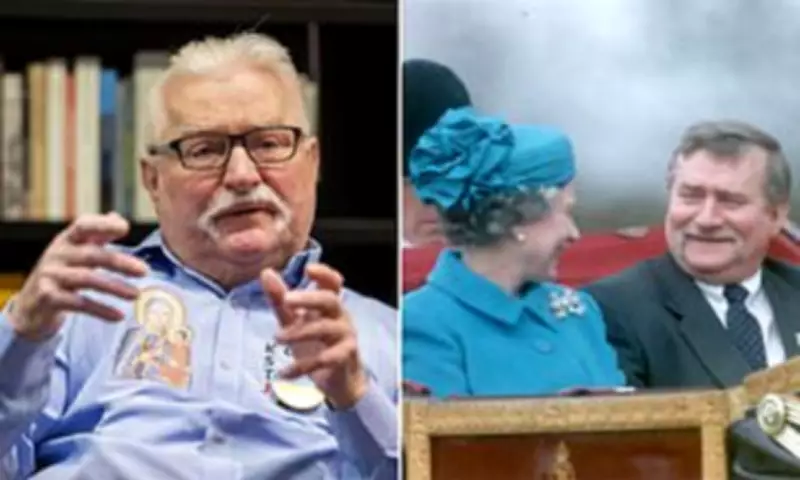
Lech Walesa, the living legend credited with freeing Poland from communist rule, has shared remarkable insights from his historic 1991 visit to Windsor Castle in an exclusive personal interview. The former shipyard electrician turned president reveals how his practical background led him to warn Queen Elizabeth II about the castle's dangerous electrical condition, a warning he believes could have prevented the devastating fire that occurred nineteen months later.
From Shipyard to State Visit
Walesa's journey from humble beginnings to international statesman forms a remarkable narrative of twentieth-century history. Raised in a poor farming family with only basic education, he worked as an electrician in the Gdansk shipyard before leading the Solidarity trade union movement that began the collapse of the Eastern Bloc. By April 1991, when Queen Elizabeth invited him and his wife Danuta for a three-day stay at Windsor Castle, he had become Poland's first democratically elected president.
Social commentators at the time expressed concerns about how the couple would adapt to royal protocol, with some imagining potential faux pas involving finger bowls and formal etiquette. Yet Walesa describes developing an unexpectedly informal relationship with the monarch, treating her as a "mate" rather than with traditional deference.
The Electrical Warning
"I had a look at the wires and thought, this place needs repairing. It was in a terrible state," Walesa recalls, describing how he discovered bare wires protruding from walls in their opulent quarters. "Some of them were hanging down, so I fixed those myself. Then I warned Elizabeth what would happen. I said I'd looked at the electrical fixtures, and I told her straight, 'This castle will catch fire soon'."
While the timing of his recollection differs from historical records - the fire occurred in November 1992 rather than "within a few weeks" - his account highlights the castle's state of disrepair. The blaze ultimately caused £35 million in structural damage and destroyed priceless antiquities during what the Queen famously called her "annus horribilis."
Personal Revelations and Regrets
Now 83 and reportedly recovering from cancer, Walesa reflects candidly on both his political achievements and personal sacrifices. He acknowledges the heavy price paid by his wife Danuta and their eight children during his years of political activism, describing how his family life suffered while he pursued his historic mission.
"They were burdened by their parents' struggle," he says of his children, two of whom have died prematurely. "They were obviously raised differently from other kids. [Their deaths] are the proof that they were not properly raised because there was no father at home. But that is the cost one had to pay. I destroyed the old order. I freed the world from communism."
Relationships with World Leaders
Walesa offers surprising perspectives on other notable figures from his era. While he developed a close bond with Queen Elizabeth, he reveals that his relationship with Margaret Thatcher was more formal, admitting to traditional views about women in politics. "I'm old school. I treat women a little differently than men," he states frankly. "I'm a male chauvinist, women in politics don't suit me very well."
He also expresses regret about encouraging Donald Trump's political ambitions during a 2011 meeting at Mar-a-Lago, saying he now views the former US president's methods as "totally wrong" despite agreeing with some reform objectives.
Confronting Historical Controversies
The interview addresses long-standing allegations about Walesa's past, including claims that he collaborated with Poland's communist secret service in the 1970s. He maintains his innocence while offering a nuanced explanation: "When I was young and silly, I was tempted to become a member [of the secret service]. It was my idea to become a part of the system and dismantle it from within."
He claims the security service refused his application when they realized his true intentions, and he dismisses the allegations by asking: "What kind of communist agent would I be, if I was the one who destroyed communism?"
Legacy and Reflection
Despite controversies and personal losses, Walesa remains confident about his historical significance. "I achieved wonderful, just unbelievable things," he asserts. "I walked a straight and just path, and I never gave up on my goals."
He acknowledges that some younger Poles view him with skepticism but believes future generations will appreciate his contributions more fully. "Some people don't like me because I speak my mind. They will be more appreciative of me [when] I'm harmless and resting dead."
The interview provides a unique window into the mind of a man who helped reshape European history, revealing both the practical electrician who warned a queen about fire hazards and the complex political figure who continues to reflect on his extraordinary life with characteristic directness.