White House Confronts Information War Amid Escalating Iran Conflict
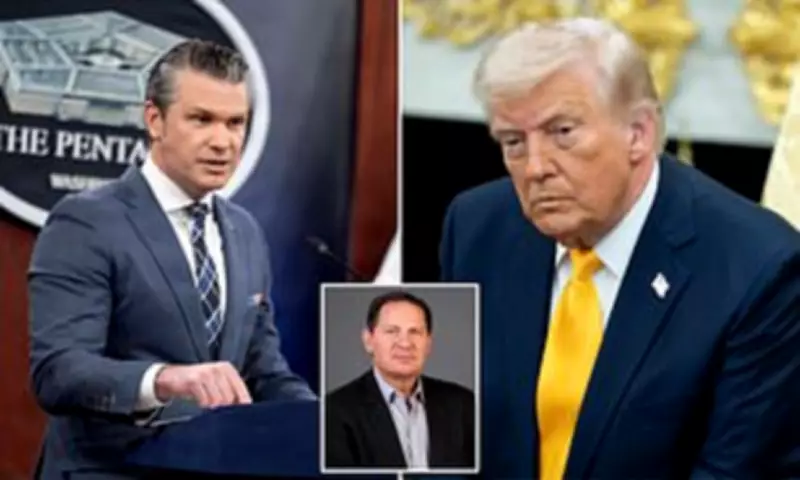
Listening to Secretary of War Pete Hegseth on Thursday morning, one could easily assume America is losing a critical information war. 'I stand here today speaking to you the American people, not through filters, not through reporters, not through cable news spin,' Hegseth declared, addressing the assembled journalists directly. He continued, 'A dishonest and anti-Trump press will stop at nothing – we know this at this point – to downplay progress, amplify every cost and call into question every step. Sadly, TDS is in their DNA.'
The White House is undeniably engaged in both rhetorical and material combat, and to think otherwise would be naive. As Operation Epic Fury transitions from a campaign of precision strikes and simple messaging to an endurance contest, the battle for the hearts and minds of the American people grows increasingly vital. The central question becomes: which will last longer – the embattled Islamic Republic or the political will in Washington DC?
Time as the Enemy in Wartime Public Resolve
In wartime, the enemy of public resolve often rivals even casualties and short-term costs, and that enemy is time. Currently, time appears to be on Tehran's side. Sources, including many vociferous supporters of President Donald Trump and the effort to eliminate the Iranian threat, express concern that this reality starkly contrasts with the regular briefings from Hegseth and Joint Chiefs of Staff Chairman General Dan Caine. Some veteran observers have even compared these presentations to the infamous Five O'Clock Follies, a pejorative term for Vietnam-era military briefings conducted out of Saigon.

If the Iranian regime refuses to submit, a mere running tally of sorties and successful strikes broadcast on television will likely have little impact on the American public watching at home. So, what is the White House to do in this precarious situation?
Escalation as a Strategy to Deescalate
There seems to be only one answer under serious consideration: escalate to deescalate. History provides few examples of conflicts being gently talked into submission; more often, they are bludgeoned into stalemate or clarity. Team Trump is reportedly examining options with a singular goal: to compress the timeline of the conflict.
The Pentagon is preparing to request an initial $200 billion in extra funds for the war effort, with Hegseth noting, 'It takes money to kill bad guys.' In Washington, such phrasing is less a reassurance and more a warning label, akin to a contractor promising a renovation will only take a few weeks.
Military Options and Strategic Considerations
Credible reports suggest ground-force options are being considered, despite President Trump telling reporters on Thursday, 'I'm not putting troops anywhere.' He quickly added, 'If I were, I certainly wouldn't tell you.' Key proposals include:
- Seizing Kharg Island: A strategic island off Iran's coast that serves as a nerve center for oil exports, reflecting the conflict's tit-for-tat struggle over energy production.
- Deploying Ground Forces: Along segments of the Iranian coast to secure freedom of navigation through the Strait of Hormuz, a scenario that concerns naval historians and budget hawks alike.
- International Coalition: Advanced by foreign-policy veteran Richard Haass, this involves constructing a coalition to shut down the Strait to Iranian-aligned traffic unless Tehran restores open passage for all, though it is time-consuming.
- Expanding US-Israeli Strikes: Targeting more objectives with drones and missiles to shift toward regime destabilization or change, coupled with efforts to encourage internal uprisings.
Every move intended to shorten the war risks lengthening it, and every show of strength carries the seed of overreach. Yet, inaction has its own price, creating an uneasy calculus of conflict.

Ambiguity and Regional Dynamics
The hope is to achieve demonstrable progress within a month, including measurable degradation of Iran's nuclear, naval, missile, and proxy-terror capabilities. On Thursday, Israeli Prime Minister Benjamin Netanyahu claimed Iran has lost the capacity to enrich uranium or make ballistic missiles. However, even in optimistic scenarios, ambiguity persists. A version of the Iranian regime could remain intact, and the nuclear program might be grievously damaged but not fully accounted for.
In the coming days, consequential signals may come not from Washington but from Riyadh and Jerusalem. Saudi Arabia, recently struck by Iranian retaliation, faces decisions that could reshape the regional balance. Israel must calibrate its actions with the knowledge that American patience – both presidential and public – has limits.
Changing Trajectories in Politics and War
In politics and war, trajectories matter profoundly. Currently, the arc is troubling, even as the Pentagon and its Israeli allies continue to decimate much of Iran's capabilities and leadership. The pivotal question is whether the White House can alter this trajectory. Because, ultimately, it cannot change the relentless march of time.