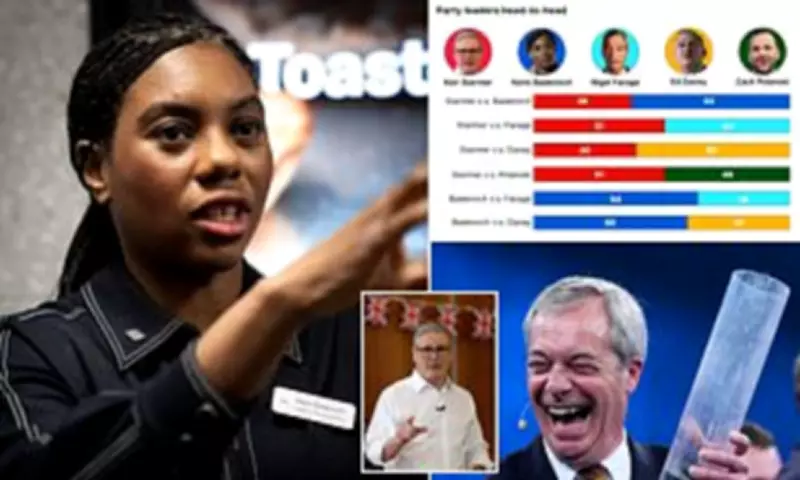
A new survey from More in Common has revealed that Conservative leader Kemi Badenoch would emerge victorious in head-to-head battles against both Labour's Sir Keir Starmer and Reform UK's Nigel Farage to determine who would make the best Prime Minister. The polling data highlights the current turbulent state of British politics, where individual popularity does not necessarily translate into party support.
Head-to-Head Leadership Battles
When voters were presented with one-on-one contests between the main party leaders to decide the UK's top political job, Mrs Badenoch consistently outperformed her rivals. She defeated all other major party leaders in these direct matchups, demonstrating a surprising level of personal appeal across the political spectrum.
Party Popularity Versus Leadership Appeal
The poll reveals a striking disconnect between leadership popularity and party support. Despite Mrs Badenoch's strong performance in head-to-head contests, her Conservative Party languishes in third place in voting intention polls at just 21 per cent. This places them two points behind Labour and a significant nine points behind the surging Reform UK party.

Reform UK leader Nigel Farage presents another paradox. While his party shows strong overall popularity, Mr Farage was defeated by all other party leaders except the Green Party's Zack Polanski in direct leadership contests. This suggests that while voters may support Reform UK's policies, they have reservations about Mr Farage's suitability for the highest office.
Widespread Voter Discontent
The polling data paints a picture of profound voter dissatisfaction with the current political landscape. When asked who would make the best Prime Minister without forcing a choice between candidates, Nigel Farage came out on top but with the backing of just 21 per cent of all voters. Even more telling, less than three-quarters of Reform UK voters believed their own leader would make the best Prime Minister.
Both Mrs Badenoch and Sir Keir Starmer received support from just 15 per cent of voters in this open question. Perhaps most significantly, nearly four-in-ten voters (37 per cent) did not believe any of the leaders from the five largest parties would do a good job as Prime Minister, illustrating the scale of the current political malaise.
Party Loyalty in Question
The poll reveals weakening party loyalty among traditional voters. Fewer than half of Labour supporters (43 per cent) and Conservative voters (45 per cent) believed their own party leader would make the best Prime Minister. This number plummeted to just 29 per cent among Green Party voters when asked about their new populist leader, Zack Polanski.
Strategic Implications for the Next Election
More in Common's director, Luke Tryl, provided analysis suggesting that Kemi Badenoch is less disliked than Conservative leaders were before the last general election. He noted that she picks up support from left-wing voters in right-versus-right battles and from right-wing voters in left-versus-right contests.
However, Mr Tryl pointed out that both Mrs Badenoch and Sir Keir Starmer struggle in a wider five-way contest. "Both Starmer and Badenoch have an interest in making the battle a head to head rather than a five-way contest," he wrote on social media platform X. "Farage benefits from a more open race. Another illustration of how, as it stands, tactical voting is likely to matter a lot."
The polling data suggests that the next general election may be decided not by enthusiastic support for any particular leader, but by strategic voting patterns and widespread dissatisfaction with the current political options. With no leader commanding overwhelming public confidence, the political landscape remains fragmented and unpredictable as Britain approaches its next national vote.