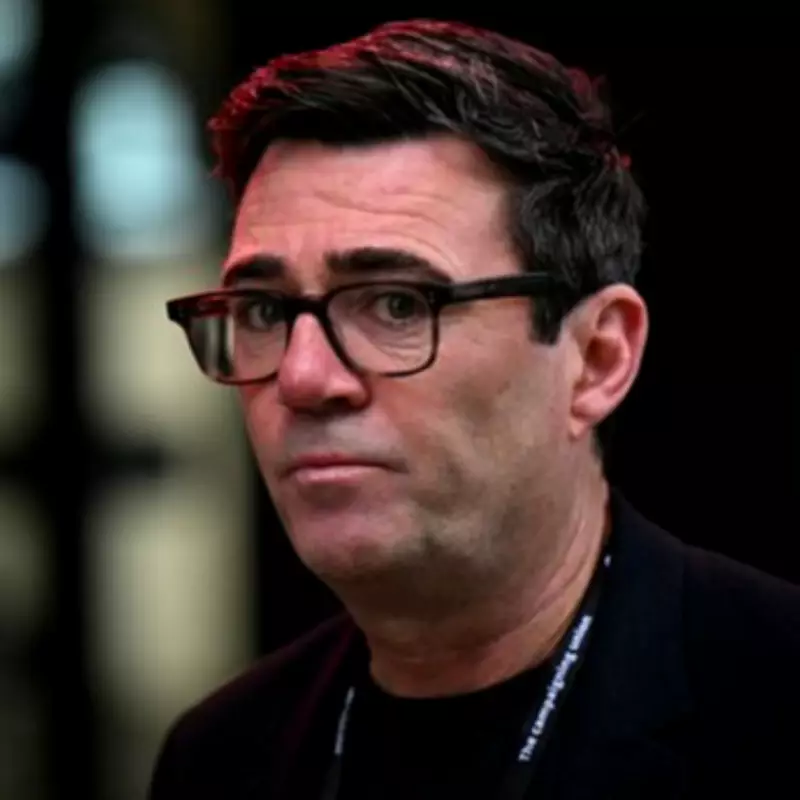
Andy Burnham Declares By-Election Loss Reveals "Depth of Chasm" Between Public and Westminster
Greater Manchester Mayor Andy Burnham has asserted that the recent by-election result in Gorton and Denton starkly illustrates the profound disconnect between the British public and the political establishment in Westminster. His remarks follow the Green Party's Hannah Spencer securing a decisive victory in the Greater Manchester constituency, amassing 14,980 votes and achieving a majority of 4,402.
Green Party Triumph Highlights Voter Discontent
In the by-election held less than a week ago, Hannah Spencer of the Green Party emerged victorious, defeating Reform candidate Matt Goodwin, who received 10,578 votes, and Labour's Angeliki Stogia, who garnered 9,364 votes. Notably, Andy Burnham himself was prohibited from standing as a candidate in this contest by Labour's ruling body, adding a layer of political intrigue to the outcome.
Speaking at a Centre For Cities event, Burnham emphasized that the election outcome should serve as a wake-up call. He stated, "The time has most definitely come for a serious conversation about our political system and its pervading culture, particularly so in the aftermath of the Gorton and Denton by-election. It revealed the full depth of the chasm between people and Westminster politics. I don’t think anybody can seriously dispute that statement."
Call for a "New Political Culture" Amidst Trust Erosion
Burnham issued a stark warning, declaring that public trust in politicians to address fundamental issues has eroded significantly. He called for the establishment of a "new political culture" entirely, arguing that the current system is failing to tackle long-term problems. He pointed to the inadequate funding of social care as a prime example, noting that frontline staff often lack a basic living wage, which he contends contributes to the NHS being in a "permanent crisis."
"It's unbelievable how people on the frontline of social care do not get a basic enough salary to support themselves, even though they are doing incredible things to look after people," Burnham explained. "So no wonder is it that the NHS is in permanent crisis... Basically, Westminster, it’s just almost like they said ‘well, we'll just leave that.’ It's just an incredible state of affairs to be honest."
Westminster Criticized for Focusing on Point-Scoring Over Problem-Solving
Drawing on his 16 years of experience as a Member of Parliament, Burnham criticized Westminster's political culture for becoming increasingly shallow. He argued that the primary aim has shifted from resolving substantive issues to scoring political points across the House of Commons. "I just saw the political, if you like, culture just becoming more and more shallow. It simply doesn't try to fix the big problems, the aim is to score points across the house, isn't it? It's not there to fix things," he remarked.
Burnham also highlighted the collapse of local government financing as a critical factor fueling public alienation. He used the example of potholes to illustrate how politics is perceived as incapable of addressing basic needs. "Is there anything that more explains the levels of alienation people feel politics can't fix a pothole? The collapse of local government and the failure of Westminster to fix the financing of local government to me, that is a really big thing that underlies the alienated political climate that we experience today. People just don't see politics as able to fix the basics," he elaborated.
Devolution and Future Political Directions
While Burnham clarified that he was not discussing his personal career plans, he referenced his book "Head North," co-authored with Liverpool City Region Mayor Steve Rotheram, which advocates for leaving Westminster and establishing devolution across England. He humorously noted that a sequel, "Head South," is currently on hold, but stressed the urgent need for systemic change.
In conclusion, Burnham's intervention underscores a growing sentiment that Westminster politics is out of touch with everyday concerns. The by-election result in Gorton and Denton, with the Green Party's significant win, serves as a potent symbol of this disconnect, prompting calls for a fundamental overhaul of the political culture to rebuild public trust and effectively address core issues like social care, local government funding, and infrastructure.