Democrats Eye Midterm Wave as Primary Turnout Surges, Alarming Republicans
Democratic voters are demonstrating unprecedented enthusiasm in primary elections, a trend that spells potential trouble for Republicans ahead of November's congressional races. Recent turnout data from key states suggests a blue wave could be building, with GOP strategists growing increasingly anxious about the implications for the midterms.
Illinois Showcases Democratic Dominance
In Illinois, a state already considered solidly blue, Democratic primary voters accounted for approximately 69 percent of the 1.7 million votes cast in the Senate race. This staggering percentage surpasses even the vote shares achieved by Joe Biden in 2020 and Barack Obama in 2008, when they won the state with 57 percent and 61.8 percent respectively.
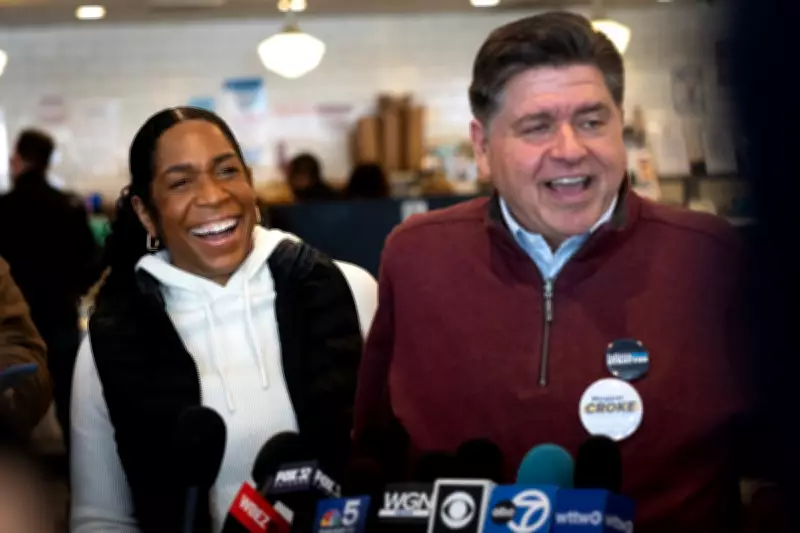
The contested primary between Lieutenant Governor Juliana Stratton and Representatives Raja Krishnamoorthi and Robin Kelly heightened engagement, but Republicans face minimal chances of victory in Illinois. Governor J.B. Pritzker's political influence was on full display as his preferred candidate, Stratton, secured the Senate nomination, bolstering his profile for a potential 2028 presidential bid.

Texas Reveals Hispanic Voter Shift
Even in traditionally red Texas, Democratic primary turnout exceeded Republican numbers, with 2,311,826 voters participating compared to 2,165,744 in the GOP primary. Notably, Hispanic voters are turning out in droves for Democrats, reversing a historic rightward shift observed in 2024.
In Zapata County, located on the border with Mexico, 2,689 Texans voted in the Democratic Senate primary this month, a significant increase from the 1,877 who supported Kamala Harris in 2024. Similarly, Jim Hogg County, which is over 90 percent Hispanic, saw 1,008 Democratic primary votes compared to 856 for Harris in the previous election.
Senator Ted Cruz, who previously celebrated Hispanic support for Republicans, now acknowledges the need to earn every vote. "We should always be worried about earning the votes of every vote," he told The Independent, reflecting GOP concerns.
North Carolina Highlights Democratic Momentum
North Carolina presents perhaps the most compelling case for Democratic optimism. In the Senate primary, 827,742 voters participated on the Democratic side, compared to 627,400 for Republicans—a margin of about 56 percent. This is particularly striking given that former Governor Roy Cooper faced little opposition, while the GOP primary featured meager competition.
Senator Thom Tillis, known for his astute analysis of voting trends, issued a stark warning to his party. "We've got to realize that you always have a negative environment," he stated, citing potential headwinds from energy prices or international conflicts like the Iran war.
In North Carolina's 4th district, which includes Black voters in Durham, liberal students at UNC Chapel Hill, and affluent suburbs, Democratic primary turnout surged from 87,827 in 2022 to 125,655 this month, despite minor redistricting changes.
Context and Caution
While these trends are promising for Democrats, experts caution against premature conclusions. Polls consistently show Democratic voters are dissatisfied with party leadership, and the broader American electorate remains skeptical. The 2022 midterms serve as a reminder that momentum can shift abruptly, as the anticipated red wave was blunted by the Supreme Court's Dobbs v. Jackson decision.
Nevertheless, elections are fundamentally about momentum and voter enthusiasm. Currently, Democrats hold the ball with a clear path to the hoop, leveraging historic primary turnout to build toward a potential wave in November. Republicans must address these warning signs quickly to avoid being swept away by a surge of blue votes.