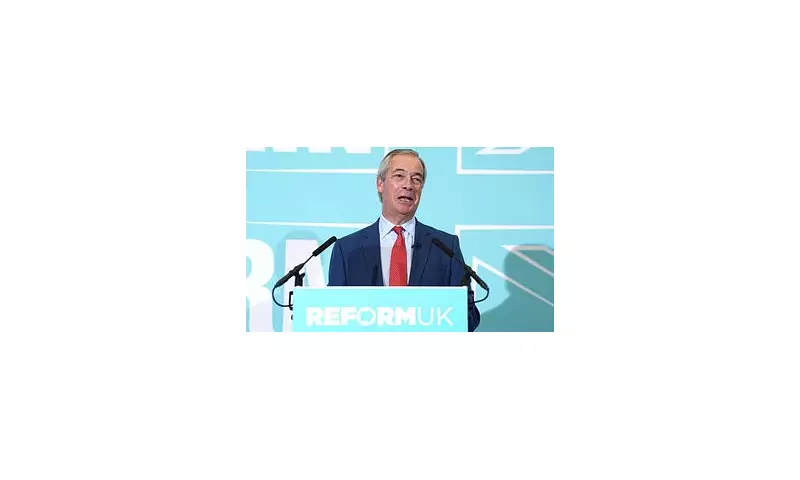
Reform UK leader Nigel Farage is initiating immediate High Court proceedings to challenge government plans that could see dozens of local authorities postpone elections scheduled for May. The legal bid aims to protect what Farage describes as a fundamental democratic principle under threat.
A Democratic Backlash and Legal Challenge
Last month, ministers invited 63 councils currently undergoing local government reorganisation to apply for permission to delay their May elections. The deadline for applications passed at midnight on Wednesday, with at least 30 councils – covering a combined population exceeding five million people – thought to have sought a postponement.
Mr Farage, whose party stands to lose significant political momentum from any delay, condemned the move as behaviour befitting a "banana republic". He announced his party is "primed and ready" to seek a judicial review, arguing the plans undermine the very foundation of British democracy. "We're about settling our arguments at the ballot box," he stated. "That principle is what generations that went before gave so much to defend."

Political Motives and Council Anxiety
The controversy has ignited a fierce political row, with opponents accusing Labour leader Sir Keir Starmer of "running scared of voters". May's local elections are viewed as a critical test for Labour, with the party anticipated to suffer significant losses. Delaying votes in key areas could potentially limit these losses and bolster Sir Keir's position.
However, the list of councils seeking delays is not exclusively Labour. It includes several large Conservative-controlled authorities like East Sussex, West Sussex, and Suffolk, as well as Lib Dem-run Cheltenham. Local Government Minister Alison McGovern defended the policy, citing that many councils had "expressed anxiety" about holding elections while simultaneously managing complex reorganisation, which in some cases could see elections postponed for a second consecutive year.
Conflicting Views on Cost and Democracy
A government source argued the move was "sensible", allowing councils to avoid costly and "unnecessary" elections, freeing up resources for frontline services like social care. They claimed that merging two-tier authorities into unitary councils could reduce councillor numbers by 5,000 and eliminate 120 senior roles, yielding major savings.
This stance puts the government at odds with the independent Electoral Commission. The watchdog has warned that the delays are not justified and risk "damaging public confidence" in the democratic process. Chief Executive Vijay Rangarajan highlighted a "clear conflict of interest" in allowing existing councils to decide when they next face voters, and stated that "capacity constraints are not a legitimate reason" for postponing long-planned polls.
As the legal battle commences, the core dispute centres on whether administrative efficiency can legitimately override the public's right to regular democratic accountability.