German State Election Poses Critical Test for Chancellor Friedrich Merz
Friedrich Merz's centre-right Christian Democratic Union (CDU) confronts a pivotal regional election this Sunday in Baden-Württemberg, marking the first of several state votes this year where the party seeks to halt the ascent of the far-right Alternative für Deutschland (AfD). This election serves as a significant barometer for Merz's leadership and the CDU's electoral viability amid turbulent political times.
Baden-Württemberg: A Prosperous Battleground
Voters in Baden-Württemberg, a prosperous southwestern German state with a population of 11.2 million and a hub for the nation's automotive industry, will head to the polls. A year after securing national elections, the CDU aims to reclaim first place in this state from the Greens, who have triumphed in the last two state elections. Recent polling indicates a tight race, with both the CDU and the Greens neck and neck at 28%, a notable shrinkage from the CDU's earlier large leads.
Key Candidates and Campaign Dynamics
Leading the CDU charge is Manuel Hagel, a 37-year-old former bank branch manager, whose campaign encountered turbulence over sexist and inappropriate comments he made about female students during a 2018 school visit, for which he has since apologised. On the Green side, the lead candidate is Cem Özdemir, 60, who, if victorious, would become Germany's first state premier of Turkish heritage. Özdemir, from the "realist" wing of the Greens, has distanced himself from more leftist factions, projecting a practical persona that resonates with voters in Baden-Württemberg.

Meanwhile, the AfD has been polling at 18%, a record score for the anti-immigration party in this state, though still below its national rating of approximately 25%. The AfD's lead candidate, Markus Frohnmaier, has garnered national attention due to his links to Russia and Donald Trump's Make America Great Again movement, recently touting a poll showing the party at 20% in the state as "sensational."
Economic Concerns and Policy Priorities
Baden-Württemberg is home to automotive giants like Porsche and Mercedes-Benz, sectors grappling with high energy prices and heightened competition from China. Voters, such as Brian Fuerderer, a 34-year-old head of a surgical equipment company, criticise the campaign for avoiding essential issues like the economy and foreign energy dependence, highlighted by the Middle East war. Merz has prioritised revitalising Germany's sluggish economy, lobbying the EU to relax its ban on new combustion-engine cars post-2035, a stance even Özdemir has echoed by advocating for more flexibility in the transition to electric vehicles.
Broader Implications for German Politics
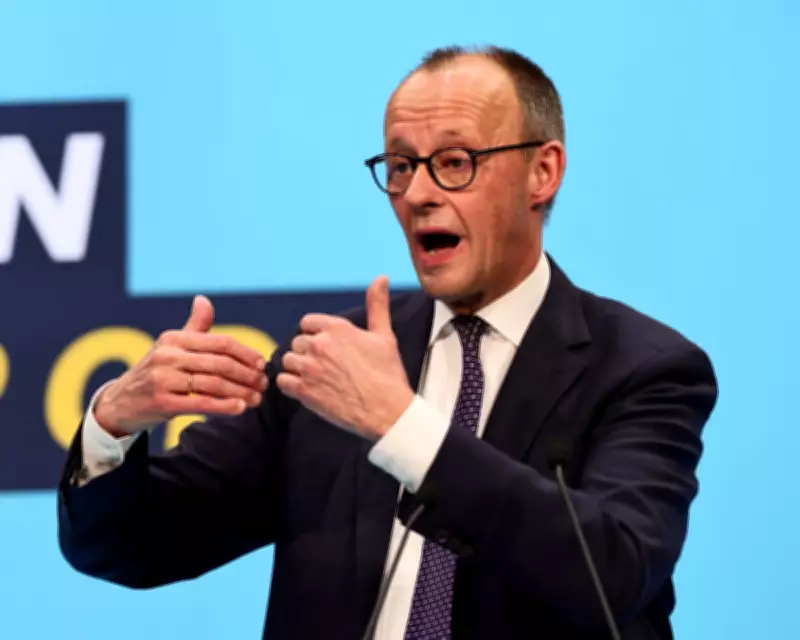
At a final campaign rally, Merz emphasised that the election's outcome would be scrutinised internationally, questioning whether the CDU can still win elections during turbulent times. A poor showing in this traditional CDU stronghold would bode ill for the party's prospects in upcoming regional votes, where it hopes its stricter migration policy will lure back AfD voters. Subsequent elections include a March 22 contest in Rhineland-Palatinate against the centre-left Social Democrats (SPD) and a series of September votes in eastern Germany, where the AfD is expected to perform strongly.
If the Greens prevail, Özdemir will succeed his party colleague Winfried Kretschmann, 77, who has led Baden-Württemberg for 15 years. Özdemir's national profile, including his tenure as agriculture minister under former SPD chancellor Olaf Scholz and his status as one of the first MPs of Turkish origin in 1994, bolsters his appeal, with voters noting his experience as a crucial asset in challenging times.