In a striking display of international solidarity, Hungary's Prime Minister Viktor Orbán has unveiled a campaign video featuring endorsements from a host of prominent right-wing figures across Europe and beyond. The move comes as Orbán, the EU's longest-serving leader, faces an unexpectedly strong challenge in the upcoming national election on 12 April.
A Global Show of Force for Hungary's Leader
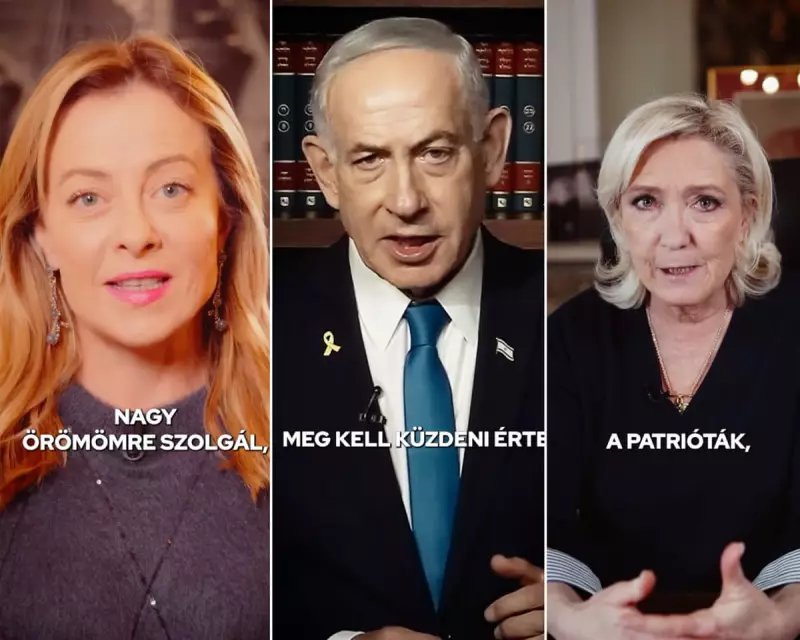
The video, published this week, serves as a powerful visual manifesto for Orbán's brand of nationalist conservatism. It features nearly a dozen leaders, including Italy's Prime Minister Giorgia Meloni and her deputy Matteo Salvini, France's Marine Le Pen of the National Rally, and Germany's Alice Weidel, co-leader of the Alternative für Deutschland (AfD).
Their messages weave a consistent theme. Weidel declares that "Europe needs Viktor Orbán," while Le Pen praises the Hungarian leader for strengthening the "camp of patriots and defenders of nations." Meloni emphasises their shared vision for a Europe that respects national sovereignty and cultural roots.

Analysts suggest the video is a strategic attempt by Orbán's Fidesz party to highlight his international stature. Márton Bene, a political analyst at Budapest's TK Institute for Political Science, notes the campaign is framing these connections as a vital asset for Hungary during turbulent global times—something his main opponent lacks.
Domestic Troubles and a Formidable Challenger
This international fanfare contrasts sharply with Orbán's domestic predicament. He is confronting an unprecedented challenge from Péter Magyar, a former insider from his own Fidesz party. Recent polls indicate Orbán is trailing behind Magyar's new opposition party, Tisza, as Hungarians grapple with economic stagnation and declining public services.
Magyar's campaign has deliberately focused on home affairs, pledging to revive the economy by tackling corruption and accessing billions in frozen European Union funds. This sets up a clear electoral choice: Orbán's narrative of strong international leadership versus Magyar's promise of domestic renewal and clean governance.
The election's outcome, Bene argues, will hinge on whether voters prioritise these international dimensions or judge the government on its domestic performance over the past years.
Controversial Alliances and Symbolic Stakes
The campaign video also spotlights Orbán's contentious foreign policy stances. It includes references to the war in Ukraine, with figures like Salvini stating, "If you want peace, vote for Fidesz." Orbán, known as the EU leader closest to Vladimir Putin, has repeatedly blocked unified EU support for Ukraine, earning him criticism as a Trojan horse for the Kremlin within the bloc.
Other endorsements come from Austria's Herbert Kickl (FPÖ), Czech former Prime Minister Andrej Babiš, and the presidents of Serbia and Argentina. Notably, Israeli Prime Minister Benjamin Netanyahu also appears, praising Orbán's qualities in protecting his nation, despite Israel's official boycott of the German AfD and Austrian FPÖ parties featured in the same video due to their antisemitic roots.
The symbolic weight of this election extends far beyond Hungary's borders. Bene concludes that for the global illiberal-populist right, Orbán's Hungary has been a prototype and a cited success story. A potential defeat for Orbán would therefore represent a major symbolic setback, challenging the narrative of an unstoppable, uniform right-wing advance across the West.