Gorton and Denton By-Election Polls Close in Critical Test for Starmer
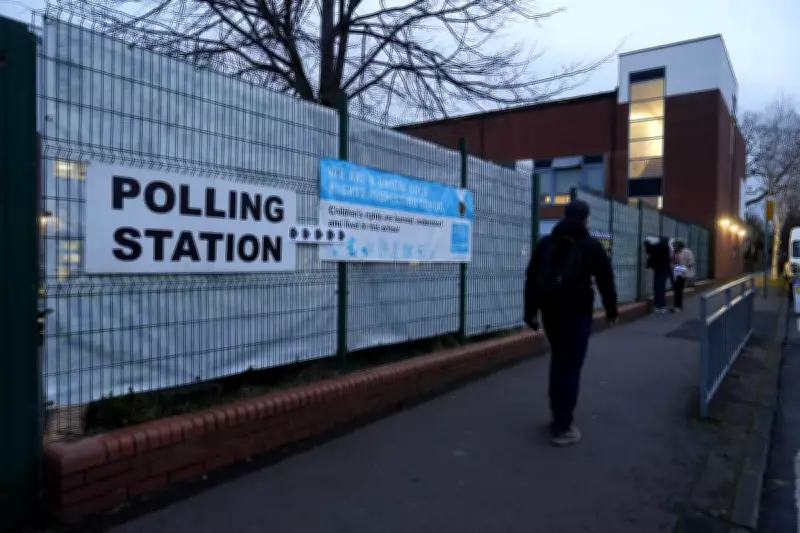
Polls have officially closed in the Gorton and Denton by-election, a contest widely viewed as a pivotal moment for Sir Keir Starmer's premiership. Votes are now being counted in the Greater Manchester constituency, with the result anticipated on Friday morning. This by-election, triggered by former Labour MP Andrew Gwynne's resignation due to health reasons, could have far-reaching implications for the political future of the Labour leader.
A Tight Three-Way Race Unfolds
Labour secured Gorton and Denton in the 2024 general election with over half the vote, but recent polling indicates a fiercely competitive three-way battle. Labour candidate Angeliki Stogia faces stiff challenges from Reform UK's Matt Goodwin and the Greens' Hannah Spencer. The outcome is likely to influence narratives ahead of May's local and devolved elections, as well as shape the political terrain leading into the next general election.
Victory for Labour would provide Prime Minister Starmer with much-needed breathing room following a period of intense scrutiny and declining party popularity. Conversely, a defeat could reignite speculation about efforts to replace him, undermining his leadership at a critical juncture.

Strategic Campaigns and Voter Confusion
Labour has attempted to frame the contest as a direct confrontation between itself and Reform UK. However, a loss to either Reform or the Greens would severely damage Labour's claim to be the most viable anti-Reform option. In a statement released as polls closed, Labour's political lead for the contest, Andrew Western, emphasized a positive local campaign focused on community unity in Manchester and Tameside, while rejecting what he termed the "toxic politics" of Reform's Matthew Goodwin.
Andrew Western acknowledged the inherent challenges of by-elections for incumbent governments, stating, "By-elections are always difficult for incumbent governments and this one has been no different. The politics of anger and easy answers offered by Reform and the Greens won't deliver the change communities want to see on the cost of living, or on fixing our NHS."
Expert Analysis on Electoral Implications
Luke Tryl, executive director of the research and consultancy firm More in Common, highlighted the significant consequences of the by-election outcome, even if it hinges on a narrow margin of votes. He told the Press Association, "If the Greens win, or come second to Reform with Labour in third, it becomes much harder for Labour to run that so-called Macron strategy. Essentially, you have to hold your nose and vote for us, because otherwise you'll let Reform in, which I think they're relying on."
Tryl added that a Labour win would "turbo-charge" their strategic approach, while a Reform victory through the middle could indicate that tactical voting is either ineffective or canceling itself out. He noted that if Reform is blocked by other parties coalescing, their national polling lead might not translate into electoral success.
Greens Position Themselves as Anti-Reform Alternative
The Greens, led by Zack Polanski, have also positioned themselves as the primary choice for anti-Reform voters, creating uncertainty for those considering tactical voting. Tryl observed that the campaigns from both Labour and the Greens have left voters "more confused" due to conflicting claims about which party is best equipped to keep Nigel Farage's Reform UK at bay.
This by-election serves as a critical barometer for Starmer's leadership and Labour's electoral strategy. The result will not only impact immediate political dynamics but also set the tone for upcoming electoral battles, making it a watershed moment in British politics.