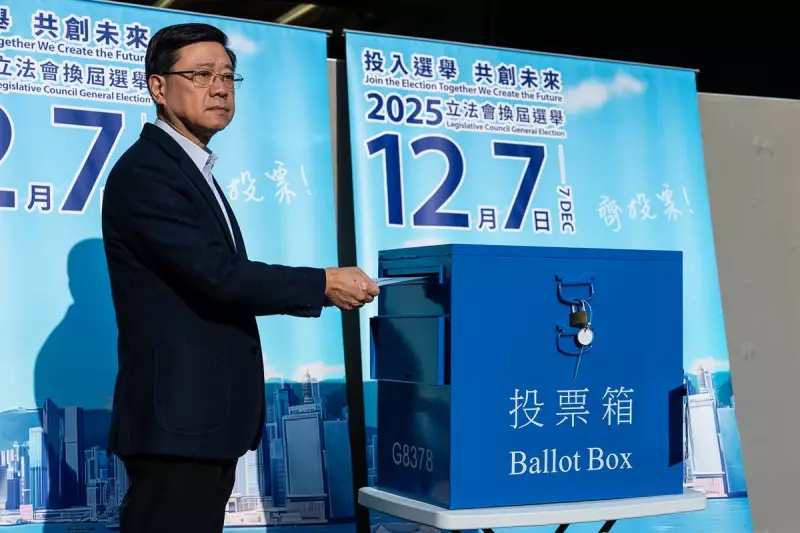
Hong Kong's legislative council election on Sunday 7 December 2025 was overshadowed by profound public grief and anger following the city's deadliest fire in nearly 80 years, alongside a government crackdown on dissent and warnings to international media.
Low Turnout in "Patriots-Only" Election
Voters headed to the polls for the second legislative election since a 2021 overhaul of the system, which eliminated the pro-democracy opposition and now only permits candidates vetted as loyal to China. The government had heavily promoted the vote, viewing it as a referendum on this new "patriots-only" system.
However, preliminary figures indicated another low turnout. By 6.30pm local time, only about 25.75 per cent of eligible voters had cast their ballots, tracking only slightly above the record low of 30 per cent seen in the 2021 election. Polls were scheduled to close at 11.30pm.

Public Anger and Calls for Accountability
The election was held under the dark shadow of the catastrophic fire at the Wang Fuk Court complex in Tai Po, which claimed the lives of at least 159 people. The tragedy has sparked intense public demands for government accountability over building safety and oversight.
In a bid to link the vote to the disaster, Hong Kong's chief executive John Lee urged citizens to vote as an expression of their outrage, suggesting it would push the government to enact safety reforms. He pledged to propose support for survivors, many of whom were left homeless.
This appeal did not resonate with all. One Tai Po resident in his late 70s, identified only as Cheng, told Reuters he would not vote, citing the fire as a result of a "flawed government" and a lack of a healthy system.
The authorities have arrested at least 21 people investigating suspected corruption and negligence linked to a major renovation project at the housing complex. A judge-led committee will investigate the fire's cause and rapid spread, which has been partly attributed to substandard safety netting and non-working fire alarms.
Crackdown on Dissent and Media Warnings
In the days preceding the election, authorities moved to stifle criticism and control the narrative. National security police arrested a man for posting content encouraging others not to vote or to cast invalid ballots following the fire. Steve Li, chief superintendent of the police National Security Department, said the man was accused of posting materials intending to incite hatred towards the Hong Kong and central governments.
Separately, the organiser of a petition calling for government accountability over the fire was arrested on suspicion of sedition.
In a significant move, Hong Kong Baptist University suspended the operations of its student union after messages expressing condolences and demanding justice for fire victims were posted on a campus forum.
Officials also summoned representatives of international media outlets based in Hong Kong to a rare meeting. They were warned they must comply with the city's national security laws and would face consequences for violations. "Do not say you have not been warned," an official stated. Beijing's national security office in Hong Kong warned against using the disaster to "disrupt Hong Kong" and stated that no media organisation could use "press freedom" to interfere in China's internal affairs.
The combined weight of the tragedy, the arrests, and the pressure on media created a subdued and tense atmosphere for an election meant to solidify Beijing's political control over the city.