Hungary's Election Showdown: Orbán and Magyar Rally Supporters in Budapest
Hungary's election campaign has intensified dramatically as Prime Minister Viktor Orbán and his main political opponent, Péter Magyar, staged competing mass rallies in Budapest on Sunday. This public display of strength comes just four weeks before the two men face off in pivotal national elections that could reshape the country's political landscape.
Rival Gatherings Draw Massive Crowds
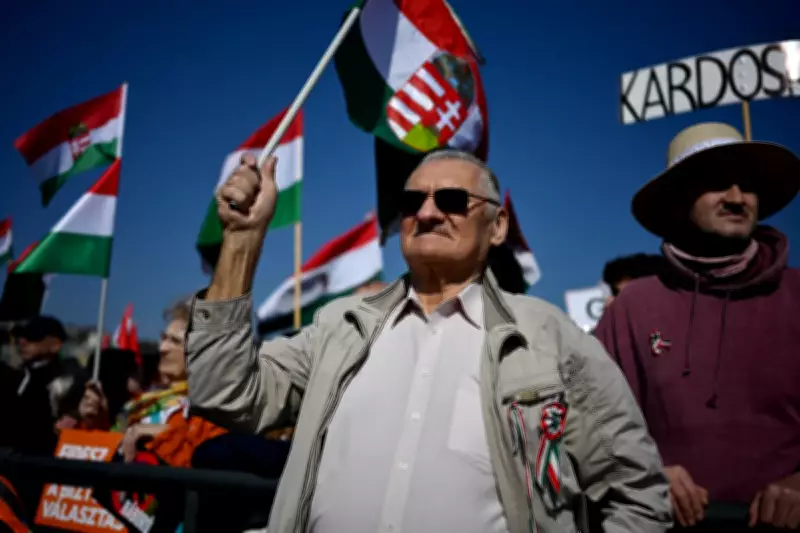
The rival rallies in Hungary's capital were expected to draw hundreds of thousands of supporters, with Orbán's nationalist Fidesz party and Magyar's center-right Tisza party each mobilizing their bases. These events, held on March 15—a national holiday commemorating Hungary's 1848 revolution against the Habsburg Empire—served as a crucial barometer for measuring which side commands greater public support as the campaign enters its final month.
In power since 2010 and seeking his fifth consecutive election victory, the 62-year-old Orbán faces his most competitive race in two decades. Magyar, a 44-year-old lawyer and former Fidesz insider who broke with the party in 2024, has challenged what once seemed an unshakeable grip on power by the pro-Russian populist leader.

Contrasting Messages and Campaign Strategies
As crowds gathered on a bridge over the Danube ahead of the pro-government march that culminated in a speech by the prime minister, Orbán supporter Anikó Menyhárt summarized his appeal in three words: "God, homeland, family." She declared, "Only this government is able to secure these three things for the future."
Meanwhile, Magyar has focused his campaign message on improving conditions for ordinary Hungarians, addressing Hungary's stagnating economy, deteriorating public services, and cost of living crisis. Through relentless campaigning across Hungary's rural countryside—traditionally an Orbán stronghold—Magyar has promised to restore democratic institutions eroded under Orbán and steer the country back toward its Western partners, away from its drift toward Moscow.
In a video posted to social media early Sunday, Magyar stated his party "would like to give back to every Hungarian what the outgoing government has taken away: our belief in our freedom, and the feeling that our homeland truly belongs to every Hungarian."
Polling and Electoral Dynamics
Tisza holds a lead over Fidesz in most independent polling. A February survey by pollster Medián, published by news site HVG, showed Magyar's party with a 20 percentage point advantage among decided voters. However, the election outcome remains uncertain as Fidesz leverages its broad support in rural areas and control over public broadcasters and loyal media outlets to deliver its message.
Orbán's campaign has increasingly relied on an aggressive anti-Ukraine narrative, alleging that Kyiv, the European Union, and Tisza are conspiring to oust his government. His central message warns that a new government would bankrupt Hungary by supporting Ukraine against Russia's invasion—something he has refused to do—and send Hungarian youth to their deaths on the front lines.
Allegations and Tensions Escalate
Magyar has responded to media reports suggesting Russian intelligence services might use disinformation campaigns to tilt the election in Orbán's favor, warning supporters about potential manipulated recordings designed to discredit him or his movement. The campaign has been marked by disinformation, including heavy use of pictures and videos generated by artificial intelligence.
Further escalating tensions, Hungary's government announced this week it will declassify a national security report that Orbán claims will prove Tisza received illegal financing from Ukraine—a claim Magyar has strongly denied. Both leaders emphasized to their followers the critical importance of attending Sunday's rallies, with many observers watching closely to see which party could mobilize more supporters as an indicator of potential performance in the April 12 election.

Tisza has predicted its rally would be Hungary's "biggest ever political event," while Orbán's supporters gathered in what they described as a show of unwavering loyalty. The competing narratives—Orbán's emphasis on national sovereignty and traditional values versus Magyar's focus on democratic restoration and economic improvement—highlight the stark choices facing Hungarian voters in this consequential election.