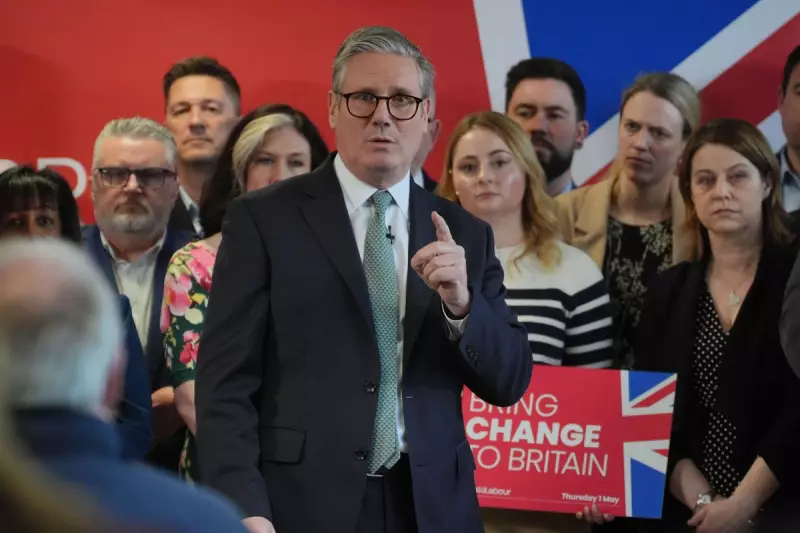
The Labour government faces a mounting democratic crisis over its controversial decision to postpone local elections in 27 council areas, a move that will deny an estimated four million people their right to vote this May.
A 'Cross-Party' Betrayal of Democracy?
At the heart of the dispute is a government plan, approved by Local Government Secretary Steve Reed, to allow councils due for abolition in 2028 or 2029 to delay their scheduled May 2026 elections. This means councillors elected for four-year terms could serve for six or seven years without facing the electorate again. The government's defence hinges on a consultation that saw two-thirds of Labour councils and one-third of Conservative councils favour postponement.
Reed has argued that holding "pointless elections" for soon-to-be-abolished positions is a waste of money, insisting "Labour wants to fix potholes" instead. He posed the rhetorical question: "Ask the public if they think it’s a good idea to elect thousands of councillors to jobs that are set to be abolished." Critics, however, swiftly counter that the public is not being asked; the decision was made after consulting the councillors whose jobs are at stake.

Farage Seizes the Initiative
The political manoeuvre has backfired spectacularly, providing Nigel Farage with a potent platform. He has initiated legal action to overturn the decision and condemned what he labels a "democratic outrage" perpetrated by the two main parties. For Farage, whose career was built on the "let the people vote" mantra, this is an open goal.
The situation also caused discomfort for Conservative leader Kemi Badenoch, who was forced to declare, "I am not a dictator," after stating her personal opposition to the move while accepting it was a matter for local councils. This attempted embarrassment of the Tories has ultimately gifted Farage a powerful narrative as the sole defender of fundamental voting rights.
A Basic Political Law Forgotten
Historically, opposing the public's right to have a say has been seen as a losing political strategy. The article draws parallels with Margaret Thatcher's abolition of the Greater London Council, which sparked a campaign for a say, and Tony Blair's eventual concession to demands for EU referendums. David Cameron ultimately yielded to the decades-long campaign for an EU membership vote.
Polls suggest many voters believe Labour is delaying elections because it fears losing them. The party is defending seats won during the Tory turmoil of 2022 and, in London, its second-best results in sixty years. Analysts predict a severe defeat for Labour in the areas still holding votes, a result no gap in the data will conceal.
By appearing to sideline democracy for short-term administrative savings and to minimise expected electoral humiliation, Labour has walked into a trap. The episode raises a stark question: why hand Nigel Farage such a straightforward propaganda victory, allowing him to posture as the champion of democratic principles against an out-of-touch establishment?