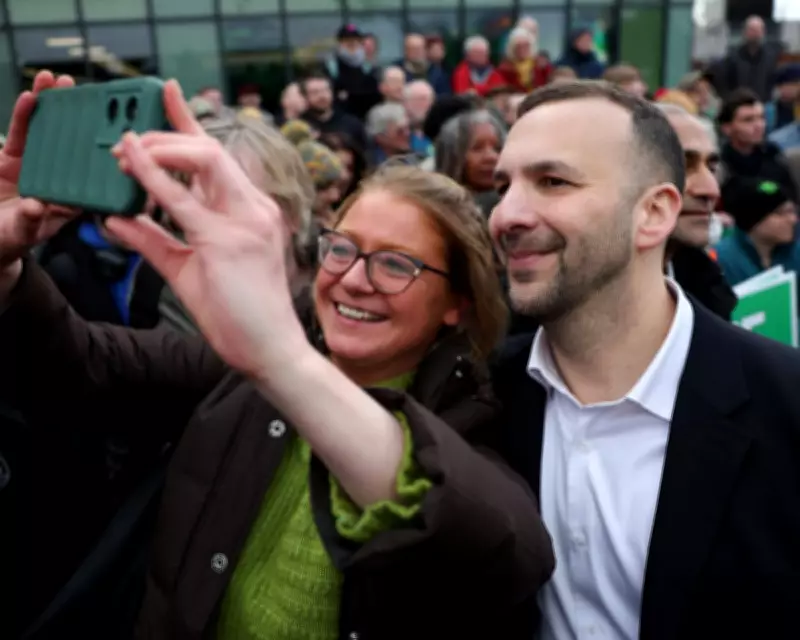
Labour's Gorton and Denton Byelection Challenge as Greens Gain Momentum
In three weeks, voters in Gorton and Denton will cast their ballots in a crucial byelection that has captured national attention. This contest serves as a significant verdict on Keir Starmer's premiership, following the controversial decision to block Andy Burnham from standing. With Reform UK aggressively targeting the seat and the Greens currently favoured by bookmakers, the election represents a microcosm of Britain's most pressing political questions.
Caerphilly's Stark Warning for Labour
Political predictions remain challenging amidst ongoing flux, yet the recent Caerphilly byelection in Wales provides a clear indicator of potential outcomes. The parallels between Caerphilly and Gorton and Denton are remarkably stark. Both areas have long been Labour strongholds, though Gorton and Denton's current boundaries were established only recently. Each contest unfolds against a backdrop of deeply unpopular Labour governance—in Caerphilly's case, the Welsh Labour administration in Cardiff Bay.
Reform UK committed substantial resources to both campaigns, while a left-of-centre alternative to Labour emerged as the primary challenger to Reform. In Caerphilly, Plaid Cymru secured victory, whereas in Gorton, early polling suggests the Greens hold strong potential. The memory of Nigel Farage's swift departure from Caerphilly after Reform placed second remains vivid, highlighting the volatility of these contests.

Four Critical Lessons from Labour's Caerphilly Defeat
First, Labour must recognise that losing its status as the most effective vehicle to stop the right triggers significant voter defections. In Caerphilly, Plaid Cymru surged from 28% support in 2021 to 47% in 2025, while Labour plummeted from 46% to just 11%. This dramatic shift occurred because Plaid became viewed as the best option to prevent a Reform victory. During the 2024 general election, much of Labour's support stemmed from anti-Tory sentiment rather than enthusiasm for Starmer. If the narrative solidifies that voting Green represents the only way to stop Reform in Gorton, Labour faces severe trouble.
Second, high campaign spending does not guarantee success. In Caerphilly, Labour expended £98,000—more than £26 per vote received—while Reform spent £96,000. Plaid Cymru achieved victory with just £47,000, spending approximately £3 per vote. Labour's wasteful expenditures included £25,000 on Airbnbs, some located nearly an hour's drive from the constituency. Effective resource allocation proves more crucial than sheer financial outlay.
Third, Labour cannot afford to treat voters as disconnected from reality. During the Welsh campaign, Labour's candidate urged votes to "save our libraries," despite the proposed closures originating from a Labour council. This created a farcical situation where a Labour candidate sought election to a Labour-run Senedd to persuade a Labour council to use Labour-provided funds to reverse Labour-initiated cuts. Voters rejected this contradictory messaging. In Gorton, where a Labour mayor already governs, candidates must avoid positioning themselves as change agents when their party controls existing institutions.
Fourth, turnout patterns defy conventional expectations. While byelections typically feature low participation, motivated voters will participate when stakes appear high. In Caerphilly, turnout increased from under 44% in 2021 to 50.4% in 2025, exceeding the Welsh average. This surge reflected left-wing voters' determination to block Reform. Any strategy assuming typical byelection apathy will likely miscalculate.
The High Stakes and Systemic Questions
The implications extend beyond immediate results. Caerphilly demonstrated that defeats can diminish hard-right parties' interest; since their loss, Reform's engagement in Wales has noticeably declined. Nigel Farage's persona relies heavily on perceived infallibility, and decisive losses undermine this narrative. These byelections could prevent the first domino from falling in Reform's advance.

Regardless of outcomes, Keir Starmer must confront systemic issues highlighted by both contests. The first-past-the-post system enables majority rule based on minority support, exacerbating societal divisions in a fragmented political landscape. This archaic framework forces voters to choose the least objectionable option rather than their genuine preference, perpetuating a cycle of polarization.
Whether Labour will internalize these lessons remains uncertain. Starmer's leadership has shown little inclination toward introspection. Failure to adapt risks leaving Labour buried beneath the rubble of its own collapsing support bases. The Gorton and Denton byelection thus represents not merely a local contest but a critical test of Labour's capacity for strategic evolution in an increasingly volatile political environment.