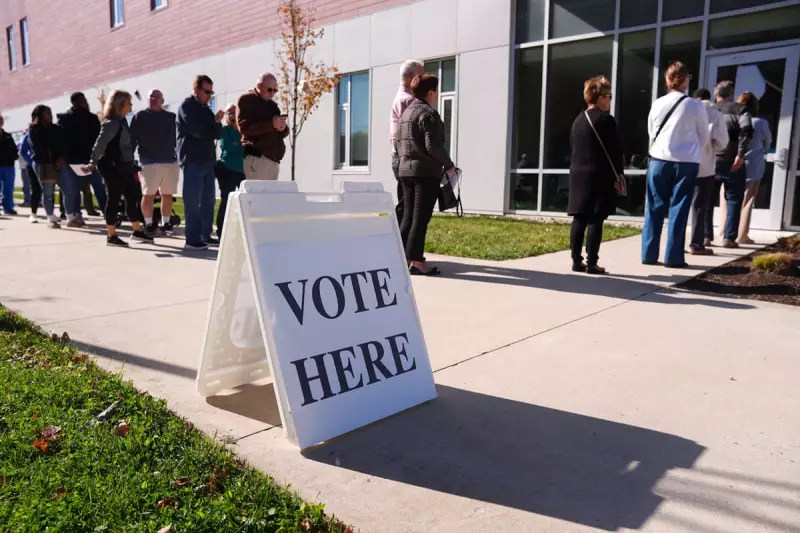
A significant political realignment is underway in American politics as new voting patterns emerge within the Latino community during the recent midterm elections. Traditionally a Democratic stronghold, this crucial voting bloc showed notable shifts toward Republican candidates in several key battleground states.
Economic Concerns Drive Voting Behaviour
Across states like Florida, Texas, and Nevada, economic issues appeared to dominate voters' priorities. Many Latino voters expressed frustration with rising living costs and economic uncertainty, concerns that Republican campaigns successfully amplified in their messaging. The Democratic party, meanwhile, struggled to maintain its historical connection with these communities amid growing dissatisfaction.
In Florida's Miami-Dade County, a traditional Democratic stronghold, Republican candidates made surprising inroads. The shift was particularly noticeable among Cuban-American and Venezuelan-American voters, where conservative messaging on socialism resonated strongly. Similar patterns emerged in Texas's Rio Grande Valley, where border security and economic opportunity became pivotal issues.
Changing Political Landscape
Political analysts note that the changing demographics of the Latino community are creating new political dynamics. Second and third-generation Latino voters are displaying different priorities than their parents and grandparents, with many showing greater openness to conservative economic policies.
The Democratic party's performance among Latino voters in these midterms has raised alarm bells within the party establishment. Several Democratic strategists have acknowledged the need for a revised approach to engaging with these communities, particularly on economic issues and local concerns.
Meanwhile, Republican leaders have celebrated their increased support among Latino voters as evidence of their broadening appeal. They point to their focus on small business growth, public safety, and educational choice as policies that resonated across ethnic lines.
Long-term Implications for US Politics
These voting shifts could have profound consequences for future elections. If these trends continue, they may fundamentally alter the electoral map in crucial swing states where Latino voters constitute a growing percentage of the electorate.
Both parties are now reassessing their outreach strategies in light of these developments. The Democratic party faces the challenge of rebuilding trust with a demographic that has historically formed part of their base, while Republicans must determine how to consolidate their recent gains.
As one political commentator noted, the Latino vote is no longer a monolith that can be taken for granted by either party. The community's diverse origins, generational differences, and evolving priorities are creating a more complex political landscape that will require nuanced engagement from all political actors.