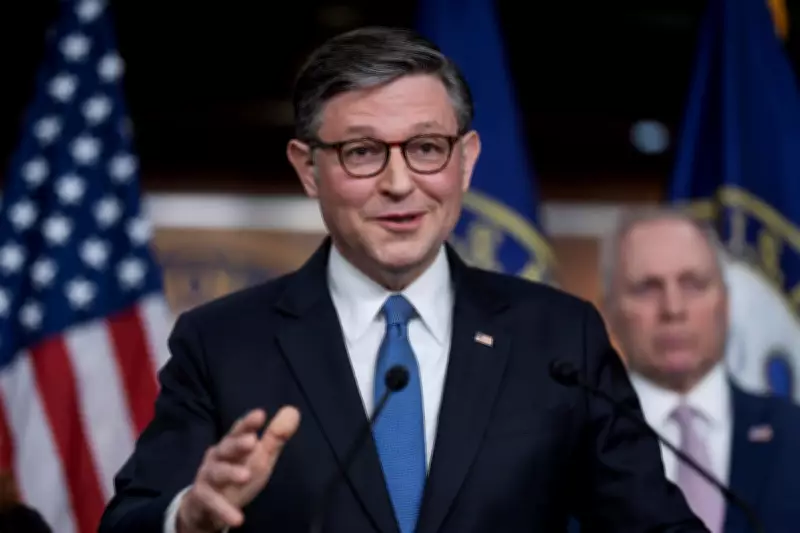
House Speaker Mike Johnson has declined to provide any specific example of election fraud that the proposed SAVE America Act would actually prevent, raising questions about the necessity and targeted impact of the controversial legislation. When directly questioned on Tuesday, 17 March 2026, about a past instance of fraud the act would address, Mr Johnson refused to elaborate, responding tersely, "Look, we're not gonna litigate all that."
Details of the SAVE America Act
The SAVE America Act is a Republican-backed bill that mandates proof of citizenship for voter registration and requires approved identification at polling stations. Proponents argue it strengthens election integrity by preventing non-citizens from voting and reducing identity fraud. However, critics contend it could disenfranchise eligible voters and create unnecessary barriers to participation.
Political Context and Trump's Endorsement
Former President Donald Trump has strongly endorsed the legislation, asserting that its passage would "guarantee the midterms" for the Republican Party in the upcoming November elections. This statement has fueled partisan debate, with Democrats accusing Republicans of using the bill for political gain rather than addressing genuine security concerns.

Johnson's refusal to name a specific fraud instance comes amid heightened scrutiny of the act's provisions. Supporters point to general concerns about non-citizen voting and lack of ID verification, but concrete examples of widespread fraud have been elusive in recent elections. The Speaker's evasive response suggests a strategic avoidance of detailed justification, potentially to sidestep contentious data disputes.
Broader Implications for Election Policy
This incident highlights ongoing tensions in American election policymaking, where measures touted as fraud prevention often face accusations of voter suppression. The SAVE America Act's focus on citizenship proof and ID requirements mirrors similar laws in states like Georgia and Texas, which have faced legal challenges and public backlash.
Analysts note that Johnson's stance may reflect a broader Republican strategy to prioritize legislative action over evidential debate, especially with midterms approaching. However, without clear examples of fraud the act would stop, its efficacy and necessity remain points of contention, likely influencing both public opinion and congressional negotiations in the coming months.