One Nation's South Australian Litmus Test: From Poll Surge to Ballot Box
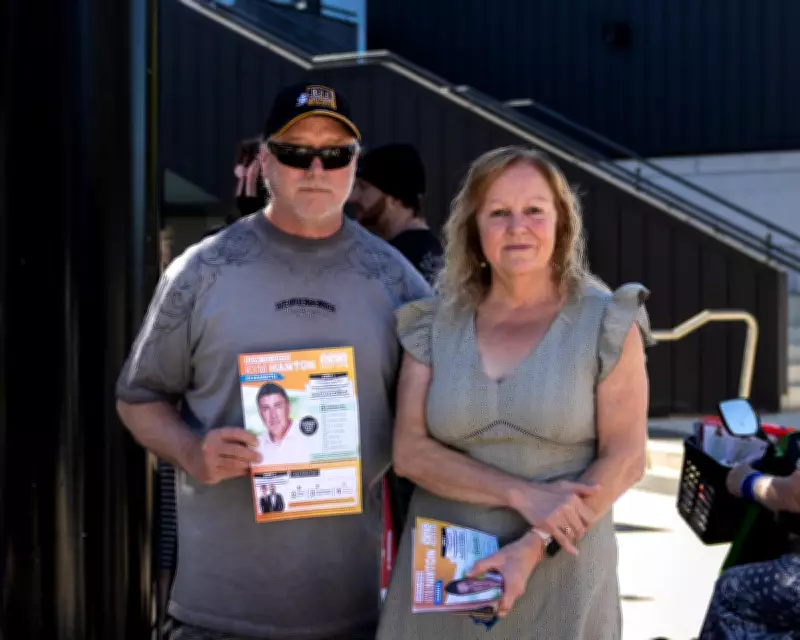
In the working-class northern suburbs of Adelaide, a queue snakes outside the Playford Civic Centre on election day. Among those waiting are Chris, an irrigation technician, and his partner Tracey from Davoren Park. "We need big changes in this country, mate," Chris declares, explaining his shift from lifelong Labor voter to One Nation supporter. "Pauline and the gang have got the answers. Labor makes promises, then dips in your pocket."
A Campaign Built on Grievance and National Pride
The scene at Williamstown Soldiers' Memorial Hall, about an hour's drive north-east of Adelaide, captures One Nation's campaign ethos. As about sixty people gather for candidate Bruce Preece's launch, campaign manager John Tate—wearing a One Nation T-shirt and Australian flag bucket hat—leads the audience in standing, placing hands on hearts, and singing the national anthem. The event features party "heavyweights" including state president Carlos Quaremba and NSW senator Sean Bell.
"What I say to the other parties who call us a grievance party is, we're grieving because you're not listening," Quaremba tells the predominantly older crowd. He frames the March 21 state election as an opportunity to send a message to what One Nation labels the "uniparty" of Labor and Liberals in South Australia, and to Prime Minister Anthony Albanese in Canberra.

The Strategic Landscape and Electoral Mathematics
This election represents the first significant test for One Nation's campaign machinery since its recent surge in national polls. With the federal Farrer byelection not until May 9, South Australia serves as an early indicator of whether polling momentum can translate into parliamentary seats. The party is running candidates in all 47 lower house seats, a dramatic increase from just 19 in 2022 when it received only 2.6% of the vote.
Three February opinion polls placed One Nation's primary vote in the twenties, ahead of the Liberals. Political analysts widely expect the party to secure two of the eleven upper house seats, which would guarantee eight-year terms for Quaremba and former Liberal senator-turned-One Nation state leader Cory Bernardi. However, major party insiders remain skeptical about lower house gains, drawing parallels with Nick Xenophon's SA-Best party collapse in 2018 after similar polling surges.
Regional Targets and Resource Challenges
One Nation's campaign has focused attention on regional South Australia where Labor traditionally struggles, particularly the Yorke Peninsula seat of Narungga and Mount Gambier and MacKillop in the state's south-east. Party leader Pauline Hanson campaigned with Bernardi in these areas, traveling in an aircraft registered to mining magnate Gina Rinehart's S Kidman and Co—a detail Labor Premier Peter Malinauskas highlighted as contradictory to One Nation's "battler" image.
The campaign faces practical challenges under South Australia's new electoral laws banning donations. One Nation's SA branch spent just $1,980 on Meta platform advertising in the 30 days to March 13, compared to $81,000 from Labor-linked pages and $67,000 from Liberal accounts. The laws do create incentives for statewide campaigning, with higher taxpayer funding per vote potentially providing One Nation with a financial windfall regardless of seat outcomes.
Voter Sentiment: From Culture Wars to Cost of Living
At the Schubert campaign launch, grievances ranged from "mass migration" and school "brainwashing" to government spending. The audience applauded when Senator Bell noted how "refreshing" it was to begin with the national anthem rather than a Welcome to Country. Candidate Preece himself made headlines last year after being accused of snubbing an acknowledgment of country and using a homophobic slur.
Among attendees was 49-year-old Alana, a former Labor voter turned Christian who felt politically displaced after the COVID-19 pandemic. "I feel like the little people just get stepped on all the time," she says. "I don't feel heard."

Bernardi's Balancing Act and Major Party Responses
Bernardi, dressed in sharp suits with a distinctive belt buckle, presents as an unlikely champion for working-class concerns. His social media content predominantly fans culture wars, raging against the state-based Indigenous voice to parliament (which One Nation promises to abolish), mocking the Kaurna language, and criticizing the ABC. Yet during the campaign, he emphasized cost-of-living issues over cultural battles, suggesting recognition of the messaging needed to broaden appeal.
Opposition Leader Ashton Hurn, whose Liberal-held seat of Schubert faces a One Nation challenge, says she will leave the party to "row its own canoe." Premier Malinauskas, expected to win comfortably, offers more nuanced analysis, empathizing with voter frustration born of economic inequality and "lost opportunity" while questioning One Nation's policy substance.
"What's One Nation's housing policy?" Malinauskas asks rhetorically. "Identifying problems is easy, but the job is to provide solutions. That's why we have a housing policy that stands in stark contrast to One Nation, which seems to be a policy-free zone."
The Verdict from the Voting Queue
Back at Playford Civic Centre, Chris remains unconvinced by such arguments. He worries whether his youngest child will ever own a home and wants an end to "wind towers and all that rubbish." His grievances echo those heard across One Nation's campaign—concerns about housing, energy costs, and political disenfranchisement.
"Give us a chance to live, we don't get a chance to live no more," he says, before delivering his electoral prediction: "One Nation is the go, mate—I'm telling you right now." As votes are counted, South Australia will reveal whether this sentiment translates into seats or remains protest without parliamentary power.