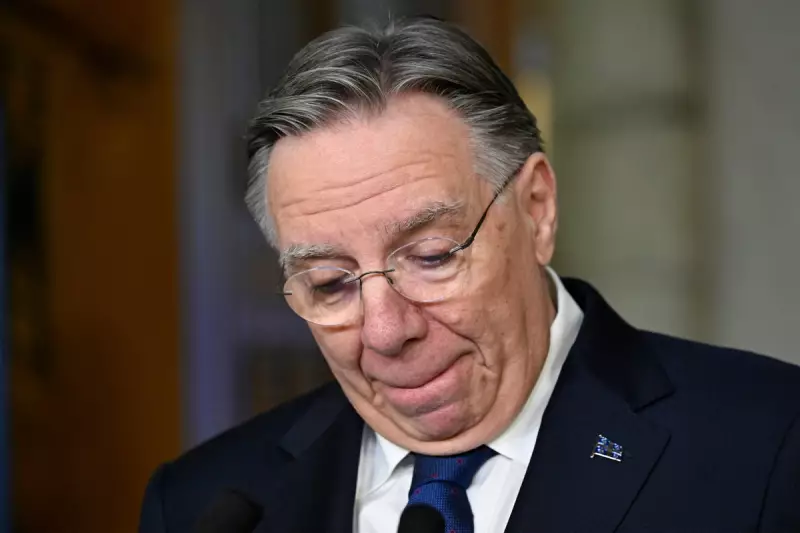
In a dramatic political development, the Premier of Quebec, François Legault, has announced he will step down from his role. The leader of Canada's predominantly French-speaking province cited his own unpopularity as the primary reason for his decision, which comes just months before a scheduled provincial election this autumn.
A Sudden Exit Ahead of the Polls
The announcement was made on Wednesday, 14 January 2026. Legault, who founded the Coalition Avenir Québec (CAQ) party and has served as premier since 2018, stated he recognised a clear public desire for change. "I'm seeing now that many Quebecers are hoping and wanting a change and a change in premier," Legault said. He added that for the good of his party and Quebec, he would resign his position.
He confirmed he would remain in office until the CAQ appoints a new leader. The party now faces a compressed timeline to select a successor to lead them into the fall election campaign.

Plummeting Popularity and Political Context
Legault's admission of unpopularity is backed by polling. Daniel Béland, a political science professor at Montreal's McGill University, noted, "He is the least popular premier in the country right now." Béland explained that while Legault was initially very popular after taking power in late 2018, his support began to decline sharply in early to mid-2023. This was attributed to a loss of public trust stemming from unpopular policies and poor government communication.
The resignation adds significant volatility to an already unpredictable electoral landscape. The province's separatist party, the Parti Québécois, is seen as a potential winner in the autumn vote. Meanwhile, the provincial Liberal party, a staunch defender of Canadian unity, is also seeking a new leader after its previous head resigned over allegations of vote-buying by party members.
Quebec's Enduring Political and Constitutional Dynamics
The political shift occurs against the backdrop of Quebec's long-standing and contentious place within Canada. The British completed their takeover of New France in the 1760s, setting the stage for centuries of identity debates. The modern sovereignty movement gained force with the formation of the Parti Québécois in the 1960s under René Lévesque.
Today, Quebec, with a population of 9.1 million, is roughly 80% French-speaking and already possesses significant autonomy. It sets its own income tax, operates a distinct immigration policy that favours French speakers, and has laws that prioritise the French language over English. The province has held two referendums on sovereignty, with the 1995 vote rejecting independence by a razor-thin margin.
Professor Béland injected a note of caution regarding any renewed push for independence, pointing to the wider geopolitical climate. "The presence of Donald Trump in the White House should give pause to those who think a provincial independence referendum is a good idea in the current context," he said. The CAQ itself has historically sought greater autonomy and power for Quebec within Canada, rather than full independence.
Legault's departure marks a pivotal moment for Quebec, setting the stage for a fiercely contested election that will shape the province's relationship with the rest of Canada for years to come.