Election Observers Report Record 'Family Voting' in Gorton and Denton Byelection
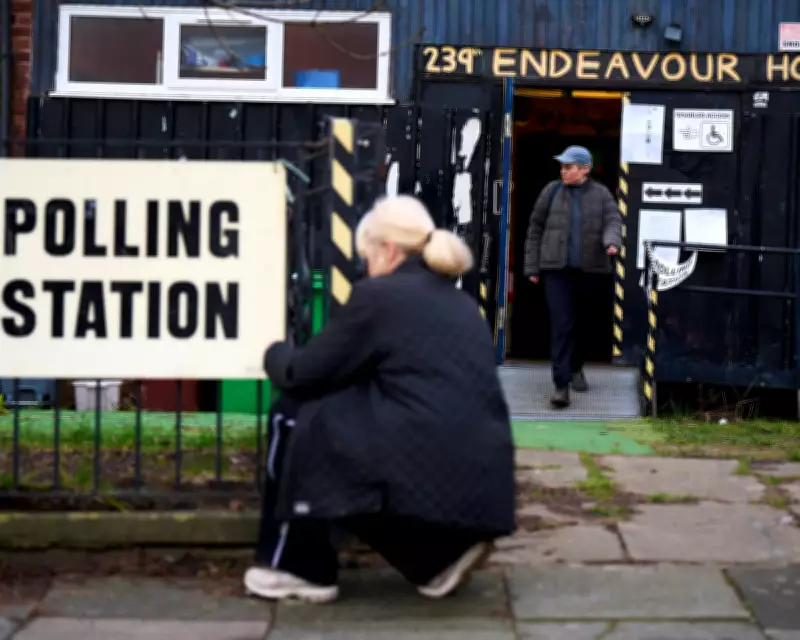
An election observer group has raised significant concerns over potential breaches of the secret ballot during the Gorton and Denton byelection in Manchester. Democracy Volunteers, an organisation founded by Dr John Ault and supported by Conservative peer Professor Robert Haywood, deployed four accredited observers across the constituency.
Unprecedented Levels of Observed Collusion
The team attended 22 of the 45 polling stations while polls were open, spending between 30 and 45 minutes in each location, working in pairs. Their focus was on identifying what they term "family voting," where individuals appear to collude on votes, potentially violating secret ballot rules. They also monitored the impact of voter ID requirements.
Democracy Volunteers reported observing family voting in 15 of the 22 polling stations visited, with a total of 32 cases documented. In one polling station alone, nine instances were recorded. From a sample of 545 voters casting their ballots, the group estimated that 12% were either directing or affected by family voting.

Historical Context and Legal Framework
Dr John Ault, director of Democracy Volunteers, stated, "Today we have seen concerningly high levels of family voting in Gorton and Denton. Based on our assessment of today's observations, we have seen the highest levels of family voting at any election in our 10-year history of observing elections in the UK."
He added that while the Ballot Secrecy Act of 2023 made family voting more clearly a breach of the secret ballot, signage to discourage the practice was only visible in 45% of the polling stations observed. Ault noted that the group rarely issues reports on election night, but the data collected was extremely high compared to other recent byelections.
For context, in the recent Westminster parliamentary byelection in Runcorn and Helsby, family voting was observed in 12% of polling stations, affecting 1% of voters. In contrast, the Gorton and Denton byelection saw family voting in 68% of polling stations, impacting 12% of observed voters.
Additional Observations and Official Response
The volunteers also noted other incidents, including voters taking photographs of their ballot papers and one individual being authorised to vote despite already being marked as having voted earlier in the day. Cases of voters being turned away were reported, but these were attributed to registration issues, such as EU citizens eligible only for local elections.
Manchester City Council responded by stating that its staff had been trained to identify voter interference and that no concerns had been reported during polling hours. A spokesperson for the acting returning officer expressed disappointment, saying, "If Democracy Volunteers were so concerned about alleged issues they could and should have raised them with us during polling hours so that immediate action could be taken."
The council highlighted that a central byelection hub was operational, responding rapidly to reported issues in liaison with police, who had a presence at every polling station.