Republican Strategists Sound Alarm Over Potential Midterm Election Disaster
Republican operatives are reportedly bracing for what they privately describe as a potential "bloodbath" in the upcoming 2026 midterm elections, with growing concerns that their current 53-47 Senate majority could be in serious jeopardy. This anxiety stems from President Donald Trump's increasingly unpopular policies and a series of recent Democratic electoral victories that have shaken GOP confidence.
Internal Polling Reveals Unexpected Vulnerabilities
Two Republican strategists speaking anonymously to Axios this week revealed that internal polling shows Senate races in traditionally red states including Alaska, Iowa, Georgia and Ohio may be far more competitive than previously anticipated. "A year ago, I would have told you we were almost guaranteed to win the Senate," one GOP operative confessed after reviewing the latest data. "Today, I would have to tell you it's far less certain."
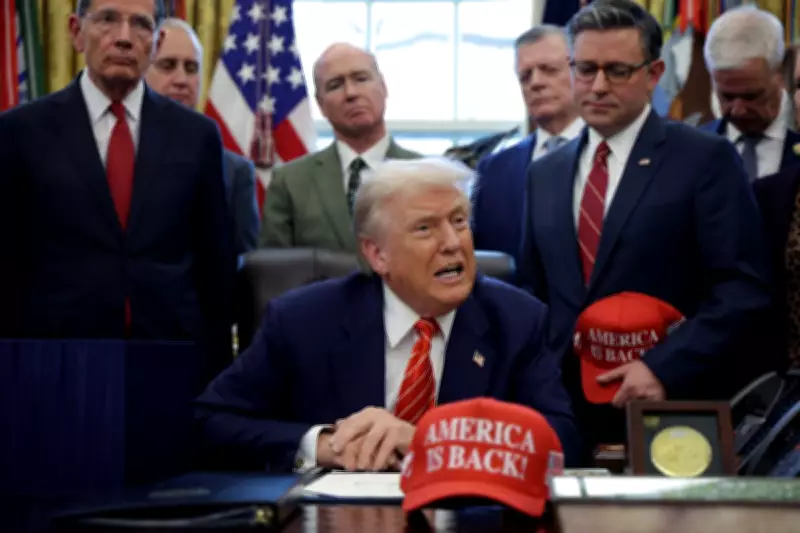
The strategists attribute this shift to the public's growing dissatisfaction with President Trump's aggressive immigration enforcement policies and his handling of economic issues. While Trump continues to pressure House Republicans to prepare for tough reelection battles given their slim majority in the lower chamber, the Senate now appears equally vulnerable.

Democratic Victories Signal Changing Political Landscape
The most alarming development for Republicans came with the Democrats' recent victory in a Texas special election, where newly-elected Representative Taylor Rehmet flipped a traditionally red congressional district in the Fort Worth area. This ended Republicans' three-decade-long reign in that district and served as what Republican Representative Don Bacon of Nebraska called a "warning" to his party about staying focused on key issues like border security and inflation.
"It should be a warning, and I think we've got to respond," Bacon told CNN this week, acknowledging the significance of the Texas upset. This follows broader Democratic success in November's local and state elections across the country, where Democrats won numerous major contests indicating that Republican messaging was failing to connect with swing voters.
Policy Failures and Public Backlash
President Trump's signature economic policy of tariffs has contributed to increased consumer prices according to the Consumer Price Index, though Trump himself denies this connection. Economists suggest inflation could be lower without these tariffs in place, undermining Trump's claims of making everyday necessities more affordable for Americans.
Meanwhile, the administration's aggressive immigration enforcement has led to significant public backlash. Videos of family separations have circulated widely on social media, accompanied by stories of children who grew up in the United States being deported with their parents. The fact that most apprehended immigrants have no criminal record has particularly troubled independent voters, leading to declining approval of Trump's immigration policies.
This marks a significant shift from Trump's campaign days when tough immigration rhetoric resonated strongly with his base. The policy's human costs, including the deaths of at least two U.S. citizens during enforcement actions, have made it a less effective political message than previously.
Democratic Messaging Gains Traction
Democrats have successfully capitalized on these Republican vulnerabilities by focusing their messaging on affordability and economic concerns, which consistently rank as top issues for American voters. This approach contributed to significant Democratic victories including New Jersey Governor Mikie Sherrill maintaining Democrats' leadership streak (something not achieved since the 1960s) and Virginia Governor Abigail Spanberger becoming the first woman to hold that position in her state.
While President Trump has attempted to reclaim the affordability narrative by insisting Republicans are making life less expensive for Americans, polling indicates many voters remain unconvinced. His preoccupation with projects like building a multi-million-dollar ballroom, intervening in foreign conflicts in pursuit of a Nobel Peace Prize, and deporting undocumented immigrants has created a perception among some voters that he's not focused on their economic concerns.

Looking Ahead to November
Although it remains early for definitive polling about how voters will cast their ballots this November, early surveys suggest Republicans have substantial work ahead to maintain their congressional majorities. Nationwide protests opposing Trump and his sweeping use of executive power indicate a motivated resistance movement that could translate into high Democratic turnout during the midterms.
As the election approaches, Republican strategists will need to address both policy vulnerabilities and messaging challenges if they hope to avoid the "bloodbath" they privately fear. The combination of Democratic momentum, Trump's unpopular policies, and recent electoral upsets has created what one operative described as "far less certain" prospects for maintaining Republican control of the Senate.