Marco Rubio Overtakes JD Vance as 2028 Presidential Frontrunner on Kalshi
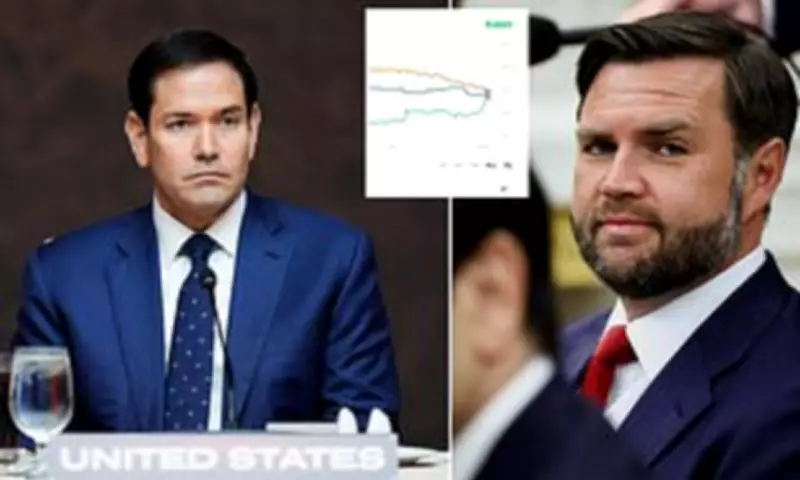
In a significant shift in the political landscape, Secretary of State Marco Rubio has leapfrogged Vice President JD Vance to become the favorite to win the 2028 United States presidential election, according to the regulated prediction market platform Kalshi. Rubio now holds a 19 percent chance of being elected President in 2028, marking a notable rise in his prospects.
Prediction Market Dynamics Show Rubio's Ascendancy
Until recently, Vance had maintained a lead with a 20 percent probability of securing the presidency, while Rubio trailed at just under 17 percent. However, as of the latest data, Vance has slipped to second place, tied with Democratic California Governor Gavin Newsom, both with an 18 percent chance. This reversal highlights the volatile nature of political forecasting and the impact of current events on market sentiment.
Interestingly, Vance retains a strong position on Polymarket, a competing prediction platform, where he leads with a 21 percent chance to succeed President Donald Trump in 2028. On that site, Newsom follows at 18 percent, and Rubio stands at 15 percent, based on Wednesday's figures. This discrepancy underscores the varying methodologies and user bases across different prediction markets.

Foreign Policy Role Boosts Rubio's Odds
Rubio's surge in popularity on Kalshi is closely linked to his elevated role in the administration's response to the Iran war, which has placed him at the forefront of U.S. foreign policy. Since the conflict began, his odds of becoming the next President have nearly doubled, rising from approximately 10 percent to the current 19 percent. This dramatic increase reflects how geopolitical crises can reshape political fortunes overnight.
Further amplifying his profile, President Trump recently tasked Rubio with explaining the administration's expansive foreign policy agenda, particularly following the capture of Venezuela's ex-dictator Nicolas Maduro. Trump has even suggested that Rubio, the son of Cuban refugees, could lead a 'friendly takeover' of Cuba, citing his ability to speak Spanish as a key asset. "Cubans can 'trust' Rubio," Trump noted, emphasizing the linguistic and cultural connection.
Trump's Interest in Succession and Inner Circle Dynamics
President Trump has shown a keen interest in who might succeed him in 2028, repeatedly soliciting opinions from donors and close advisors on Rubio and Vance. According to a Wall Street Journal report, Trump asked a room of donors at his Mar-a-Lago estate for their thoughts on these top lieutenants shortly after launching the war on Iran. Sources revealed that attendees, dining on jumbo crab and rib-eye steaks, applauded more loudly for Rubio than for Vance, signaling a preference within Trump's inner circle.
Trump has also highlighted philosophical differences between himself and Vance, noting that the Vice President was "less enthusiastic" about the war. This contrast may be influencing perceptions of their presidential potential, as both Vance, 41, and Rubio, 54, are former senators with distinct regional appeals that could shape the GOP's 2028 nomination race.
Polling and Influence Metrics Paint a Complex Picture
Despite Rubio's lead on Kalshi, Vance remains a formidable contender. An exclusive survey by the Daily Mail and JL Partners indicates that Vance leads early polling for the GOP's 2028 presidential nominee, with 19 percent of respondents identifying him as the most influential member of Trump's inner circle. Rubio followed in second place with 12 percent, suggesting that while prediction markets favor Rubio, traditional polling still shows Vance's strength among Republican voters.
This divergence between prediction markets and conventional surveys underscores the multifaceted nature of political forecasting. As the 2028 election approaches, the interplay between market odds, polling data, and real-world events will continue to evolve, making Rubio and Vance central figures in the unfolding political drama.