The political landscape of New York City, and by extension the United States, has been fundamentally reshaped by the remarkable election of Zohran Mamdani as Mayor. His victory, seen as an insurgent triumph against the established Democratic machine, has laid bare a profound and growing fissure within the party, a drama played out in hysterical fashion across the front pages of the nation's most famous tabloid.
The Tabloid Frenzy and a Campaign of Contradictions
For devoted readers of the New York Post, Mamdani's ascent provided months of sensational copy. The paper's coverage swung wildly, attempting to pin the candidate with every conceivable ideological bogeyman. Initially, columnists like Miranda Devine framed the race through a lens of 'Antifa' militancy, warning of a left-wing takeover of Democratic cities like Portland and Chicago.
This narrative shifted abruptly by mid-October. The focus turned to Mamdani's alleged links to Muslim figures, prominently featuring Imam Sirah Wahhaj, whom the Post labelled an 'unindicted co-conspirator' in the 1993 World Trade Center bombing. The paper claimed Wahhaj had called for a 10,000-strong march, conflating it with 'jihad'.

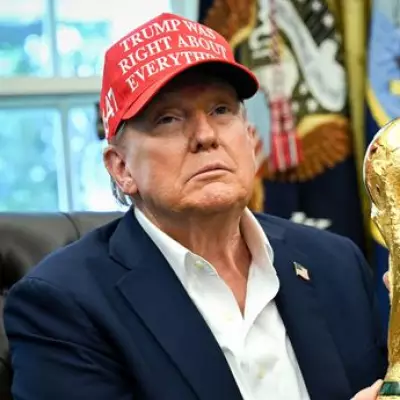
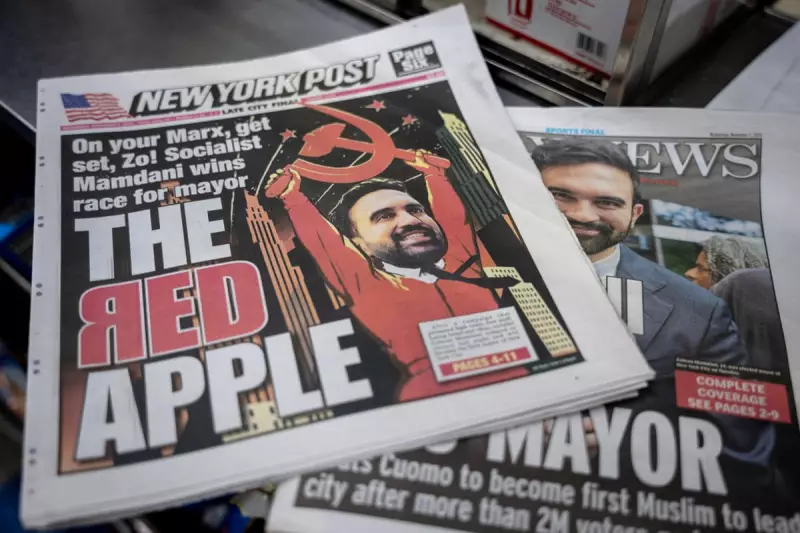
Yet, in a dizzying pivot, the tabloid soon 'discovered' Mamdani's 'truer origins' were not in Islamist extremism but in Marxism-Leninism. The paper, with help from its 'special correspondent' Donald Trump, began branding the mayor-elect a 'communist' who would bring 'Economic and Social Disaster'. Front pages screamed 'Keep the Commie Out!' and later, after his victory, 'On your Marx, get set, Zo!' The campaign was a masterclass in contradictory smears, linking him simultaneously to anti-fascist secularists, conservative jihadists, and godless communists.
The Real Political Battle: Machine vs. Movement
Beyond the tabloid madness, a genuine and significant political struggle was underway. The national and local Democratic party machinery, deeply uncomfortable with Mamdani's progressive, socialist label, worked to stymie his 'radical' takeover. Key figures were notably tepid in their support.
Senate Minority Leader Charles Schumer offered no endorsement. House Minority Leader Hakeem Jeffries, wary of a primary challenge from Mamdani's camp, gave a last-minute, lukewarm backing. New York State party chairman Jay Jacobs declined to endorse him entirely. This resistance stemmed from a fundamental dislike among party bosses for the kind of popular, high-demand politics Mamdani represented, which threatens traditional top-down patronage and candidate selection.
Mamdani's success was undeniable. He helped double voter turnout from 2021 to at least 42%, securing a slim absolute majority with over 1 million votes. His platform resonated in an astronomically expensive city: a pledge to freeze rents and impose slightly higher taxes on the wealthy—social democratic policies, not revolutionary expropriation.
The Fault Line: Brooklyn vs. Queens and the Future
The crucial political civil war is not the traditional national partisan split but a new, localised fault line within New York's Democratic heartland. It runs between the old Brooklyn machine—the organisation that produced former Mayor Eric Adams and is the power base for Schumer and Jeffries—and the rising progressive movement in Queens, where Mamdani moved in 2018 and built his winning coalition.
This rift was crystallised by the dramatic arrest of deposed Venezuelan President Nicolás Maduro in Brooklyn. While Schumer and Jeffries offered cautious, muted criticism of the operation's recklessness, Mayor Mamdani issued a short, unequivocal protest, even calling the President directly. This act ended his brief truce with the New York Post, which promptly returned to attack mode.

The defining political fight now is not merely Trump versus the Democratic establishment. It is the internal Democratic struggle between the progressive wing embodied by Mamdani and figures like Alexandria Ocasio-Cortez, and the party's powerful old guard: Schumer, Governor JB Pritzker, and California's Gavin Newsom. The battle ground is not the Mason-Dixon line but the new, undesignated border between machine-dominated Brooklyn and insurgent Queens.