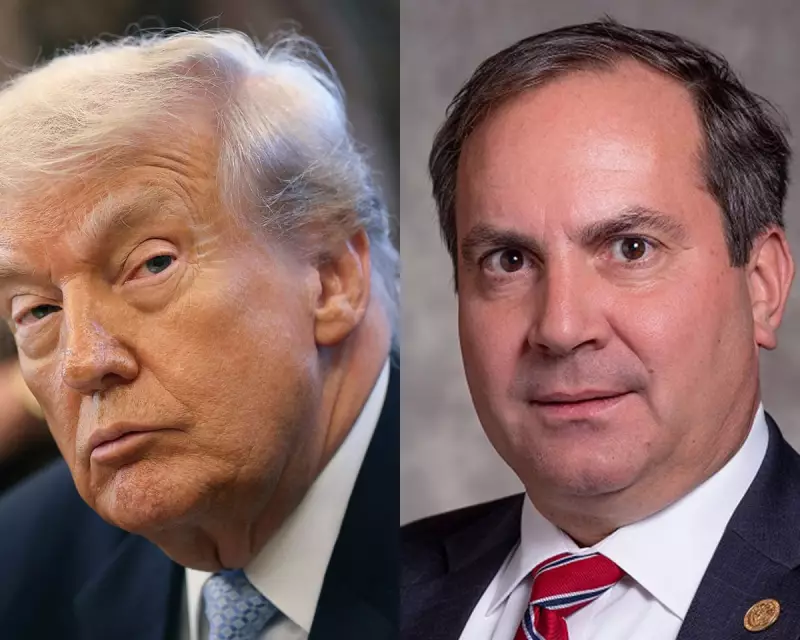
Former US President Donald Trump has launched a scathing public attack on a Republican state senator from Indiana, Andy Zay, after the lawmaker voted against a contentious redistricting bill. The incident, which occurred on Monday, December 1st, 2025, highlights the deepening fissures within the Republican Party and the ongoing influence of Trump on state-level politics.
The Vote That Provoked a Presidential Rebuke
The controversy centres on a vote in the Indiana State Senate concerning a new congressional map. The proposed redistricting plan was widely seen as an aggressive partisan gerrymander, designed to solidify Republican control over the state's congressional delegation. While the bill ultimately passed, Senator Andy Zay was one of a handful of Republicans who broke ranks to vote against it.
Zay, who represents Indiana's 17th district, cited concerns over the bill's divisive nature and its potential to dilute the voting power of certain communities. His defiance, however, did not go unnoticed by the party's most prominent figure. Donald Trump swiftly responded on his social media platform, Truth Social, branding Zay a "disloyal RINO" – a derogatory acronym for 'Republican In Name Only'. Trump's post accused the senator of betraying the party and its voters.

Trump's Demands and the Senator's Defence
In his characteristic style, Trump did not limit his intervention to criticism. He explicitly called for consequences, demanding that the Indiana Republican Party "immediately withdraw all support" from Senator Zay. This direct call to action places immense pressure on local party officials, forcing them to choose between loyalty to the former president and backing a sitting elected representative.
Senator Zay has defended his position, stating that his vote was a matter of conscience and principle. He argued that the redistricting plan pushed the boundaries of fairness and risked further eroding public trust in the electoral process. His stance represents a rare instance of a state-level politician openly resisting the Trump-aligned wing of the party on a high-stakes procedural issue.
Broader Implications for Republican Unity
This public clash underscores a significant tension within the GOP as the 2026 midterm elections approach. Trump continues to demand absolute loyalty, particularly on issues central to his political narrative, such as electoral control. The redistricting process, a once-a-decade exercise with profound consequences for political power, has become a key battleground.
The incident in Indiana serves as a potent case study. It demonstrates how Trump's influence extends deep into state legislatures, where his endorsement or condemnation can make or break careers. For traditional Republicans like Zay, navigating this landscape requires balancing local constituency interests with the formidable pressure from the party's national base.
The fallout from this episode is likely to reverberate. It raises critical questions about party discipline, the independence of elected officials, and the future direction of Republican politics in the post-Trump era, which shows no signs of truly beginning. The Indiana Republican Party's response to Trump's demand will be closely watched as a bellwether for similar intra-party conflicts across the United States.