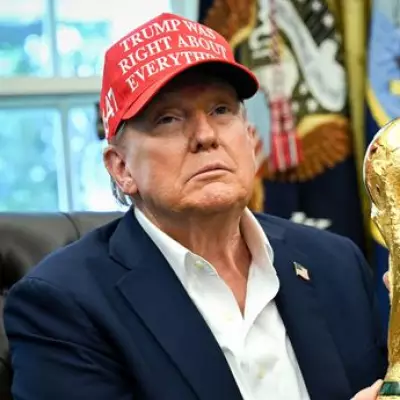
In a startling intervention that has sent shockwaves through American politics, former President Donald Trump has suggested the United States "shouldn't even have an election" this year. This represents his most explicit hint yet at the potential cancellation of the crucial 2026 midterm elections.
From Offhand Remarks to Direct Proposal
For weeks, Trump has been quietly floating the idea of axing the upcoming congressional vote, which opinion polls indicate could deliver a severe blow to his Republican party. While he had previously made vague comments in speeches, he directly proposed the notion in an interview with the Reuters news agency on 15 January 2026.
Expressing clear frustration with a longstanding political tradition, Trump told the reporter that the party controlling the White House historically loses seats in midterm elections. "It's some deep psychological thing, but when you win the presidency, you don't win the midterms," he stated. He then boasted about his accomplishments, concluding, "when you think of it, we shouldn't even have an election."

Echoes of January 6th and War-Time Speculation
The comments come in a highly charged political climate. In a speech last week, delivered on the five-year anniversary of the January 6th Capitol insurrection, Trump complained about the necessity of his party competing against Democrats. "How we have to even run against these people," he said, adding, "I won't say cancel the election, they should cancel the election, because the fake news will say, 'He wants the elections canceled. He's a dictator.'"
Furthermore, during a meeting with Ukrainian President Volodymyr Zelensky, Trump speculated on how a state of war could affect electoral processes. After Zelensky discussed the difficulty of holding elections during Ukraine's conflict with Russia, Trump pondered aloud: "So let me just say three and a half years from now - so you mean, if we happen to be in a war with somebody, no more elections, oh, I wonder what the fake news would say."
Factual Inaccuracies and Constitutional Uncertainty
Elsewhere in his recent rhetoric, Trump has made several factually incorrect claims. He asserted he had won the state of Minnesota in all three presidential elections he contested, despite having lost it on each occasion. He also expressed uncertainty about his eligibility to run in the 2028 presidential election, stating, "I'm not allowed to run. I'm not sure... Is there a little something out there that— I'm not allowed to run, but let's assume I was allowed to run. There's gonna be a constitutional movement."
These latest remarks, particularly the direct suggestion of cancelling a national election, are likely to ignite fierce debate about democratic norms, the sanctity of the electoral process, and the potential for constitutional crisis in the United States. The idea of scrapping a vote due to unfavourable polling represents an unprecedented challenge to the country's foundational democratic principles.