The Hypnotherapist Who Now Holds Britain's Political Future in His Hands
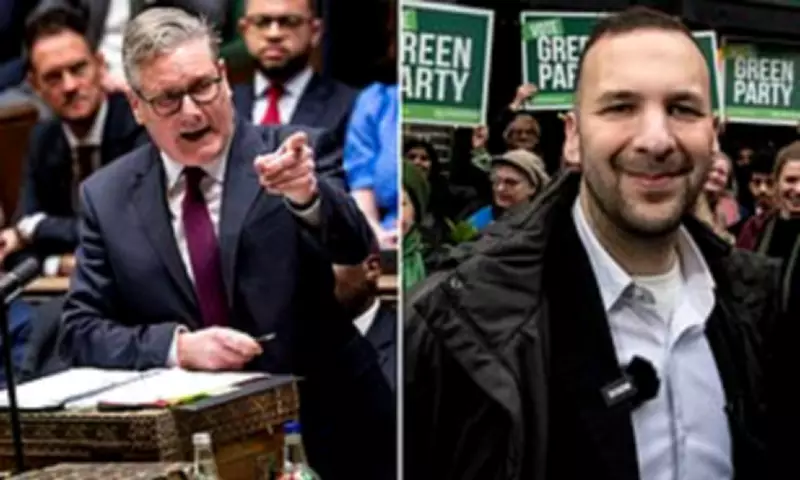
Five years ago, Zack Polanski was practicing as a hypnotherapist, making headlines with claims he could enlarge women's breasts through mental power alone. Today, as deputy leader of the Green Party, he stands at the centre of a political earthquake that is fundamentally reshaping British politics and exposing deep fractures within the Labour government.
A Seismic Shift in Manchester's Political Landscape
Gorton and Denton was once considered Labour's 38th safest constituency, a traditional stronghold where the party could count on unwavering support. That certainty evaporated last month when the Green Party achieved a stunning victory, securing the seat with a commanding 5,000-vote margin over Labour's disappointing third-place finish, while Reform UK pushed them hard into second position.
The tremors from this political upset continue to reverberate far beyond Manchester's boundaries. Labour MPs across the country are reportedly terrified by the implications, while Prime Minister Sir Keir Starmer finds himself increasingly distanced from what many describe as Britain's "sane majority."

The Collapse of Labour's Traditional Coalition
This electoral upset represents far more than a local anomaly. It signals a national collapse of Labour's traditional voter coalition that has been decades in the making. Where the party once relied on solid inner-city support and positioned itself as the champion of the working class, recent polling reveals just 15 percent of working-class voters now desire a Labour government.
"Alarm clock Britain" - that substantial segment of hard-working, patriotic citizens who value their country - is increasingly turning toward Reform UK. Meanwhile, to compensate for this hemorrhaging support, Labour has increasingly courted two specific voter groups: Muslim communities and those reliant on the public sector. Ironically, these are precisely the constituencies that Polanski's Green Party now threatens to poach.
Green Strategy: Less Environment, More Identity Politics
During the Gorton and Denton by-election campaign, the Greens notably downplayed environmental issues in favour of identity-based messaging. They criticised Labour for perceived insufficient loyalty to the Palestinian cause, published campaign materials in Urdu, and circulated a video showing Starmer shaking hands with India's Hindu nationalist Prime Minister Narendra Modi - a calculated move targeting the constituency's substantial Pakistani-heritage population.
The strategy proved devastatingly effective, and with dozens of constituencies sharing similar demographic profiles, Labour has been scrambling to address this vulnerability. The government's recent introduction of a new definition of "anti-Muslim hostility," which provides specific protections against "negative stereotyping" for Muslim communities, has been widely interpreted as a direct response to the Green threat.
Policy Paralysis and Political Submission
Even on issues where Labour recognises reform is necessary, decision-making appears driven by fear of Green insurgency. When Home Secretary Shabana Mahmood proposed modest changes to migrant settlement processes, reports emerged that the government would U-turn after Deputy Prime Minister Angela Rayner described them as "un-British."
This pattern mirrors last summer's abandoned welfare reforms, when even minor adjustments to Britain's generous benefits system were shelved following backbench rebellion. On economic matters, this submission to Green pressure is particularly apparent. Despite widespread recognition that North Sea drilling could reduce energy bills, Starmer refuses to grant new licences, forcing Britain to import the same gas from Norwegian sources.
The Charisma Gap and Leadership Challenges
Personality dynamics further complicate Labour's predicament. Compared to Starmer's often-criticised communication style, Polanski emerges as the more charismatic campaigner - though observers note this isn't a particularly high bar to clear. As May's local elections approach, Labour anticipates significant losses as left-wing supporters find in Polanski the Jeremy Corbyn-style figure they genuinely admire.

Following expected electoral setbacks, desperate Labour MPs may conclude that appeasing Green-leaning voters requires replacing Starmer with Rayner - a move that could precipitate an even more dramatic leftward shift with potentially disastrous economic consequences.
The Fiscal Fantasy of Unlimited Borrowing
Influential Labour figures including Lisa Nandy and Andy Burnham, who have shown increasing restlessness with Starmer's leadership, appear aligned with Polanski's apparent belief that Britain can borrow without consequence. This approach treats public money as mere "zeroes on a spreadsheet" rather than recognising that taxpayers ultimately shoulder the burden of sky-high interest payments on ever-growing national debt.
As Labour chases far-left voters deeper into what critics describe as political fantasy, the nation faces rising taxes, declining living standards, continued illegal migration, and diminished global standing. The upcoming local elections present an opportunity for millions to reject what they see as left-wing extremism and demand practical solutions to Britain's pressing challenges.
Only by sending this clear message can Britain hope to redirect its political trajectory toward sensible governance and away from the ideological brinkmanship that currently threatens to undermine the nation's stability and prosperity.