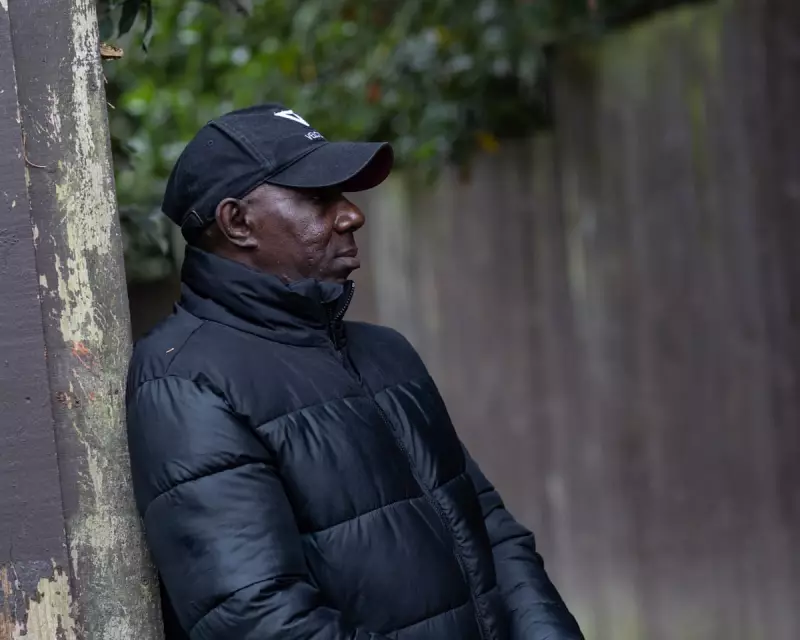
The Escape That Led to 17 Years of Uncertainty
Ussu never imagined that his decision to participate in a military coup in his small, unstable African homeland would lead to nearly two decades of bureaucratic purgatory in the United Kingdom. Growing up in a former Portuguese colony, he had dreamed of becoming a doctor, but military service requirements trapped him in an army he couldn't leave.
"A few of us army colleagues got involved in the coup to overthrow the government because we were surrounded by killings and corruption, and we wanted something better for the country," he recalls. When the coup failed, he faced imprisonment, beatings and torture with iron bars that left permanent scars down the right side of his body.
After two months and seventeen days of captivity, Ussu and a friend made a desperate escape attempt. "We knew we might be killed but decided to take the risk. I didn't have any good options," he explains. That fateful decision on 28 April 2008 marked the beginning of an odyssey that would test his resilience beyond imagination.
A System Designed to Disbelieve
With help from his family, Ussu obtained a false Portuguese passport and planned to seek asylum in Portugal, where he could communicate in the language of his country's former colonisers. Instead, a split-second decision to buy a ticket to the UK when no flights to Portugal were available altered the course of his life completely.
Arriving bewildered and speaking no English, he was nodded through immigration with his false documents. His first encounter with British justice came when he was arrested at Luton airport while attempting to reach Portugal later. He received incorrect legal advice to plead guilty to passport offences, unaware that refugees are protected under the Geneva Conventions when forced to travel on false documents.
This critical misunderstanding began a cascade of legal failures that would plague his case for years. "When I finally found out I had been given the wrong legal advice, I wanted to try to get my conviction overturned but the law firm the solicitor was working for had gone out of business so I couldn't access my records," he says.
After serving a six-month prison sentence, Ussu was moved to Colnbrook immigration detention centre near Heathrow before being released to asylum accommodation in Stockton-on-Tees. There he faced racism and hostility in an area where far-right groups were active.
Homelessness, Injury and Institutional Indifference
When the Home Office refused his asylum claim and terminated his accommodation, Ussu found himself sleeping on an abandoned mattress on a church veranda in London. Police officers occasionally took pity on him, offering leftover food from their station.
His case entered a cycle of refusal and appeal, with one immigration judge noting he had a strong case but couldn't grant the appeal due to poor preparation by his legal representation. Despite having strong evidence of torture from medical experts at Freedom from Torture, the Home Office repeatedly disbelieved his account.
The years of limbo took a dramatic physical turn in 2013 when Ussu was hit by a car while cycling—a bicycle he'd received from the Bike Project charity that represented his only means of transportation as a refused asylum seeker receiving no support.
"So many bad things had happened to me in the UK," he recalls, "but in all the years I have lived here, the way the staff in that hospital talked to me, and the way they told me they were going to discharge me on to the street, when I couldn't walk, was in so much pain and could hardly get out of bed, hurt me so much."
Doctors told him he would never walk properly again, but through determination and returning to cycling, he managed an against-the-odds recovery.
Breaking the Cycle: A Glimmer of Hope
The turning point came when reputable immigration firm Wilsons took on his case, spending four years untangling the legal mess that had accumulated over nearly two decades. Even then, the Home Office rejected his claim before finally losing an appeal in a higher court.
This summer, after 17 years—one of the longest waits endured by any asylum seeker in the UK system—Ussu received his eVisa confirming leave to remain.
The impact of his ordeal extends beyond paperwork. "I've always been a family man but I haven't seen my kids for so long," he says. "They were so small when I left, but now they're 20 and 24." He maintains contact through weekly WhatsApp calls but hasn't been able to reunite physically with his children.
His experience highlights broader systemic issues within the UK's asylum process. Sonia Lenegan, editor of Free Movement website, notes: "The degradation of the legal aid system over the past three decades, overseen by the government, has been a false economy that has certainly contributed to the current state of the asylum system."
Despite government announcements in November 2024 and July 2025 promising increased legal aid fees for immigration work, the desperately needed additional funds have yet to materialise more than three months later.
Now working as a kitchen porter in central London, Ussu looks toward rebuilding his life. He hopes to bring his family together for a reunion in a safe third country and support his children's ambitions to complete master's degrees.
"I have a few simple words to say to the Home Office: you destroyed my life," he states. "How can they hold on to a person for 17 years who has done nothing wrong? Being an asylum seeker here is like living in an open prison."
Despite everything, Ussu remains determined to contribute to British society through work, taxes and continued volunteering. His story stands as both a testament to human resilience and a stark indictment of a system that can leave genuine refugees in limbo for decades.