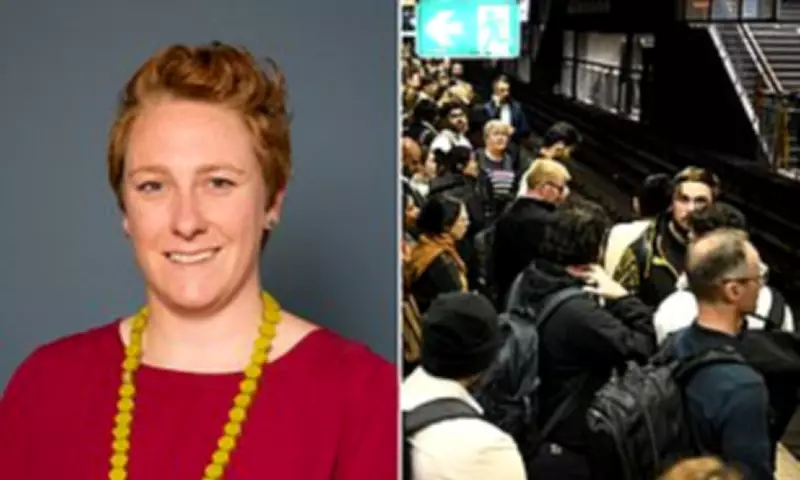
Academic Defends Big Business Role in Migration Policy Amid 'Cult' Accusations
A prominent Australian academic who provoked controversy by asserting that large corporations play a constructive role in steering the nation toward higher migration levels has robustly defended her position after critics labelled her part of a 'pro-migration cult'. Dr Jill Sheppard, a respected political scientist and lecturer at the Australian National University, maintains that business involvement in political fundraising actually helps temper anti-migration sentiment among what she terms the 'median voter'.
The Argument for Business Influence
Extensive survey research conducted by Dr Sheppard reveals that a majority of Australians consistently express opposition to increased migration, regardless of how the question is presented. She contends that business interests, which typically favour higher migration levels to secure labour supply, stimulate economic growth, and maintain open markets, provide a crucial counterbalance to this widespread public resistance. 'My contrarian view on political donations is that money from big business is actually good,' she stated during an appearance on ANU's 'Democracy Sausage' podcast. 'It gets us to a healthy equilibrium, especially on issues like immigration, and can mitigate against these populist tendencies.'
While acknowledging that political donations can sometimes have questionable effects, Dr Sheppard warned that political parties responding exclusively to anti-migration viewpoints risk pulling migration policy dangerously away from what is economically necessary for the country. She emphasised that Australia's economy, its vital university sector, and regional workforces are fundamentally dependent on migration, particularly within the aged care and health sectors. 'Our economy needs it… ultimately I think voters will back the sort of settings we had before Covid,' she argued.
Political Context and Fierce Backlash
Her comments were made against the backdrop of intense political debate, notably surrounding One Nation's calls to drastically reduce migration by capping visas at 130,000 per year—a dramatic cut from current levels exceeding 570,000. Dr Sheppard suggested that as minor parties like One Nation gain electoral popularity, business influence could serve to moderate their more hardline positions, remarking it wasn't the 'worst thing that One Nation has to talk to business more'.
However, these assertions have triggered vehement reactions online and from prominent commentators. Critics have accused Dr Sheppard of effectively endorsing corporate influence over democratic preferences, while supporters argue she is merely highlighting the pragmatic realities of political pressure. Leading the charge against her was economist Leith van Onselen, who slammed her remarks, arguing that the recent surge in migration has directly and negatively impacted Australia's productivity and GDP figures.
'Essentially, what Sheppard has said is: 'Screw what voters actually want'. They don't matter,' van Onselen wrote in a scathing article for Macrobusiness. 'Politicians should represent the lobbying interests of Big Business. Sheppard has confirmed that the ANU is an open-borders migration cult that will say anything to keep the numbers flowing.'
Robust Defence and Policy Dismissals
Dr Sheppard has hit back forcefully against these accusations. In a statement to Daily Mail, she clarified that van Onselen had 'incorrectly inferred a lot from my simple observation that business tends to view migration more favourably than the average voter does.' She pointedly added, 'I'm a former Coalition staffer and sadly not in any cult, pro-migration or otherwise.'
Furthermore, Dr Sheppard dismissed recent migration policy proposals from former Prime Minister Tony Abbott and former Treasurer Josh Frydenberg, which advocate for more 'defensive' migration settings. She described these proposals as a dramatic and unrealistic departure from the demographic realities of modern Australia. This debate unfolds as One Nation's official immigration policy not only suggests slashing annual migration but also proposes limiting international student visas and including student arrivals within the strict national migration cap—policies that underscore the deep divisions in Australia's ongoing migration discourse.