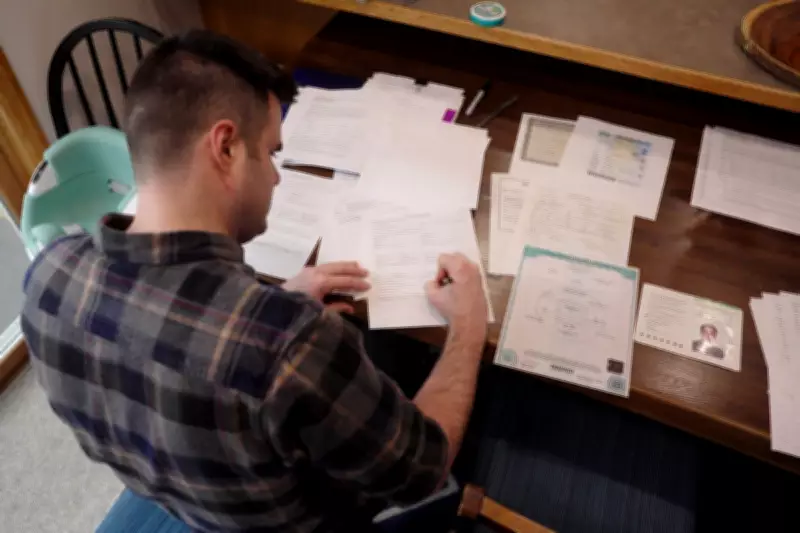
New Canadian Citizenship Law Sparks Surge in American Applications
A recent change in Canadian immigration law has made it significantly easier for millions of Americans to claim citizenship by descent, prompting a dramatic increase in applications and overwhelming immigration lawyers on both sides of the border. The new legislation, which took effect on December 15, 2025, has opened up a streamlined path to dual citizenship for individuals with Canadian ancestry, leading to a rush of interest from American citizens exploring their heritage and future options.
Overwhelmed Immigration Lawyers Report Flood of Cases
Since the implementation of the new law, immigration attorneys in the United States and Canada have reported being inundated with clients seeking assistance with proof of citizenship applications. Driven by a combination of political concerns, family heritage, job opportunities, and other personal factors, thousands of Americans are actively pursuing dual citizenship under the simplified process.
Nicholas Berning, an immigration attorney at Boundary Bay Law in Bellingham, Washington, stated that his practice is "pretty much flooded with this." He explained, "We've kind of shifted a lot of other work away in order to push these cases through." Similarly, immigration lawyer Amandeep Hayer noted that his Vancouver-area practice has experienced a massive surge, going from approximately 200 citizenship cases per year to more than 20 consultations daily.

How the New Citizenship Law Works
Canada has been revising its citizenship laws for decades, often to update historical interpretations or address discrimination issues. Previously, Canadian citizenship by descent could only be passed down one generation, from a parent to a child. This changed with the enactment of Bill C-3, which came into force on December 15, 2025.
The new law opens up citizenship to anyone born before that date who can prove they have a direct Canadian ancestor, such as a grandparent, great-grandparent, or even more distant relative. For those born on or after December 15, 2025, they must demonstrate that their parent met a residency requirement of 1,095 days in Canada.
Under the legislation, descendants of Canadians are already considered citizens, but they must provide proof to obtain an official certificate of citizenship. Hayer, who advocated for the new law in the Parliament of Canada, estimated that millions of Americans are eligible. "You are Canadian, and you're considered to be one your whole life," he said. "That's really what you're applying for, the recognition of a right you already have vested."
Motivations Behind American Applications
American applicants cite various motivations for seeking dual citizenship, with many pointing to political factors as a key driver. Michelle Cunha of Bedford, Massachusetts, decided to move to Canada after decades of political activism, feeling she had "nothing left to give" in the United States. "I put in my best effort for 30 years. I have done everything that I possibly can to make the United States what it promises the world to be, a place of freedom, a place of equality," she said. "But clearly we're not there and we're not going to get there anytime soon."
Troy Hicks from Pahrump, Nevada, was spurred by an international trip where he faced negative comments about the U.S. "I recently went to Australia and you know, first words out of the first person I talked to in Australia was basically an expletive about Trump and the U.S.," Hicks recalled. "So the idea of doing that with a Canadian passport just seemed easier, better, more palatable."
Maureen Sullivan of Naples, Florida, was motivated by immigration crackdowns under the Trump administration, which hit close to home when her teenage nephew encountered federal officers near his high school in St. Paul. Sullivan, whose grandmother was Canadian, sees citizenship as a safety net. "When I first heard about the bill, I couldn't believe it. It was like this little gift that fell in my lap," she said.

Costs and Processing Times for Citizenship Applications
For those with documentation readily available, the proof of citizenship application fee is relatively inexpensive at 75 Canadian dollars (approximately $55). However, costs can escalate significantly for individuals requiring assistance from attorneys or genealogists. Cunha estimated her expenses at around $6,500 after hiring a lawyer.
Mary Mangan of Somerville, Massachusetts, filed her application in January using advice from online forums, suggesting that many applicants can handle the process independently. "There are some situations where a lawyer might be the right thing, but for many people, I would guess 90% of people can probably do this on their own," she noted.
The Immigration, Refugees and Citizenship Canada office, which processes applications, reports that processing times for a certificate average around 10 months, with over 56,000 people currently awaiting decisions. From December 15 to January 31, the agency confirmed citizenship by descent for 1,480 individuals, though not all were Americans. Last year, 24,500 Americans gained dual U.S.-Canada citizenship.
Canadian Perspectives on the Surge
Fen Hampson, a professor of international affairs at Carleton University in Ottawa, commented that Canadians are generally welcoming but may view some applicants with skepticism. "I think where people start looking askance is someone who's never been to Canada, who has very thin ties. They can get a passport, becoming Canadians of convenience. People don't like that," he said.
Hampson also expressed concerns that the surge in American applications could delay efforts by refugees and asylum-seekers fleeing vulnerable situations. "Canadians don't like queue jumpers," he added, highlighting potential tensions between different groups seeking citizenship or residency in Canada.